Español
  Español
 ENG
ENG CAT
CAT
Barranco de Moró
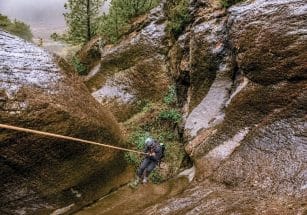
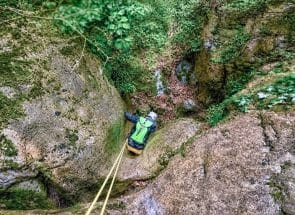
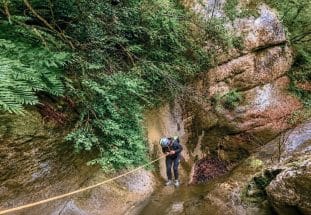
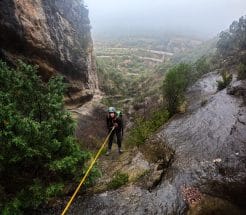
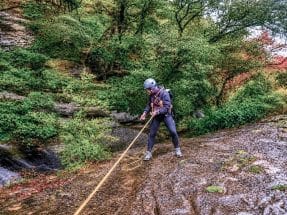
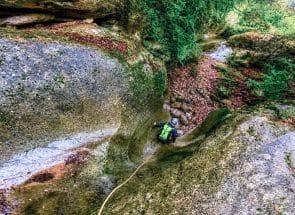
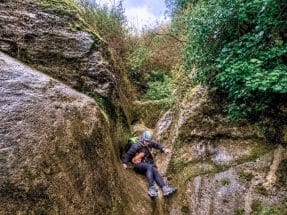
El Barranco de Moró es una de las opciones más interesantes del Pallars Jussà para quienes buscan un barranco seco con mayor continuidad de rápeles y una sensación de descenso algo más vertical.
Situado muy cerca de La Pobla de Segur, forma junto a Gramontill y Serradell un pequeño grupo de recorridos perfectos para continuar practicando barranquismo durante otoño e invierno.
Moró resulta especialmente atractivo cuando ya existe cierta soltura con el rápel y la progresión por reuniones.
Aquí no solo importa bajar.
También es necesario organizar correctamente las cuerdas, mantener un orden claro dentro del grupo y enlazar las diferentes maniobras con eficiencia.
 Ficha técnica
- Aproximación: 45 min
- Descenso: 3 horas.
- Retorno: 5 min
Opción con combinación aproximación 8 minutos.
 Nivel de dificultad
Técnico.
Recomendamos Moró especialmente para:
- Participantes con experiencia básica o intermedia en rápel.
- Personas que quieran mejorar la eficiencia en maniobras.
- Grupos pequeños y coordinados.
- Barranquistas que buscan una actividad de otoño o invierno.
La dificultad final depende siempre de las condiciones reales del recorrido.
 Precios
75 euros por persona.
¿Para quién recomendamos el Barranco de Moró?
Moró resulta especialmente interesante para participantes de nivel intermedio.
Es recomendable haber realizado anteriormente varios rápeles y conocer las bases del uso del descensor, los cabos de anclaje y las reuniones.
También puede plantearse como una iniciación más avanzada cuando existe un acompañamiento profesional y el grupo es reducido.
En grupos numerosos, la sucesión de maniobras puede aumentar considerablemente la duración del descenso.
Un barranco seco con mayor continuidad
El atractivo de Moró está precisamente en su ritmo.
Los rápeles y las pequeñas secciones de progresión crean una sensación de descenso continuo.
En un barranco de estas características es fundamental que cada participante sepa qué debe hacer en cada momento.
Mientras una persona desciende, el resto del grupo debe permanecer correctamente asegurado y preparado para continuar.
El orden reduce errores y permite disfrutar mucho más de la actividad.
Mejor época
El otoño y el invierno son excelentes momentos para realizar este tipo de barrancos.
Al no necesitar un caudal acuático podemos seguir practicando técnicas de barranquismo cuando otros descensos resultan demasiado fríos.
La primavera también puede ser adecuada cuando la meteorología es estable.
Después de lluvias hay que comprobar siempre el estado del cauce.
¿Quieres seguir haciendo barranquismo en invierno?
Los barrancos termales son la alternativa perfecta cuando bajan las temperaturas. Descubre el canyoning en aguas calientes naturales y disfruta de una experiencia única en los Pirineos.
Material recomendado para Moró
Además del material habitual de barranquismo, en recorridos con mayor continuidad de rápeles la organización del equipo adquiere todavía más importancia.
Necesitarás:
- Casco.
- Arnés.
- Cabos de anclaje.
- Descensor.
- Mosquetones de seguridad.
- Cuerdas adecuadas al recorrido.
- Material auxiliar según las necesidades del grupo.
- Guantes.
- Calzado con buena adherencia.
- Ropa de montaña.
- Frontal.
Cuando las características del grupo lo aconsejan puede ser interesante trabajar con más de una cuerda para mejorar la organización y disponer de redundancia.
Gestión del grupo durante el descenso
En Moró la comunicación es uno de los aspectos más importantes.
Debe existir un orden claro.
Una persona monta, otra puede revisar y los participantes descienden siguiendo siempre las mismas indicaciones.
No conviene improvisar continuamente.
Una comunicación sencilla mediante palabras previamente acordadas evita confusiones.
En invierno, además, interesa reducir las esperas innecesarias porque permanecer parado durante mucho tiempo favorece la pérdida de temperatura.
¿Prefieres barranquismo con agua, saltos y toboganes?
Cuando llega la primavera y suben las temperaturas comienza la mejor época para disfrutar de los barrancos acuáticos de los Pirineos: pozas cristalinas, cascadas, saltos, toboganes naturales y recorridos para todos los niveles.
Riesgos habituales en un barranco seco vertical
Los principales aspectos que debemos controlar son:
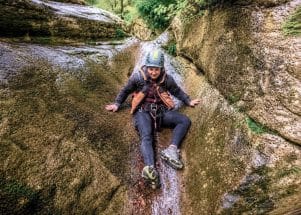
- Resbalones sobre roca pulida.
- Piedras sueltas.
- Rozamiento de las cuerdas.
- Errores de montaje.
- Problemas durante la recuperación de cuerda.
- Cansancio y pérdida de concentración.
- Falta de luz si el descenso se alarga.
La seguridad no depende únicamente del material.
También depende de mantener el orden, anticipar las maniobras y tomar decisiones antes de que aparezcan los problemas.
Moró, Gramontill y Serradell: una escapada de barrancos secos
Si dispones de un fin de semana, estos tres barrancos secos del Pallars Jussà permiten organizar un programa muy interesante.
Puedes comenzar con el Barranco de Serradell si necesitas familiarizarte con las maniobras.
Otra posibilidad es utilizar el Barranc de Gramontill para trabajar técnica y coordinación.
Después, Moró puede convertirse en el descenso más completo de la escapada.
De esta manera llegas al recorrido con el grupo coordinado, las maniobras frescas y más confianza.
Haz el Barranc de Moró con MundoCanyon
Cuéntanos tu experiencia y prepararemos una jornada adaptada a tu nivel y a las condiciones del barranco.