 ENG
 Español
 ENG
 CAT

Christmas in the Pyrenees: snow, villages and unique winter holiday activities
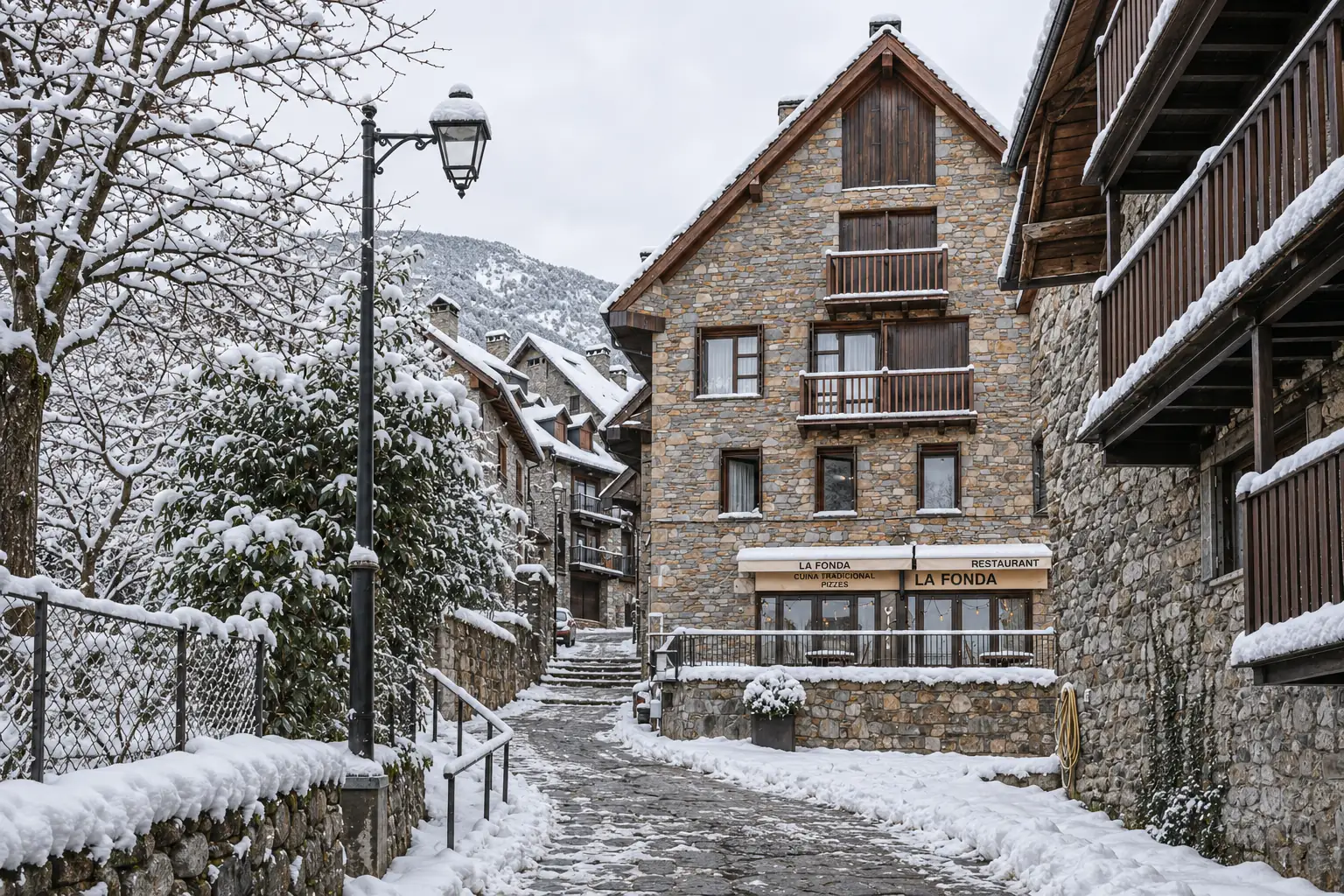
In brief:
- For a festive Christmas atmosphere: Vall de Boí combines stone villages, snow, Romanesque heritage and a special programme between Christmas and Three Kings’ Day.
- For a peaceful getaway: Vall Fosca offers small villages, winter landscapes and access to different mountain areas.
- If you want snow without skiing: snowshoeing lets you explore forests, mountain refuges and snowy landscapes without needing skis.
- The most unusual plan: descend a thermal canyon in Thuès-les-Bains, with natural hot-water springs in the middle of winter.
- If there is no snow: you can still go hiking, try orienteering or caving, visit villages or choose other activities depending on conditions.
- With children: villages, snow, orienteering, easy snowshoe routes and Christmas activities make it possible to organise a very varied holiday.
Christmas in the Pyrenees: much more than skiing
Spending the Christmas holidays in the Pyrenees does not necessarily mean booking a full week of skiing.
Winter completely transforms the mountains, but it also multiplies the ways to enjoy them.
You can wake up in a small snow-covered village, walk through forests on snowshoes, visit Romanesque churches, enter a cave, descend a canyon fed by thermal waters or simply spend the day discovering secondary roads, villages and landscapes that look completely different in summer.
The Spanish holiday period between Christmas and Three Kings’ Day also makes it possible to organise a much longer getaway than a simple weekend.
And there is another advantage: not every day has to depend on snow.
A good winter trip can combine high-mountain activities with lower-altitude options, cultural visits and adventure experiences.
Mountain villages with a Christmas atmosphere: Vall de Boí and Vall Fosca
If you are looking for a Christmas of stone houses, church towers, snow and mountains, you do not need to go very far.
Two of the most interesting areas in the Lleida Pyrenees are Vall de Boí and Vall Fosca, although they offer very different experiences.
Taüll, Boí and Barruera: Christmas in Vall de Boí
Vall de Boí is one of the most complete destinations for a Christmas getaway.
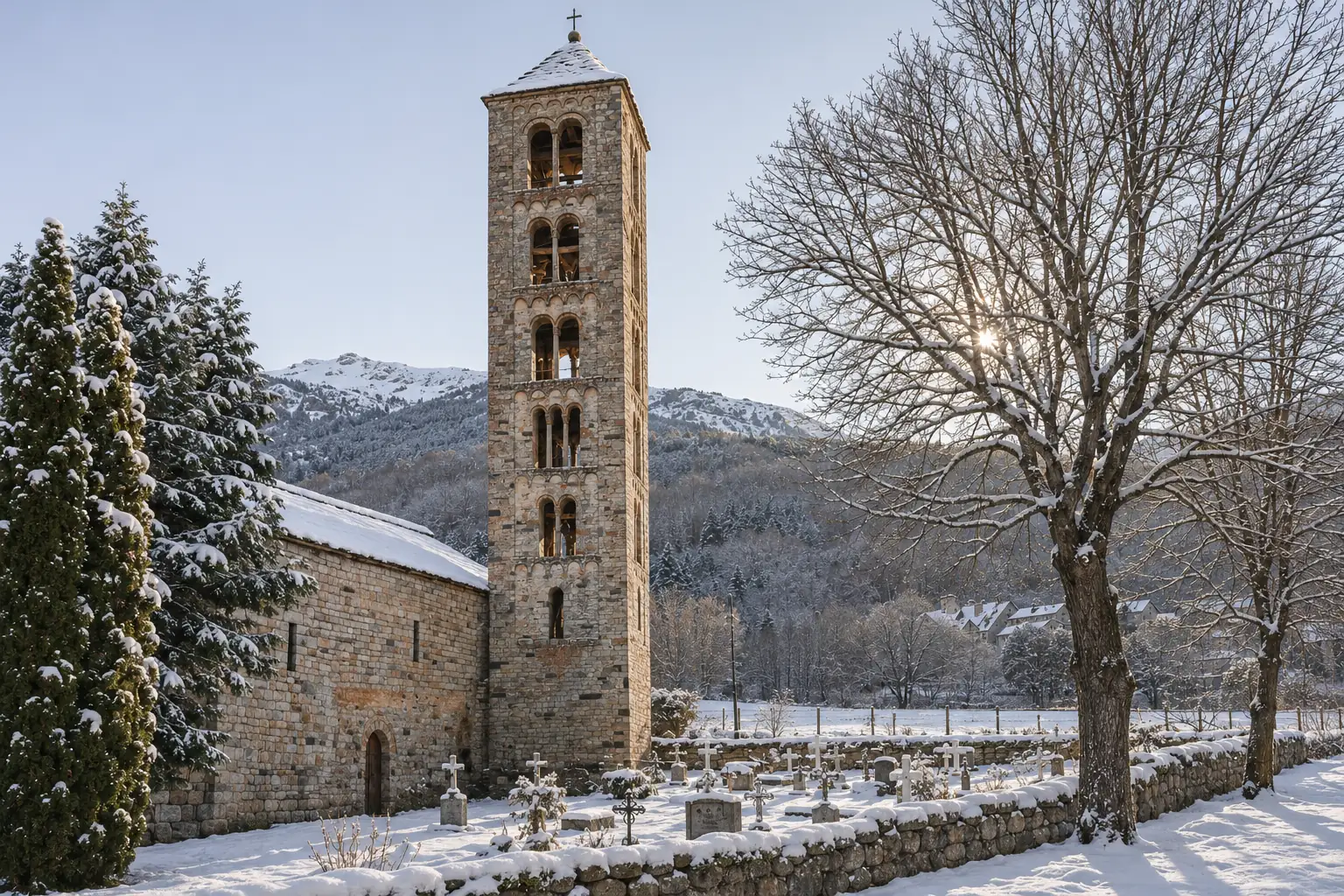
Taüll and Boí preserve the valley’s traditional architecture and form part of its extraordinary collection of Romanesque churches. When snow arrives, the contrast between rooftops, stone bell towers and mountains turns these villages into some of the most recognisable winter landscapes in the Catalan Pyrenees.
During the 2026–2027 Christmas holidays, the official programme also includes a range of activities.
On 24 December, Father Christmas is scheduled to arrive at the Boí Taüll ski resort. Several snowshoe excursions are also organised during the holidays, including outings using the chairlift and sunset trips.
The programme continues over New Year and Three Kings’ Day, with New Year’s Eve celebrations, the Barruera Christmas Park on 2 January and the arrival of the Three Kings at Boí Taüll on 5 January.
This makes the area particularly convenient for families, as snow and mountain activities can be alternated with children’s events and village visits.
Vall Fosca: a quieter, more rural Christmas
Vall Fosca offers a different experience.
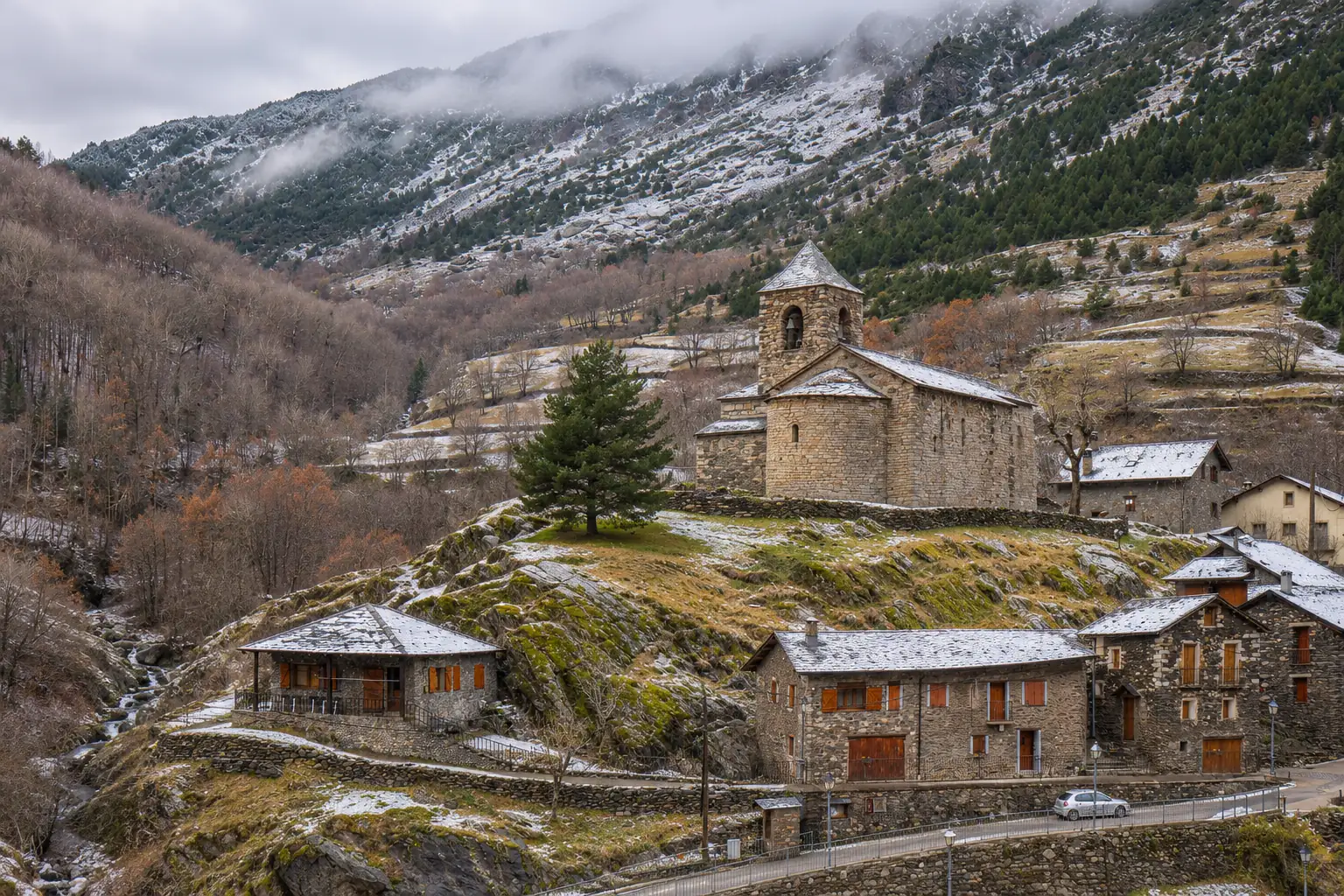
Here you do not find the same ski-resort atmosphere, but rather a long valley made up of small settlements where winter feels much quieter.
La Pobleta de Bellveí, La Torre de Capdella, Espui and Capdella are ideal for staying in rural accommodation and using each day to explore a different part of the valley.
Cultural activities are also organised during winter. On 27 December 2026, for example, the Museu Hidroelèctric de Capdella is scheduled to offer a theatrical guided tour.
But the main attraction remains outdoors: villages, forests, paths and mountain areas that, when conditions allow, can be explored on snowy routes.
If you want to learn more about the area before planning your trip, see our complete guide to Vall Fosca.
Enjoying the snow without skiing
One of the most common questions when December arrives is where to enjoy the snow without having to ski.
The answer is simple: you do not need a ski slope to enjoy winter in the Pyrenees.
You can choose an accessible area, spend a few hours walking on snow, play with the children, take photographs or simply discover how a forest changes under winter conditions.
Some ski areas also have lifts that allow pedestrians to reach higher elevations without skis, although available services depend on each resort and current snow conditions.
For us, however, one of the best ways to discover winter is to walk through it.
Snowshoeing: one of the best Christmas activities
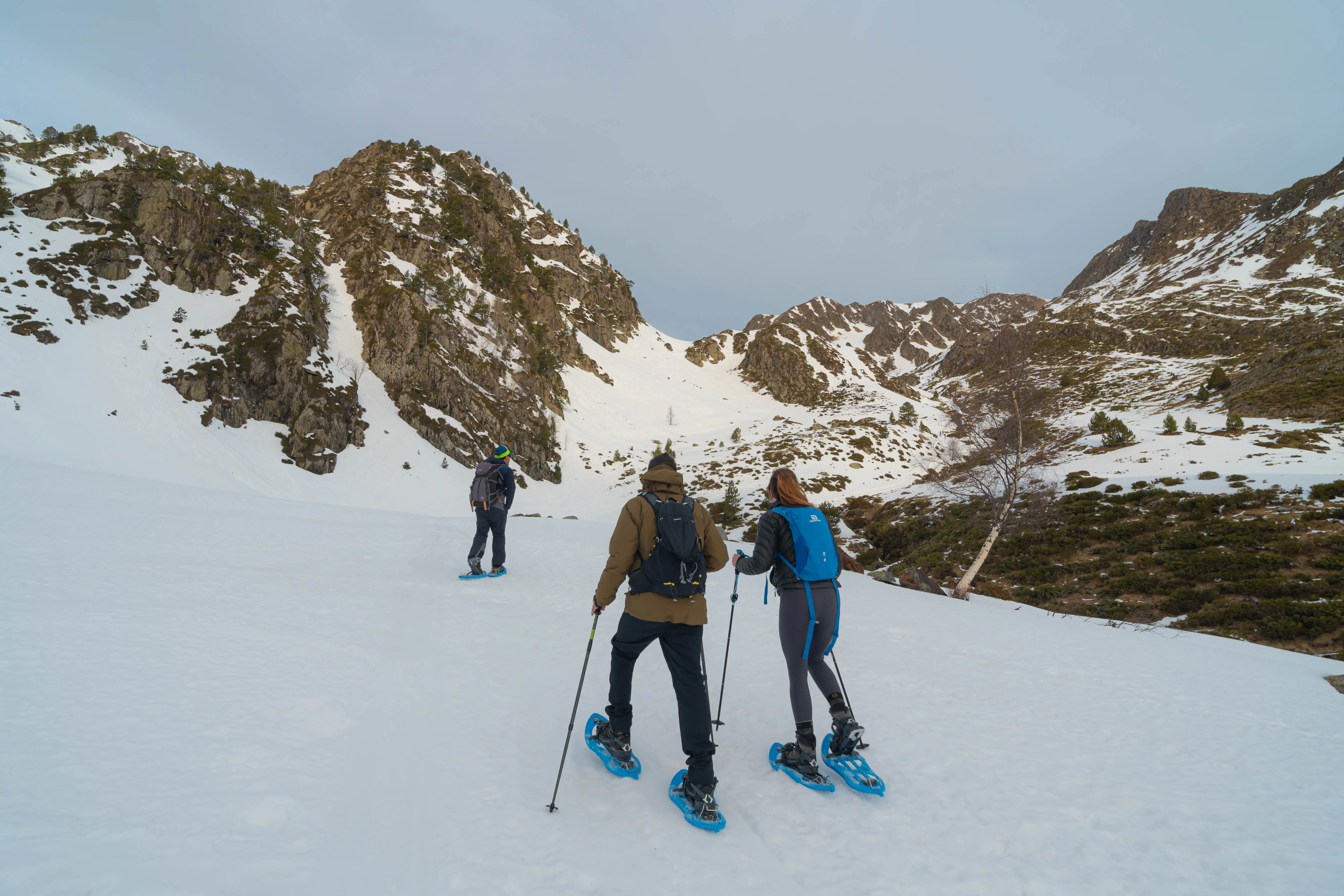
Our snowshoe excursions are probably one of the most versatile winter activities.
You do not need to know how to ski, and the route can be adapted quite well to the group’s level.
That does not mean snowshoeing is simply a matter of putting on the equipment and following any path.
Snow completely changes the terrain. A simple trail in August may cross a slope in December where snowpack, ice, wind or avalanche risk must be assessed.
That is why the specific route is always chosen according to current conditions.
There are several areas in the Pallars and the Pyrenees where outings can be organised.
Refugi Pla de la Font
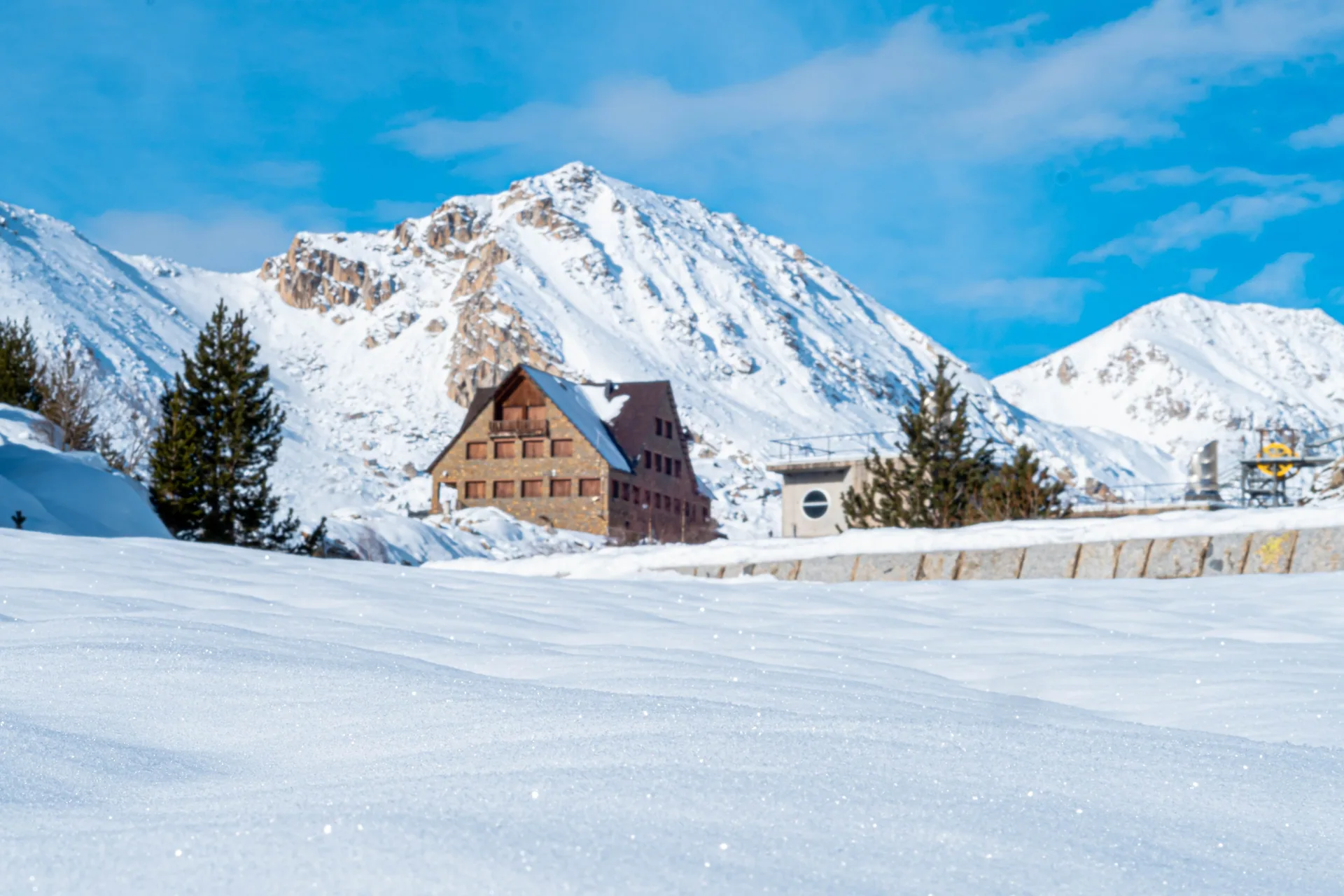
The snowshoe route to Refugi Pla de la Font begins near Planes de Son and climbs through forests and open terrain to a mountain refuge located at around 2,000 metres.
It is a very interesting option for experiencing a fully winter landscape without necessarily undertaking a major ascent.
Filià and Vall Fosca
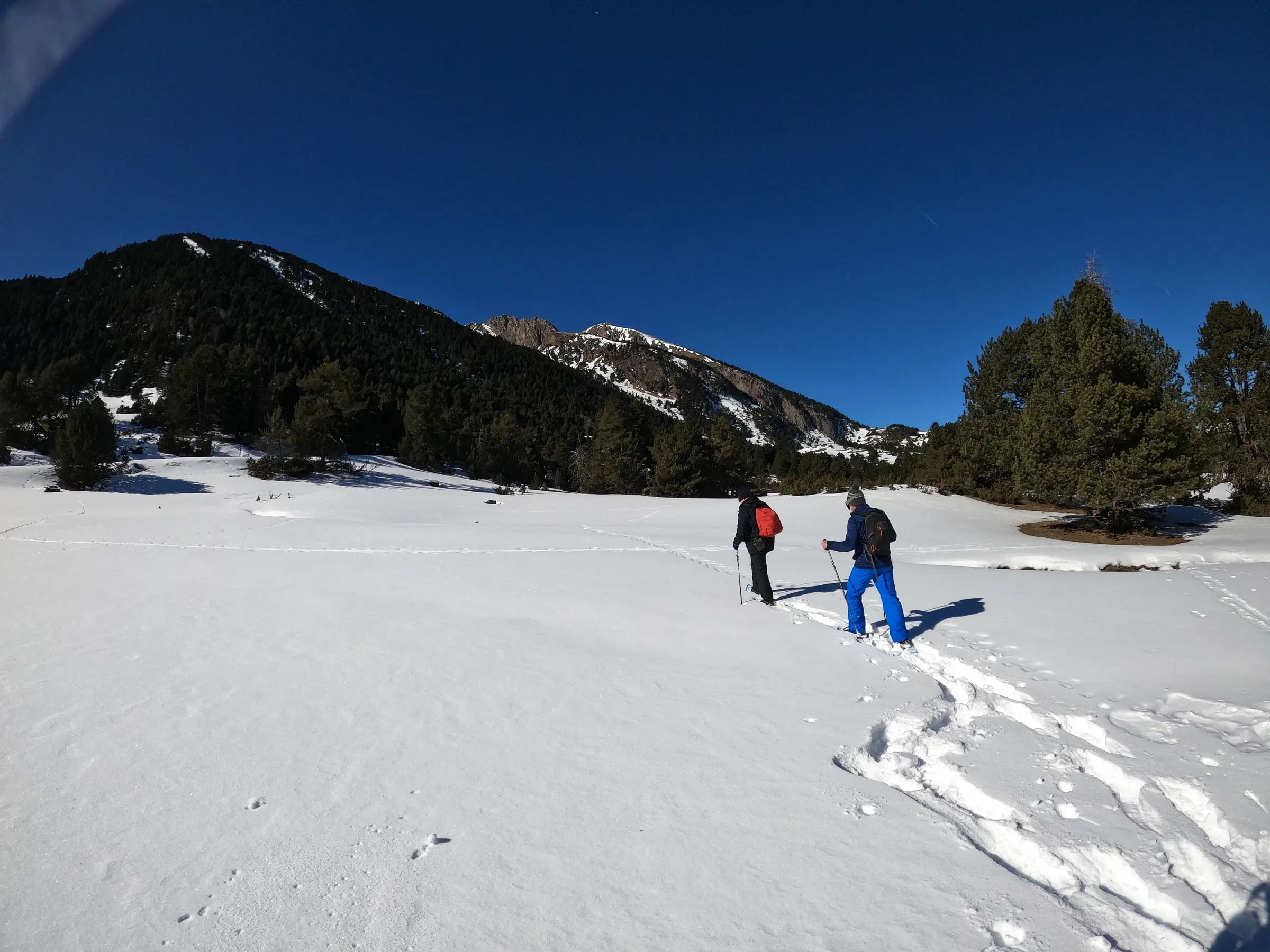
Filià is another major setting for winter activities.
Depending on snow conditions, we can prepare routes of different lengths and levels of difficulty.
Vall Fosca also has winter itineraries in areas such as Riqüerna, Estanys de Francí, Colomina, Font Blanca and Montsent de Pallars.
If you are looking for ideas before choosing an area, see our guide to the best snowshoe routes in the Pyrenees.
Would you like to try snowshoeing this Christmas?
We do not choose the route simply by its name. We look for a suitable area according to snow conditions, weather, the group’s experience and the type of day you would like to have.
A peaceful Christmas in Vall Fosca
For anyone who wants to escape the busiest ski resorts, Vall Fosca works very well as a base for several days.
You can stay in one of its villages without planning every day around a major activity.
One day can be spent exploring the valley and visiting Capdella, Espui, La Torre de Capdella or La Pobleta de Bellveí.
Another can be reserved for a snowshoe outing if there is enough snow.
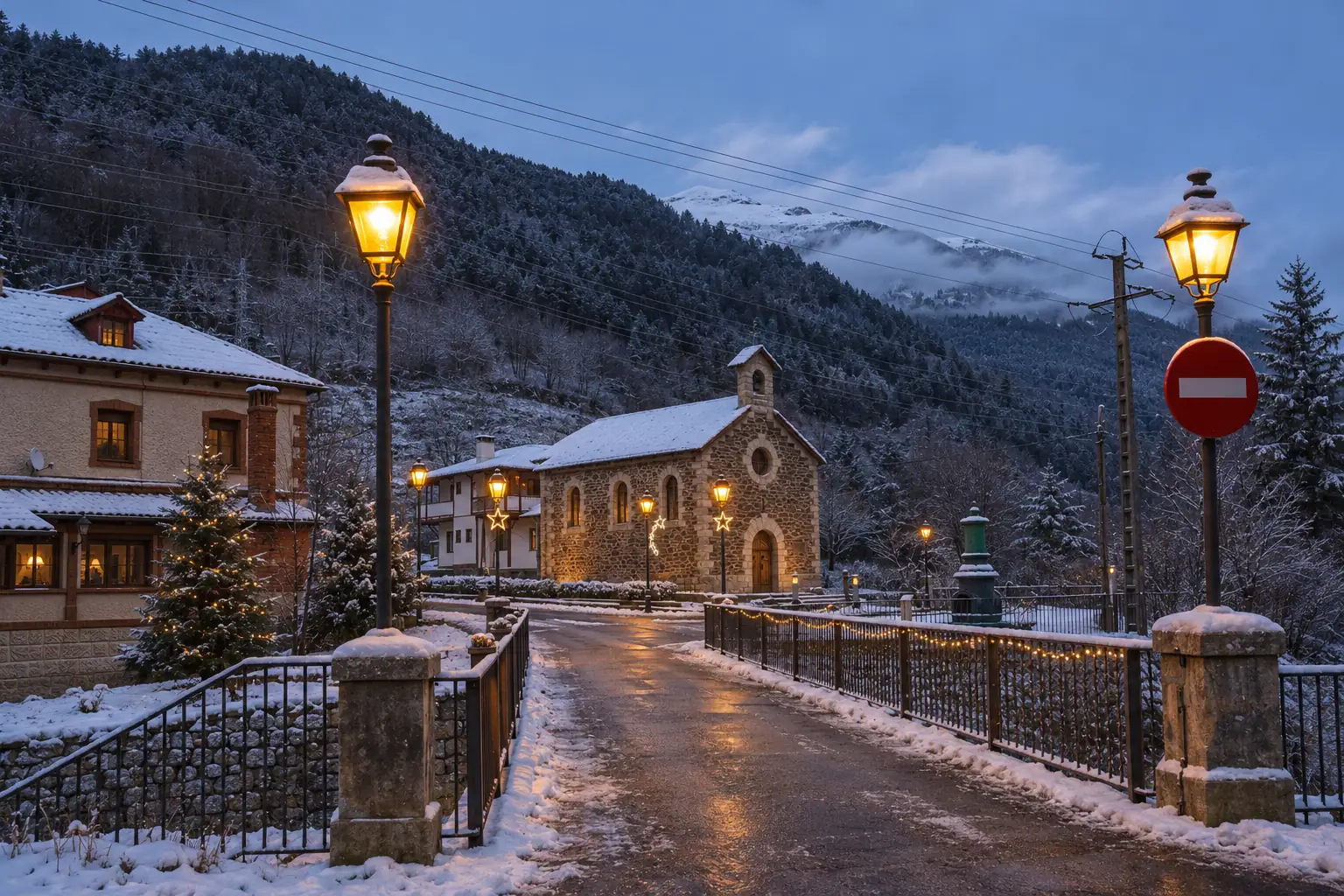
You can also visit the Museu Hidroelèctric de Capdella and understand why dams, pipes, power stations and other large infrastructures can be found in a valley that otherwise seems so isolated.
The upper valley changes completely in winter. Places that we associate with hiking and mountain lakes in summer become winter mountain terrain and require a different approach.
That is exactly why we do not recommend arriving with only one fixed route as the objective.
Sometimes the best day is in Filià; at other times it makes more sense to remain at lower elevations or change the plan completely.
Thermal canyon: canyoning in warm water in the middle of winter
Few people associate December or January with canyoning.
And that is precisely why one of the most surprising ideas for a different Christmas holiday is to descend a thermal-water canyon.
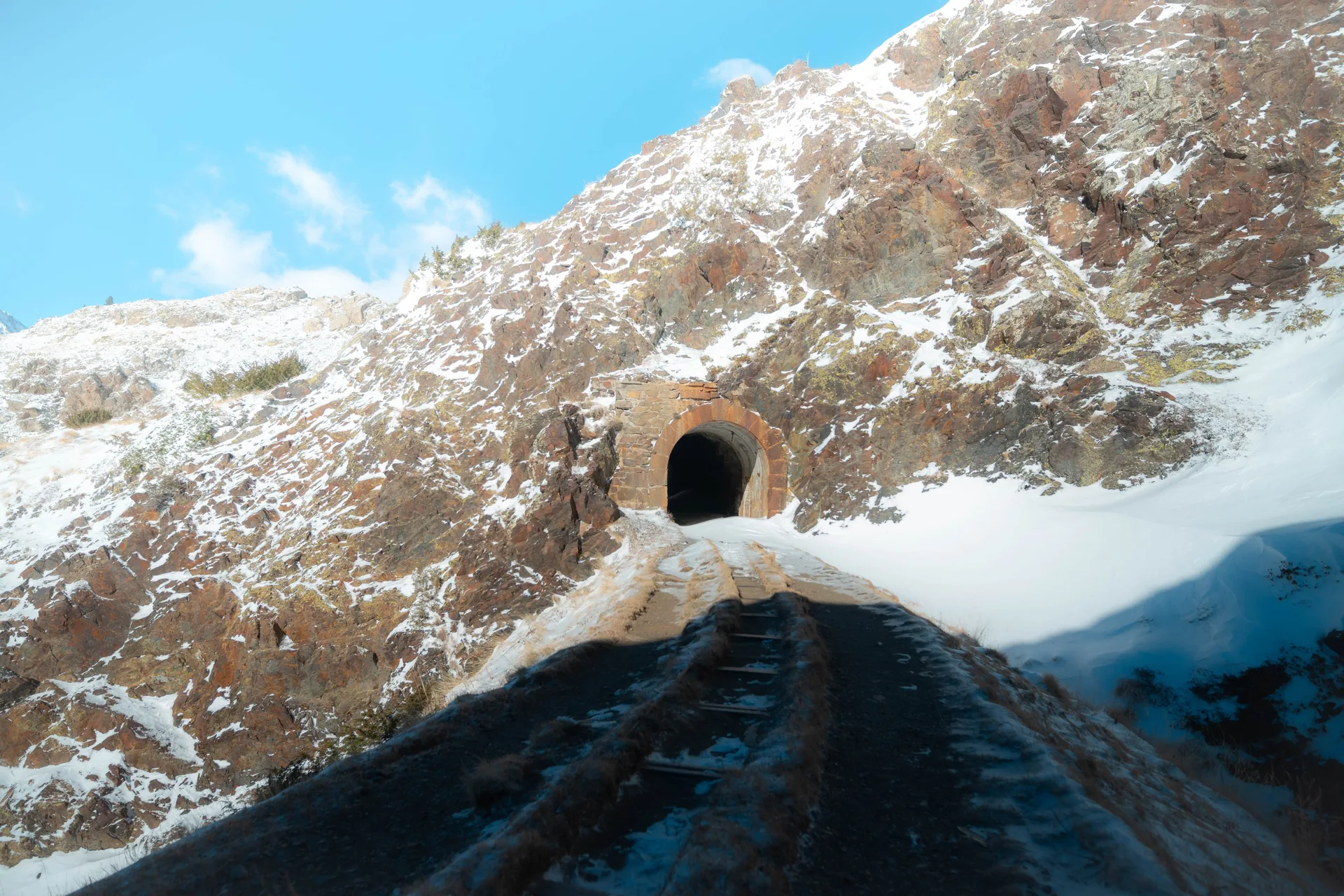
At Thuès-les-Bains, in the French Eastern Pyrenees, we find the Torrent de Faget — also written Fajet — a descent where natural hot-water springs emerge inside a genuine Pyrenean gorge.
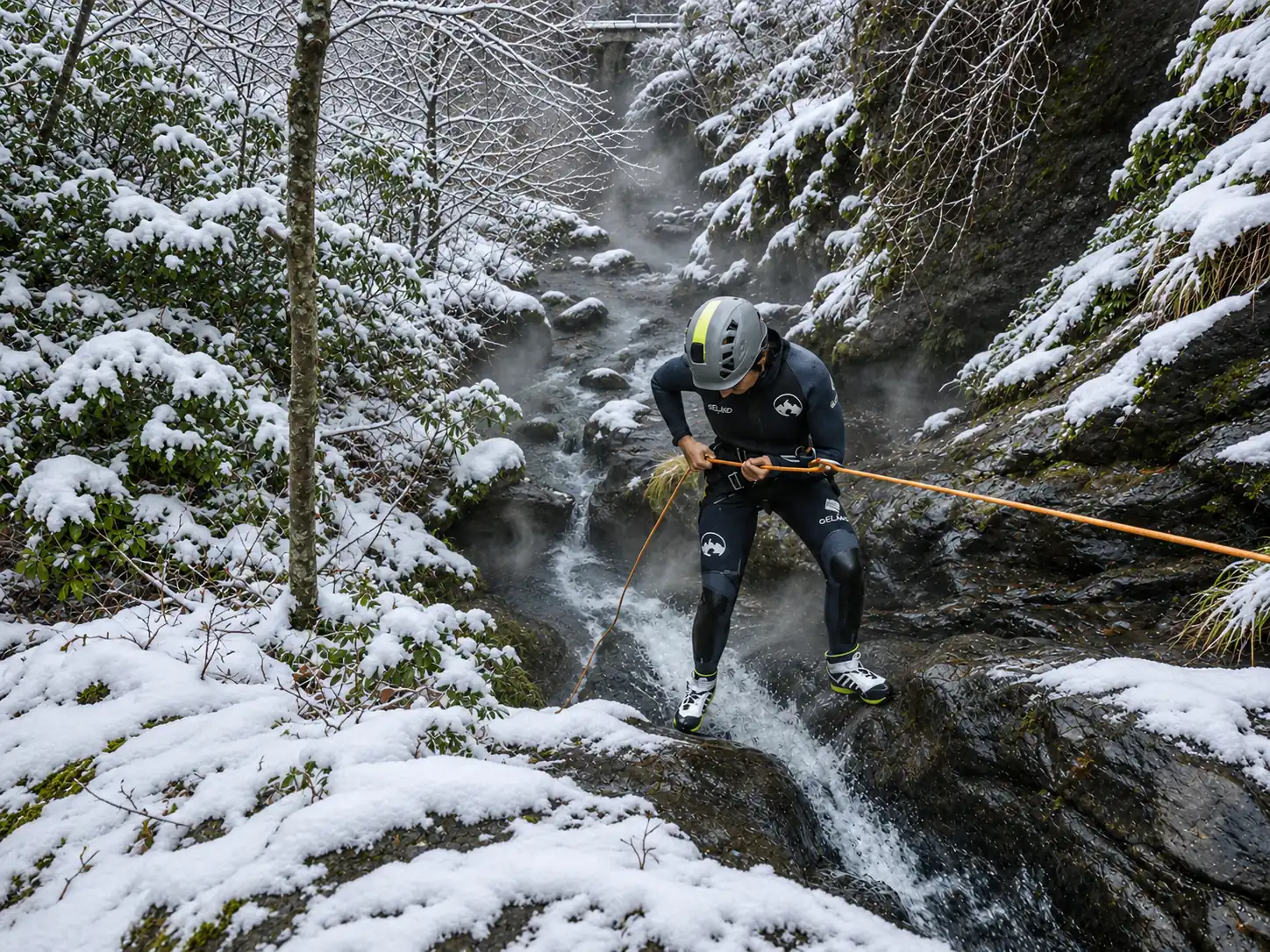
The experience is difficult to compare with conventional canyoning.
Outside, conditions may be completely wintry, while at different points along the route the thermal water mixes with the stream and creates much warmer sections.
Not all of the canyon is a hot pool.
There are cooler sections, abseils, progression through the stream bed and areas where the thermal springs emerge. That is why we still use wetsuits and full canyoning equipment.
The Torrent de Faget thermal canyon in Thuès-les-Bains can also be suitable for beginners depending on conditions and the characteristics of the group.
It is hard to think of a more appropriate activity for anyone who wants to return from the holidays saying they did something genuinely different.
Canyoning at Christmas — and in thermal water?
At Thuès-les-Bains we can combine a genuine Pyrenean gorge with natural hot-water springs. A particularly interesting experience during the colder months.
Aigüestortes in winter: discovering the park in a different way
Aigüestortes i Estany de Sant Maurici National Park does not disappear when summer ends.
It simply changes.
Forests, lakes and paths take on a completely different character when the snow arrives.
The way we move through them also changes.
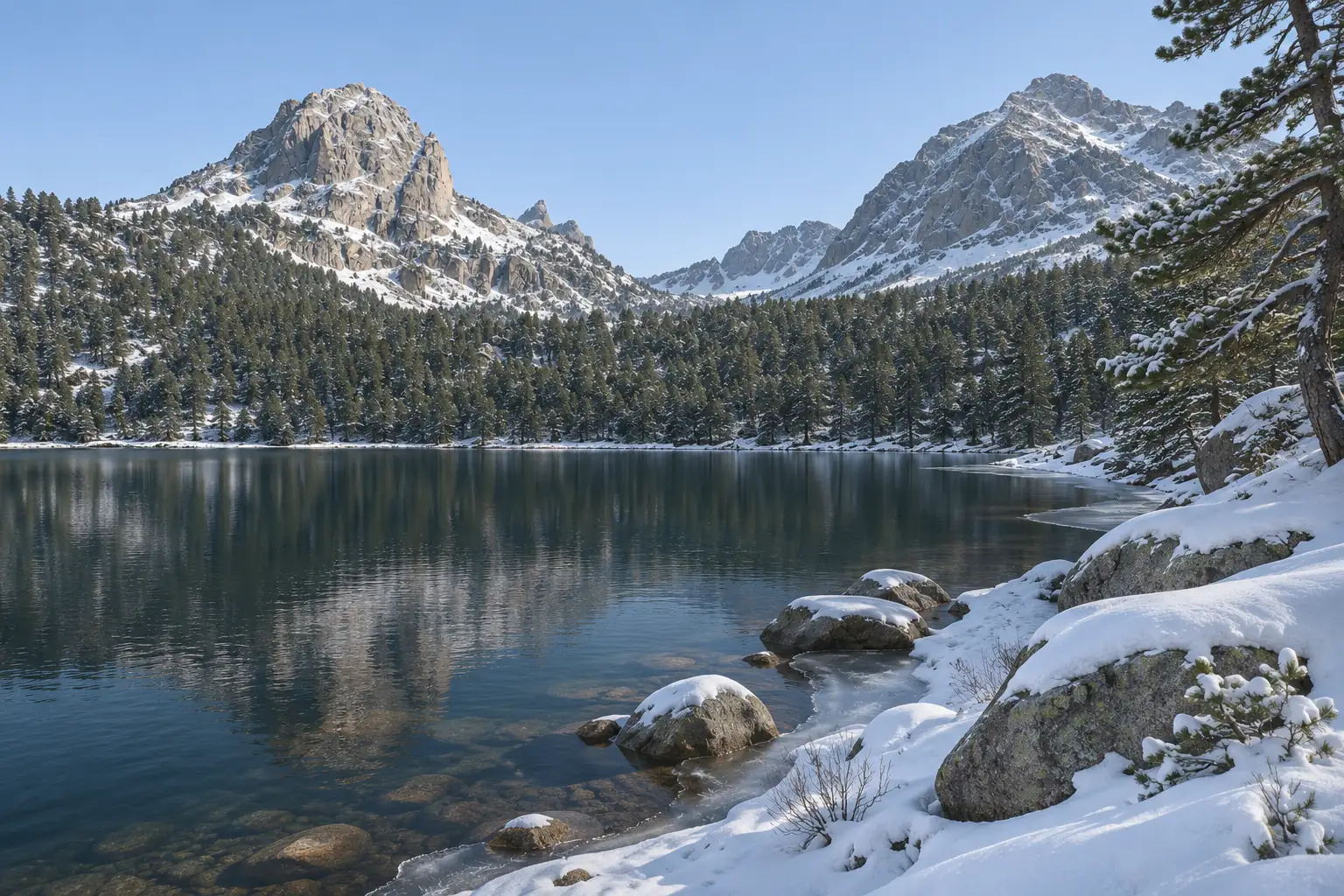
A route that is walked in summer may require snowshoes or winter equipment, or may even become unsuitable depending on snow conditions.
Visiting Aigüestortes at Christmas therefore does not mean simply copying an August hike and adding warmer clothes.
The itinerary must be adapted to current conditions.
Vall de Boí is particularly interesting because it allows you to combine the National Park with Romanesque villages, Boí Taüll and other Christmas activities.
What if there is no snow?
Christmas does not guarantee snow at every altitude in the Pyrenees.
Some years the snowpack arrives early; in others, mid-altitude areas can remain almost completely dry for much of December.
That does not have to ruin the trip.
In fact, it can open up other possibilities.
Mid-mountain hiking
We can look for routes at lower elevations where there are no significant problems with ice or accumulated snow.
Among our hiking routes in the Pyrenees, we can adapt the area to the season and terrain conditions.
Estany de Montcortès and Pla de Corts
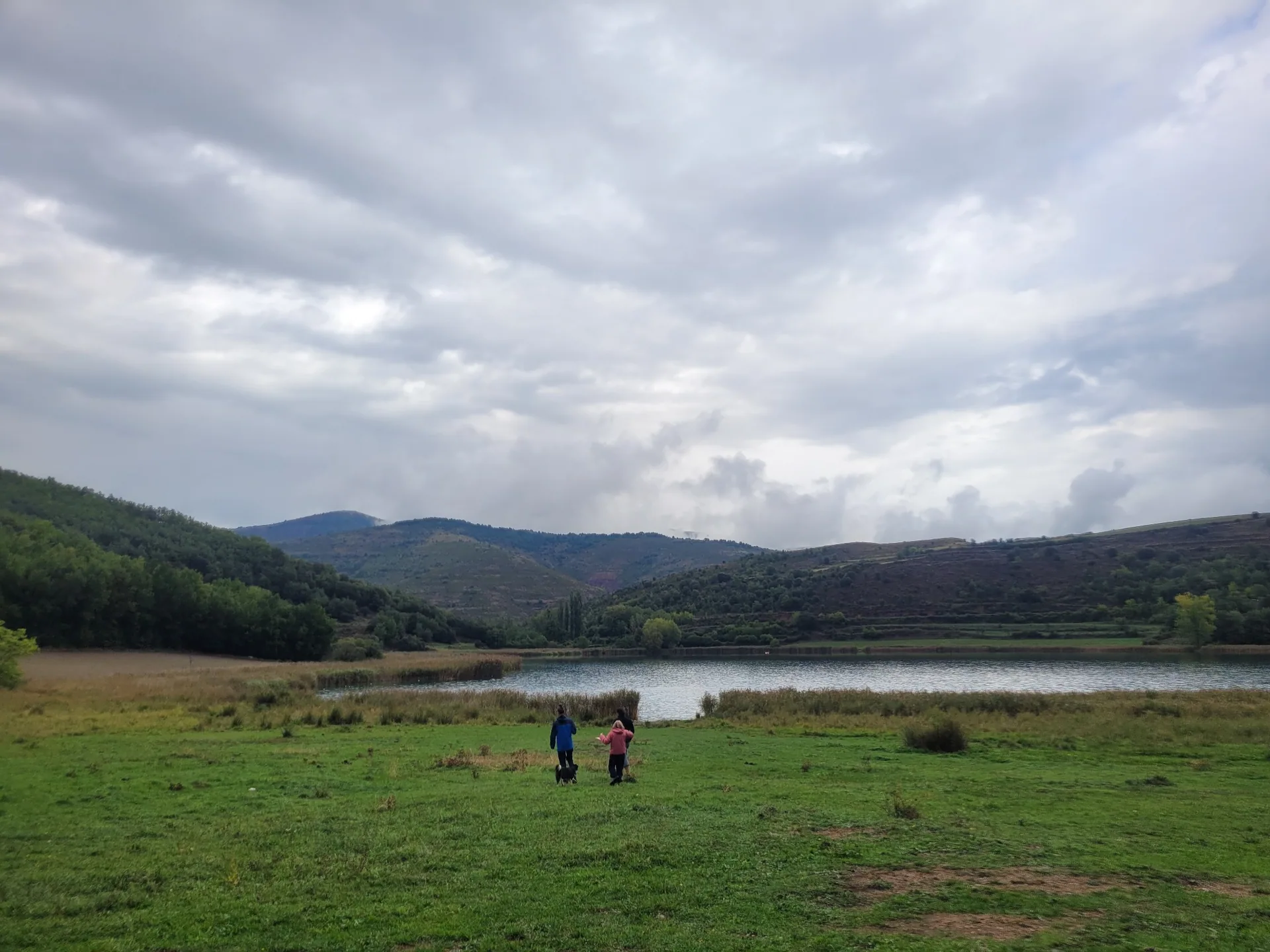
The surroundings of Estany de Montcortès offer a landscape completely different from the high mountains.
The karst lake, Peramea, Gerri de la Sal and the paths of the Pla de Corts can become a good alternative for a quiet day when conditions are poor at higher elevations.
Boumort and the Pre-Pyrenees
The Boumort Reserve is another area where the landscape changes completely.
Here you find large limestone reliefs, forests and open landscapes of the Pre-Pyrenees.
The exact itinerary will still depend on the weather, but the entire getaway does not have to depend on finding snow.
Villages and heritage
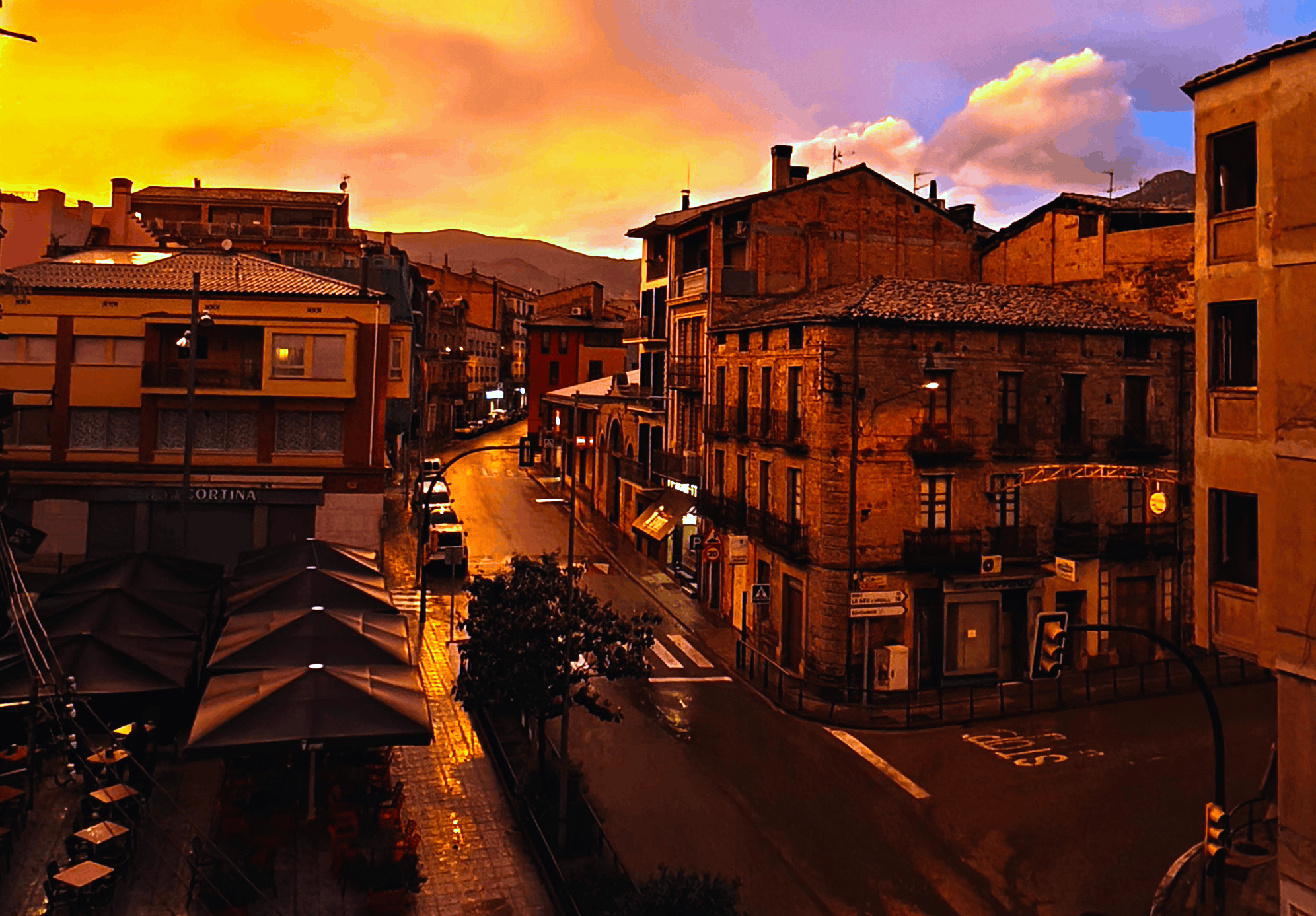
Another option is to spend a day exploring La Pobla de Segur and its surroundings.
Our guide to what to do in La Pobla de Segur brings together villages, routes, heritage and natural areas that make very different plans possible.
Caving, orienteering and via ferratas: other winter activities
One of the mistakes when organising a mountain holiday is planning seven days around a single activity.
Winter requires flexibility.
If snow conditions change or there is a day with poor conditions at altitude, we can choose completely different experiences.
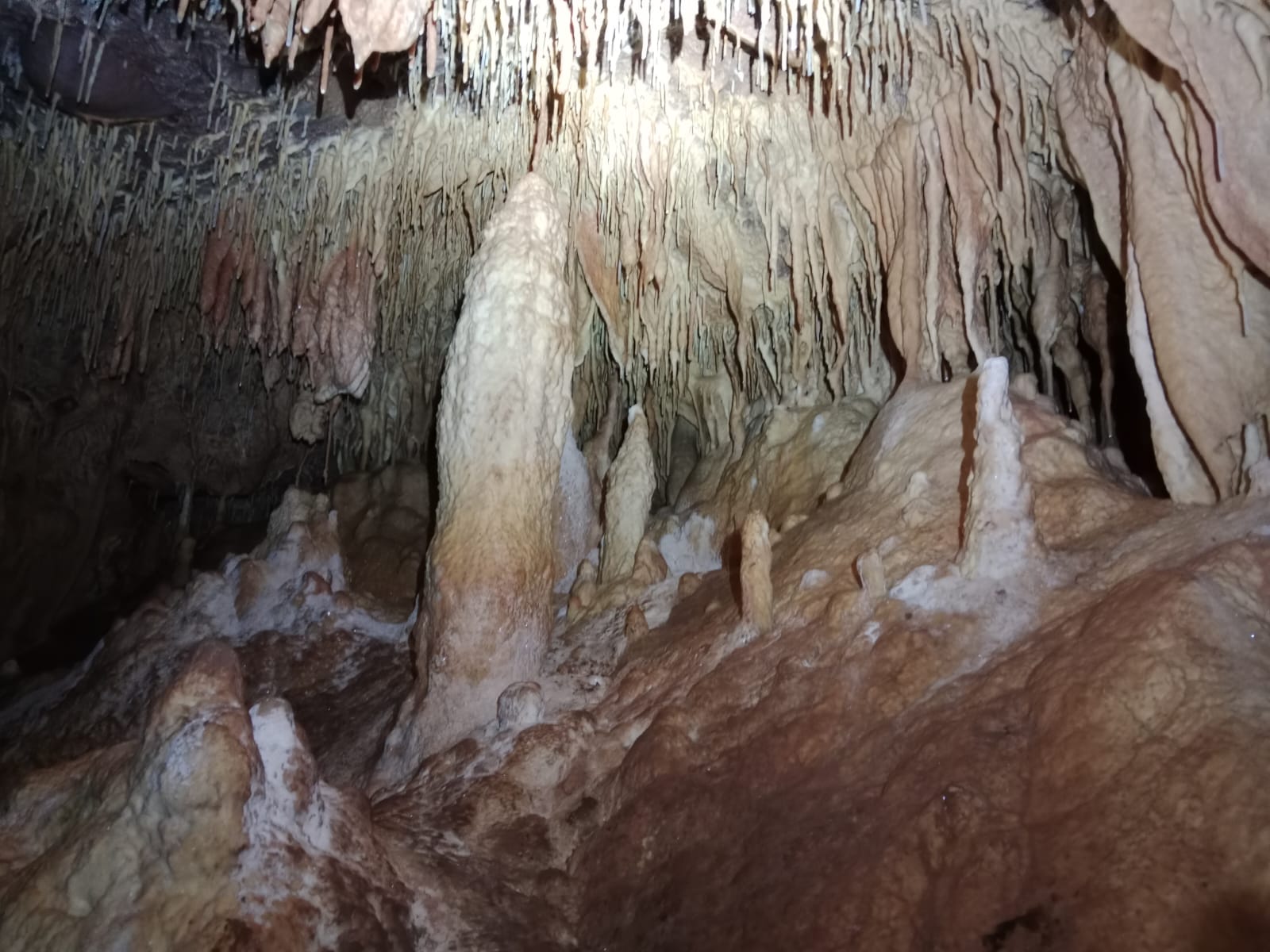
Caving
Going underground completely changes the day.
Caving in Catalonia allows you to discover caves and formations created over thousands of years by flowing water.
It does not depend on finding a snowy landscape and can become one of the most original activities of a winter getaway.
Orienteering
For families and groups of friends, an orienteering activity in the Pyrenees turns a walk into a challenge.
After learning the basics of map and compass use, participants must find different checkpoints and decide which route to take.
No previous experience is required, and the activity can be adapted to the group and terrain conditions.
Via ferratas
There are also via ferratas in the Pyrenees at different levels.
In winter, however, it is not enough simply to check whether rain is forecast.
Temperature, ice, snow on approaches and return routes, and the condition of the via ferrata itself all need to be assessed. When conditions are good, it can be an excellent activity for a dry, sunny day.
Christmas in the Pyrenees with children
Travelling to the Pyrenees with children does not mean that every day has to be spent at a ski resort.
In fact, combining different activities usually works better.
You can spend one morning in the snow and the afternoon visiting a village, reserve another day for an easy snowshoe route and leave a third day for something completely different.
Vall de Boí is particularly convenient during the Christmas holidays because it combines nature with family activities.
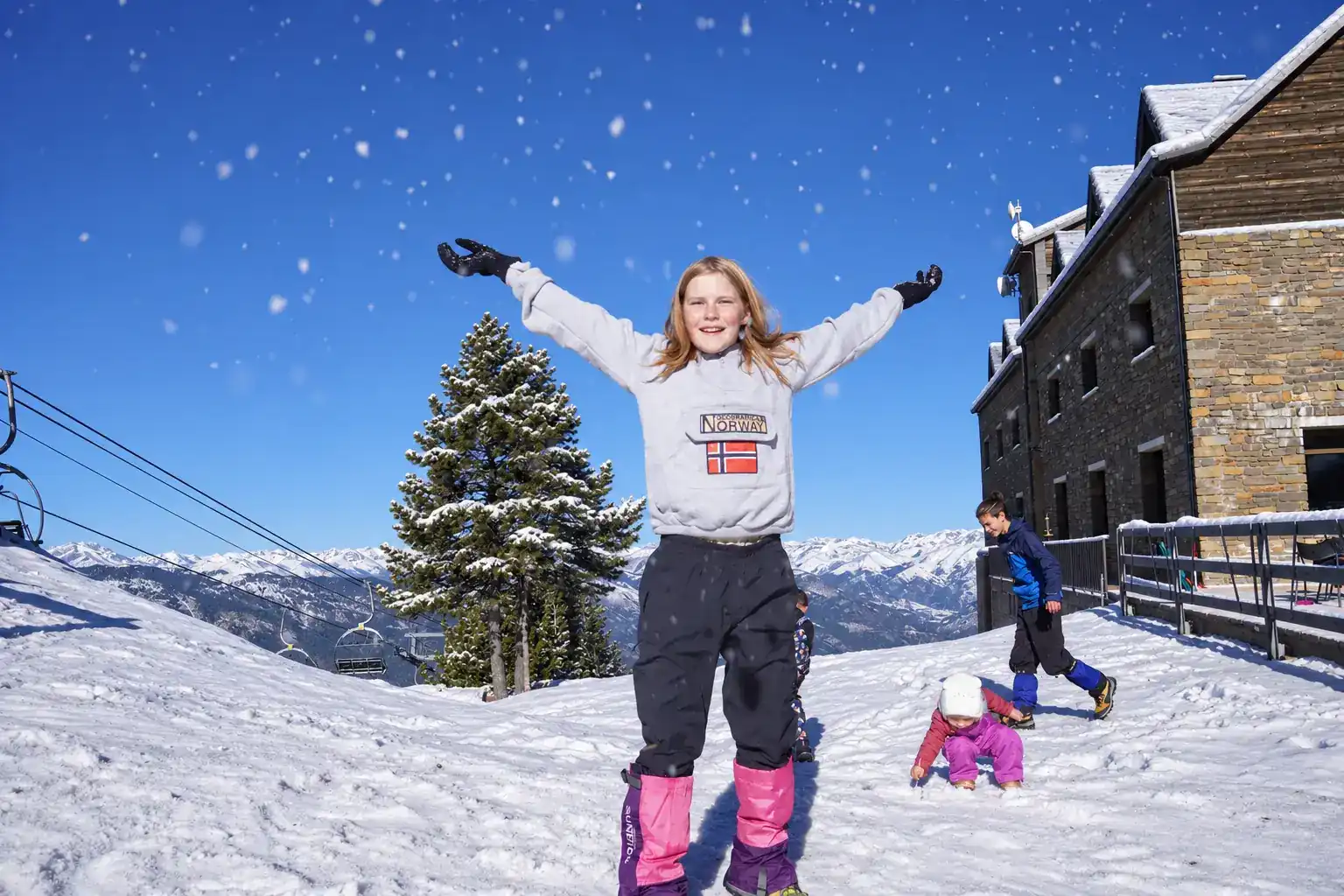
The Barruera Christmas Park scheduled for 2 January 2027 includes games, children’s activities and a visit from the Royal Page, while the Three Kings are scheduled to arrive at Boí Taüll on 5 January.
For children and teenagers who need something more than simply “going for a walk”, orienteering works especially well: finding a checkpoint turns the outing into a mission.
Snowshoeing can also be adapted for families as long as the route, snow conditions and age of the participants are suitable.
How to organise several days between Christmas and Three Kings’ Day
There is no single correct combination.
The advantage of this part of the Pyrenees is that in just a few days we can do completely different things.
A three-day getaway
Day 1:
- Vall de Boí;
- Taüll and Boí;
- Romanesque heritage;
- Christmas atmosphere.
Day 2:
- snowshoeing if conditions are good;
- or hiking at lower elevations if there is not enough snow.
Day 3:
- Vall Fosca;
- villages and landscapes;
- Museu Hidroelèctric de Capdella;
- or an orienteering activity.
Four or five days
With more time, we can add a completely different day:
- thermal canyon in Thuès-les-Bains;
- caving;
- a via ferrata if conditions are suitable;
- Estany de Montcortès and Peramea;
- or a route through Boumort and the Pre-Pyrenees.
That way, if the weather changes one day, the entire plan does not fall apart.
New Year’s Eve and New Year’s Day in the mountains
We do not need to turn 31 December into a major activity either.
A short morning route, a relaxed meal and New Year’s Eve celebrations in a mountain village may be more than enough.
And starting 1 January by walking through a forest, going on a snowshoe excursion or simply watching the sunrise between the mountains has far more charm than trying to squeeze another full day into an already packed schedule.
Are you spending the Christmas holidays in the Pyrenees?
We can help you choose an activity according to real conditions: snowshoeing when there is a good snowpack, thermal canyoning, orienteering, caving, hiking or via ferrata when the terrain allows.
Frequently asked questions about Christmas in the Pyrenees
Is there snow in the Pyrenees at Christmas?
Snow is common at higher elevations and ski resorts during the Christmas holidays, but it cannot be guaranteed everywhere or every year. Snow depth and snowline depend on the weather conditions of each season.
Where can I go in the Pyrenees at Christmas if I do not want to ski?
Vall de Boí and Vall Fosca allow you to combine villages, heritage, nature and winter activities. You can also go snowshoeing, hiking, orienteering or caving, or explore mid-mountain areas.
Can I go snowshoeing without experience?
Yes. There are introductory routes suitable for people who have never used snowshoes before. The route must be chosen according to the group’s physical condition and, above all, snow conditions.
Can children go snowshoeing?
Yes, as long as their age, the duration of the route, elevation gain and conditions are appropriate. For a first experience, a short and progressive route is usually preferable.
Can you go canyoning in winter?
Conventional aquatic canyons depend greatly on temperature, water flow and current conditions. A particularly interesting alternative is Torrent de Faget in Thuès-les-Bains, where natural hot-water springs emerge inside the canyon.
What can you do in the Pyrenees at Christmas if there is no snow?
You can choose mid-mountain hiking, visit villages, explore Estany de Montcortès, discover areas of the Pre-Pyrenees, try orienteering or caving, or consider a via ferrata if conditions are suitable.
What can you do with children during the Christmas holidays?
Besides playing in the snow or doing an easy snowshoe route, you can combine villages, Christmas activities, orienteering, short walks and cultural visits. Vall de Boí also has a specific programme during Christmas and Three Kings’ Day.
Do activities need to be booked in advance?
There is considerable demand for accommodation and activities during Christmas, New Year and Three Kings’ Day. If you want to do a guided activity on specific dates, it is advisable to check availability in advance.