ENG
ENG  Español
 ENG
ENG CAT
CAT
Thermal Water Canyoning
Torrent de Faget (Fajet): thermal canyon in Thuès-les-Bains, France
MoreContents
What is thermal water canyoning?
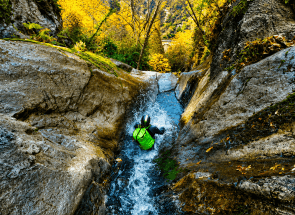
Thermal water canyoning is a unique type of canyoning that combines the classic elements of canyon descents with the presence of naturally heated thermal springs.
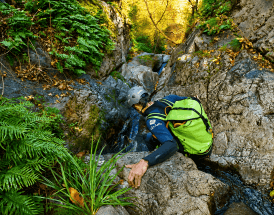
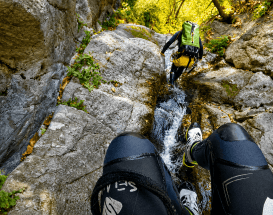
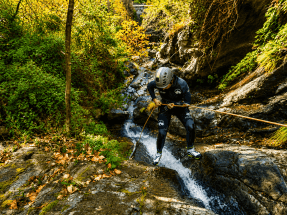
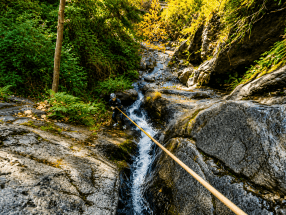
Like any canyoning route, the activity may include hiking through the riverbed, abseiling, downclimbing, pools, natural slides and, when conditions allow, optional jumps. The key difference is that certain sections of the canyon are fed by underground thermal springs.
This turns a thermal canyon into a completely different experience. Instead of associating canyoning only with cold water and summer conditions, you may find yourself exploring a spectacular mountain gorge where some pools and sections are naturally warmed.
The contrast between the cool mountain air and the thermal springs is one of the main reasons why this activity is so special.
What are thermal canyons like?
Thermal canyons are extremely rare because they require very specific geological conditions.
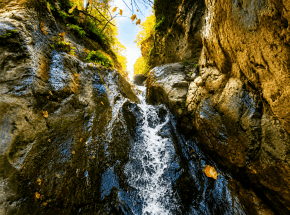
Water seeps through cracks in the rock, circulates underground, heats up naturally and eventually returns to the surface. When these thermal springs emerge inside a gorge suitable for canyoning, they create an exceptional combination of adventure and naturally warm water.
That doesn’t mean the entire canyon is like a giant hot spring.
Usually, some sections contain cooler stream water while others are warmed by thermal springs or by the mixing of different water sources. This constant change in temperature is exactly what makes the experience so unique.
A thermal water canyon is still a natural environment subject to change. Water flow, rainfall, snowmelt and outside temperatures can significantly alter the conditions from one day to another.
Thermal canyoning in the Pyrenees
Finding a thermal canyon in the Pyrenees means experiencing two elements that rarely come together: a true high-mountain environment and naturally warm water.
The Pyrenees have a remarkably complex geology, with fault lines, underground water circulation and numerous thermal springs. Wherever these features coincide with accessible mountain gorges, they create outstanding canyoning routes.
The result is an ideal activity for anyone who wants to discover a different side of the Pyrenees.
It’s not only about adrenaline. The real appeal also lies in stopping to admire the rock formations, feeling the water temperature change naturally and enjoying mountain scenery that often looks spectacular even during winter.
Hot Water Canyoning
Hot water canyoning does not change the technical fundamentals of canyoning.
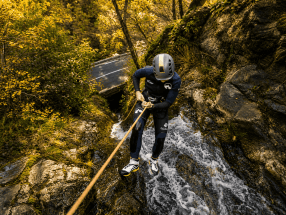
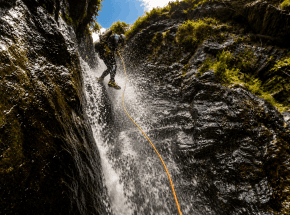
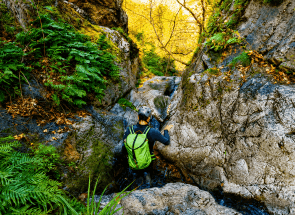
You still progress through a natural watercourse using the appropriate techniques to overcome each obstacle. Depending on the route, there may be abseils, slippery rock sections, swimming areas and passages that require extra attention.
The comfortable water temperature adds to the experience, but it does not eliminate the natural risks associated with canyoning.
Thermal springs may reach temperatures significantly higher than the surrounding water. For this reason, you should never remain directly above the point where the hot water emerges or assume that every thermal pool is suitable for bathing.
The experience is about enjoying the natural balance between the stream and the thermal springs while always following the guide’s instructions.
Winter Canyoning in Warm Water
One of the greatest advantages of this activity is the opportunity to enjoy winter canyoning in warm water.
During the colder months, many traditional canyoning routes become less appealing for people who are not used to icy water. Thermal canyons, however, offer a completely different experience.
Imagine entering a mountain gorge on a cold winter day and discovering sections where the water becomes pleasantly warm thanks to natural thermal springs.
That does not mean you can forget about winter conditions. The approach hike, the moments spent outside the water and the time after the activity all take place in a mountain environment.
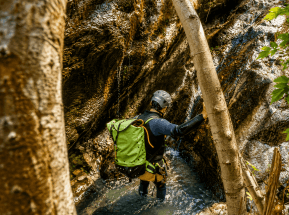
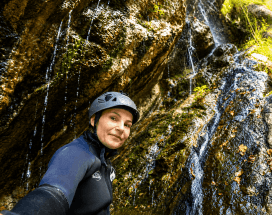
For this reason, we always use neoprene suits and recommend bringing warm clothing to wear before and after the descent.
How Difficult is a Thermal Canyon?
There is no single difficulty level that applies to all thermal canyons.
Some routes are perfect for beginners, while others require advanced technical skills. Difficulty depends on factors such as vertical sections, route length, abseils, water flow, temperature, escape options and the overall shape of the canyon.
If you want to try thermal water canyoning for the first time, choosing an introductory or moderate-level descent is the best option.
A professional guide will evaluate the group’s previous experience and recommend the most suitable route so that the day is both enjoyable and safe.
It is also important to remember that the same canyon can change considerably after heavy rain or during periods of high water flow.
Thermal Canyoning for Families and Children
Thermal canyoning can be a fantastic family adventure, provided that the route is suitable for all participants.
Children usually enjoy the pools, natural slides and the feeling of exploring a real mountain gorge.
The warmer water can also make the experience more comfortable than many traditional canyoning routes.
However, there is no universal minimum age.
The appropriate age depends on the specific canyon, the conditions on the day, the size and safety of the obstacles, the child’s confidence in the water and their overall physical ability.
As a general guideline, some beginner-friendly routes may be suitable for children from around 8–10 years old, although every activity should be assessed individually.
What Equipment Do You Need?
Even if you are canyoning in naturally warm water, you will need almost the same technical equipment as for any other canyon descent.
The standard equipment includes:
- Neoprene wetsuit.
- Helmet.
- Canyoning harness.
- Abseiling and safety equipment.
- Footwear with good grip.
On guided trips, all the necessary technical equipment is provided by the company.
Normally, you only need to bring:
- Swimsuit.
- Sports shoes or hiking boots.
- Towel.
- A complete change of clothes.
- Water.
- Warm clothing during winter.
What Is the Best Time for Thermal Water Canyoning?
One of the main advantages of thermal canyons is that they significantly extend the traditional canyoning season.
Autumn, winter and early spring are particularly attractive thanks to the contrast between the cool mountain air and the naturally warm water.
However, the best season always depends on the specific canyon.
Heavy rainfall can increase the water flow considerably, while other natural factors may affect both the thermal springs and the overall canyon conditions.
For this reason, before planning any winter canyoning in warm water activity, it is essential to check the weather forecast and the actual conditions of the canyon.
Why Go Thermal Canyoning with a Guide?
Although the warm water may make the canyon seem less demanding, you are still moving through a natural mountain gorge.
A professional guide knows the access routes, installed anchors, water flow behaviour, escape points and the locations of the thermal springs.
They also know how to adapt the pace of the descent and the technical sections to the experience level of the participants.
This is particularly important around the thermal springs, where the water may emerge at much higher temperatures before mixing with the stream.
For this reason, we always recommend exploring any thermal canyon in the Pyrenees with experienced local guides, especially if it is your first time visiting the area.
The goal is not simply to complete the descent, but to enjoy it safely while experiencing one of the most unique natural environments found in the mountains.
Frequently Asked Questions About Thermal Water Canyoning
What is a thermal canyon?
A thermal canyon is a canyon where natural hot springs flow into the stream. The descent still includes classic canyoning techniques such as abseiling, scrambling, swimming and moving through the riverbed.
Is the water warm throughout the entire canyon?
Not necessarily. Most thermal canyons have cooler sections and other areas where hot springs significantly increase the water temperature.
Can you go thermal canyoning in winter?
Yes. In fact, winter canyoning in warm water is one of the biggest attractions of thermal canyons, provided that weather conditions and water levels are suitable.
Are thermal canyons suitable for beginners?
It depends on the route. Some thermal canyons are ideal for beginners, while others require previous canyoning experience. Choosing a route that matches your group’s ability is the key to enjoying the activity safely.
Can children take part in thermal canyoning?
Yes, on certain beginner-friendly routes. The minimum recommended age depends on the difficulty of the canyon, current conditions and the child’s confidence and abilities. Some introductory descents may be suitable from approximately 8–10 years old.