 ENG
 Español
 ENG
 CAT

Estany de Montcortès: the most unique karst lake in Pallars
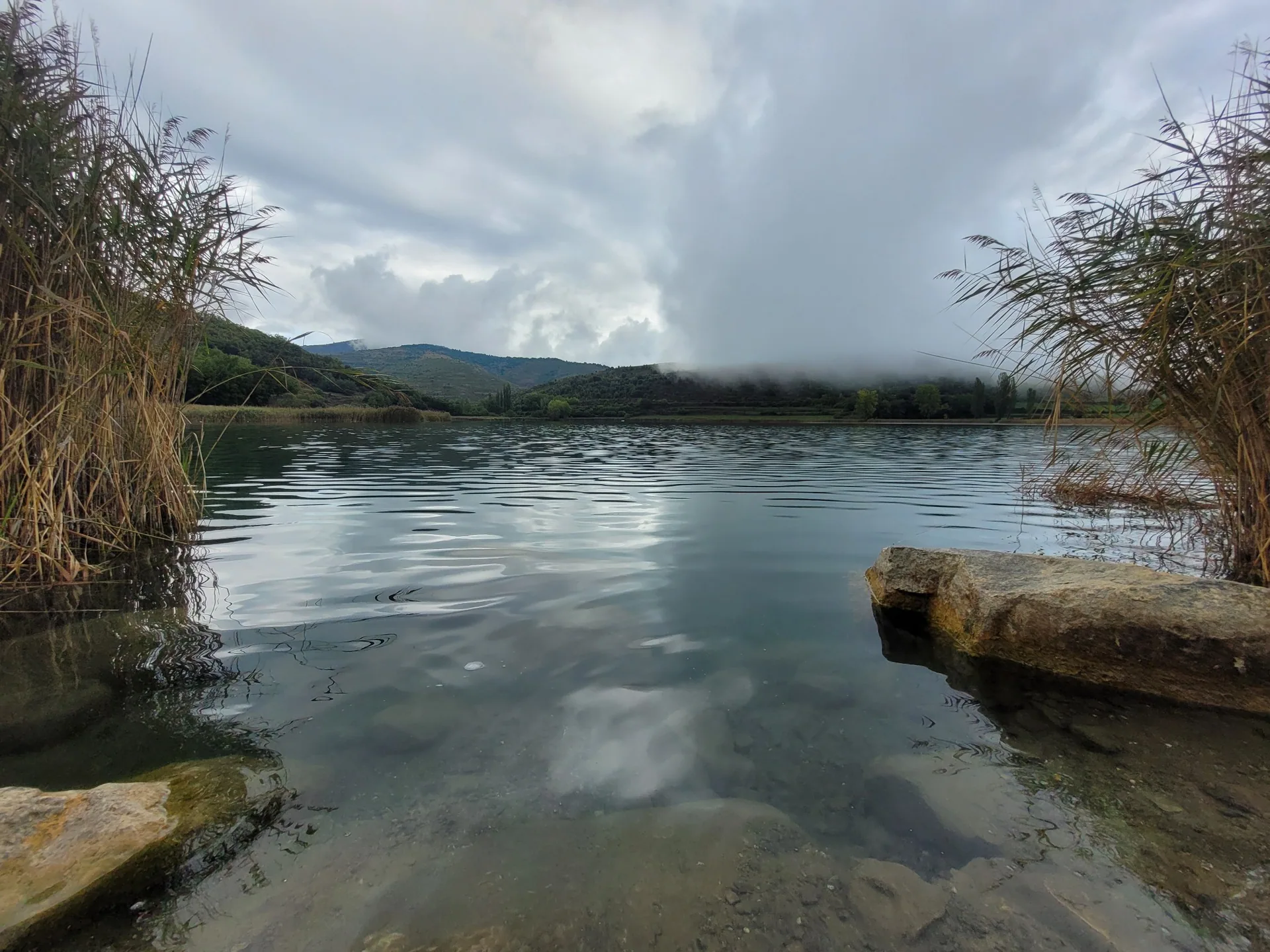
In brief:
- Where Estany de Montcortès is: in Baix Pallars, Pallars Sobirà, between Montcortès, Peramea, Gerri de la Sal and the access towards Vall Fosca.
- What makes it different: it is not a glacial lake but a karst lake, fed mainly by groundwater.
- Altitude: around 1,000–1,065 metres.
- Depth: approximately 30–32 metres.
- Why it matters: it is a protected natural area, a biodiversity refuge and an exceptional natural archive preserving thousands of years of environmental history.
- What to do: walk beside the lake, watch birds, explore the Pla de Corts and combine the visit with Peramea, Gerri de la Sal, Vall Fosca or a hiking route.
At first glance, Estany de Montcortès looks like a small, peaceful lake surrounded by meadows, reed beds and mountains.
But what you see on the surface is only one part of its story.
Unlike most of the major Pyrenean lakes, Montcortès was not carved out by a glacier. Its origins lie underground: over time, water dissolved the rock and created a complex karst system that eventually formed the depression occupied by the lake today.
There is also no clearly visible river feeding it. Much of its water comes from underground.
This combination has made Montcortès one of the most unusual natural areas in the Catalan Pre-Pyrenees and, at the same time, a place surrounded by legends of submerged towns, apparitions and waters believed to possess special powers.
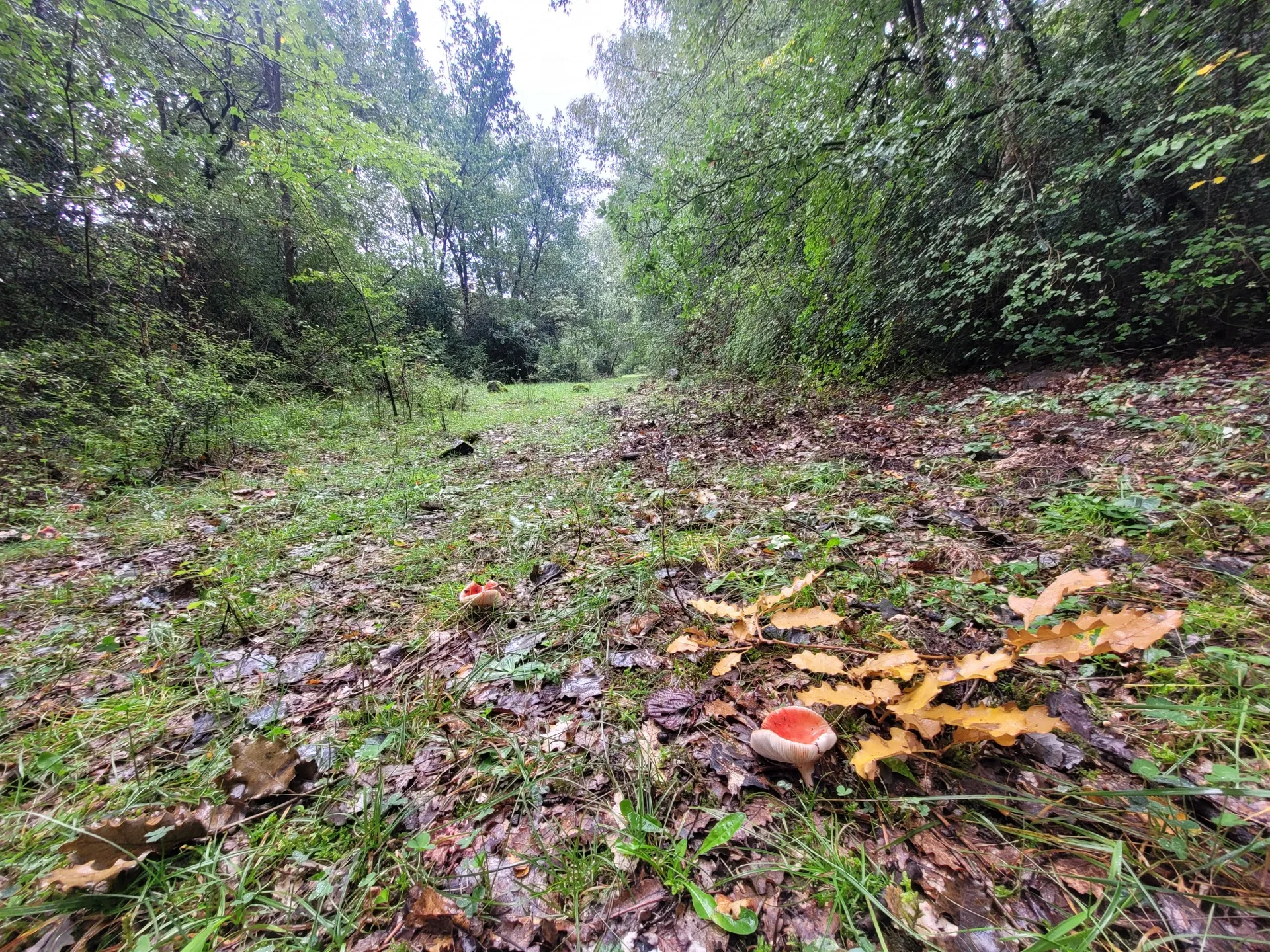
Mushrooms near Estany de Montcortès
Where Estany de Montcortès is
Estany de Montcortès is located in the municipality of Baix Pallars, in Pallars Sobirà, within the open landscape of the Pla de Corts.
It lies west of the small village of Montcortès and relatively close to Peramea and Gerri de la Sal.
Its location also makes it an excellent place to include in a wider trip through the Pallars: to the west are La Pobleta de Bellveí and the entrance to Vall Fosca, while to the east the road descends towards Gerri de la Sal and the Noguera Pallaresa valley.
The lake lies at roughly 1,000 metres above sea level — the Baix Pallars Town Council gives an altitude of 1,065 m — considerably lower than most high-mountain lakes in the Pyrenees.
This helps explain its appearance: instead of bare rock and alpine terrain, you find meadows, farmland, reed beds, forests and small villages.
If you are exploring this part of the Pallars, you can combine the visit with our guide to Vall Fosca or with our ideas on what to do in La Pobla de Segur and the surrounding area.
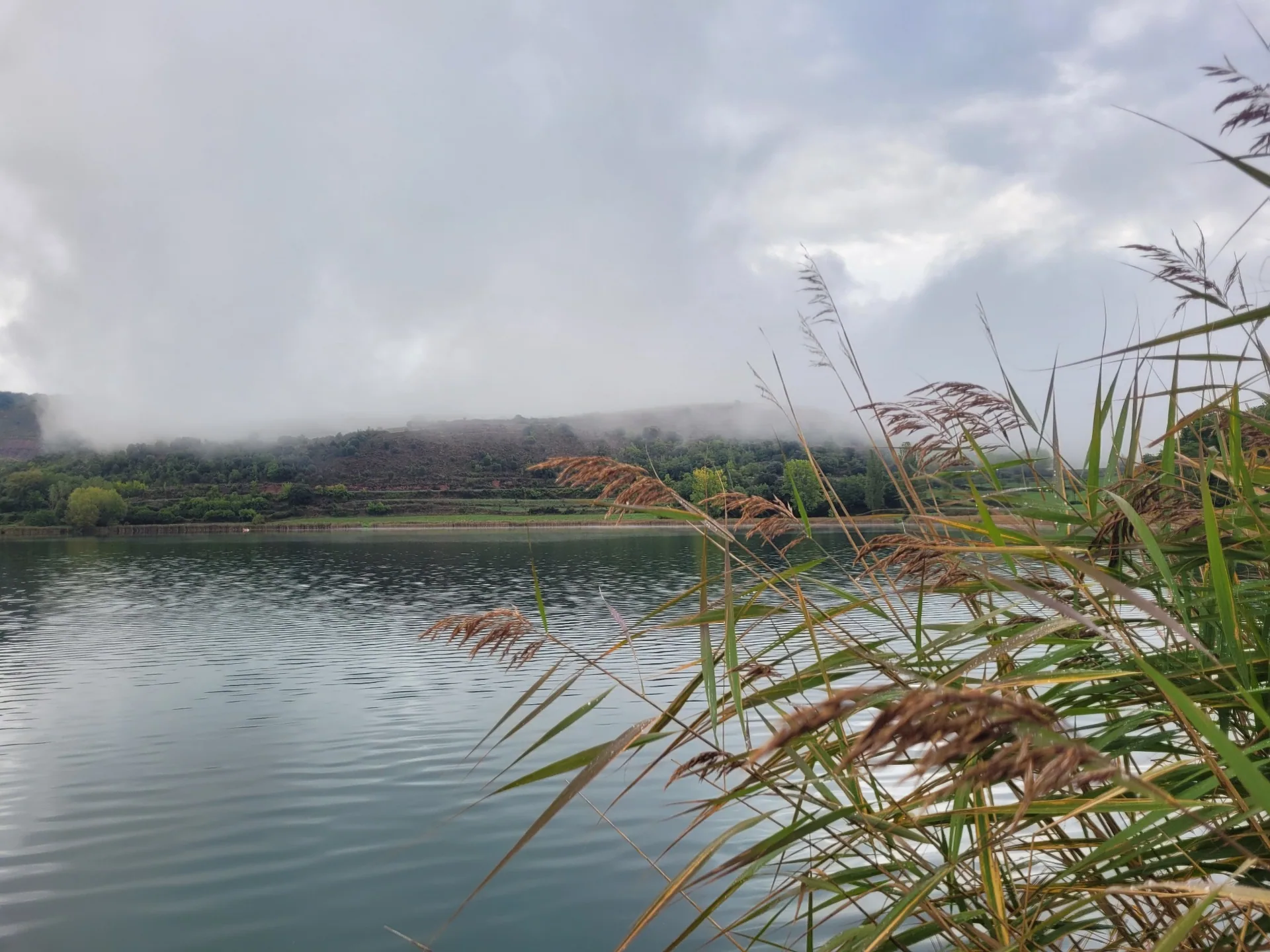
Mist over Estany de Montcortès
Why Montcortès is different from other lakes in the Pyrenees
When we think of a Pyrenean lake, we often imagine a basin carved out by ancient glaciers.
That is exactly what happened with many of the lakes in Aigüestortes i Estany de Sant Maurici National Park.
Montcortès is different.
It is a karst lake. Rocks such as limestone, dolomite and gypsum occur in this area and can slowly be dissolved by water. Over time, underground cavities and channels form, and collapses can create depressions in the landscape. The Montcortès basin is directly related to this process.
The lake is approximately circular, measuring around 525 metres long and 450 metres wide. Studies place its maximum depth at around 30–32 metres.
But perhaps the feature that most surprises visitors is something else:
where does all that water come from?
The lake is fed mainly by groundwater through the karst system. There is no large river flowing into it, and only during periods of rain may small temporary surface streams appear.
The lack of an obvious visible source is probably one of the reasons why Montcortès gave rise to so many stories and legends.
| Estany de Montcortès | Many high-mountain lakes |
|---|---|
| Karst origin | Glacial origin |
| Fed mainly by groundwater | Fed by snowmelt and surface streams |
| Around 1,000 m above sea level | Often above 2,000 m |
| Meadows, reed beds and rural landscape | Alpine and subalpine landscape |
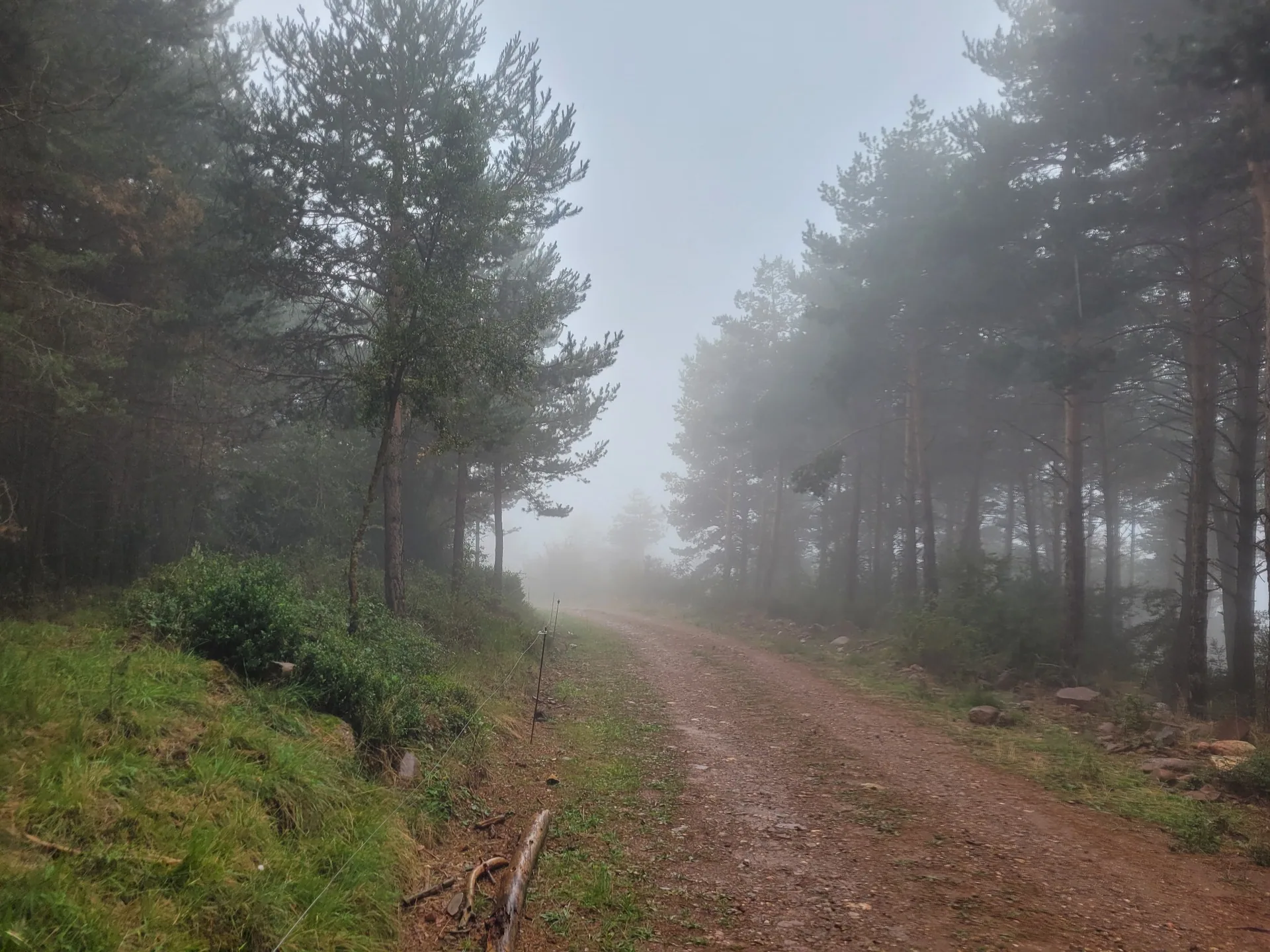
Pine forest in the mist near Estany de Montcortès
A natural archive thousands of years old
Montcortès is not remarkable only because of its geological origin.
The lake bed functions almost like a natural archive.
Sediments have accumulated in layers and, thanks to the characteristics of the water and lake bed, many of these laminations have been preserved with exceptional precision.
Researchers have used these sediments to reconstruct changes in climate, vegetation and human activity in the surrounding area over thousands of years. Some studies examine sedimentary evolution over the past 6,000–7,600 years, while the laminated records provide particularly detailed information for the most recent millennia.
In other words, beneath the water lies evidence of fires, rainfall, vegetation, agriculture and human transformation of the landscape.
That makes this small lake in the Pallars an extraordinary scientific source for understanding how the Pre-Pyrenean environment has changed through history.
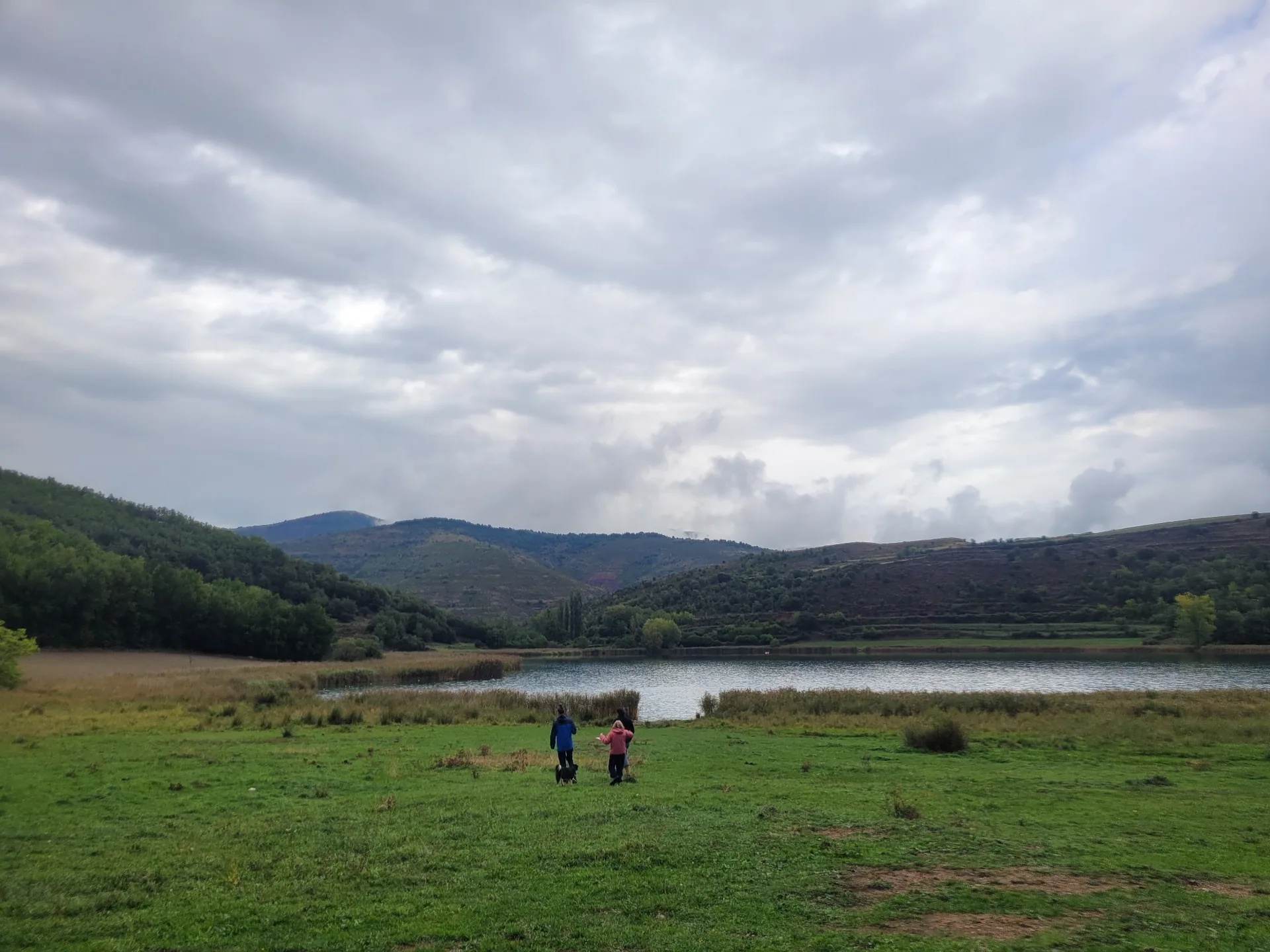
Meadow beside Estany de Montcortès
Biodiversity and protection of Estany de Montcortès
The lake and its surroundings are also of considerable biological importance.
Montcortès is included in the PEIN network of protected natural areas and in Natura 2000 as site ES5130019. Its definitive boundary within Catalonia’s protected natural-area system was also included in a Generalitat resolution approved in May 2026.
The reed beds surrounding much of the lake are more than just a landscape feature.
They provide shelter and breeding habitat for different species. Wetland birds found in the area include the little grebe, Eurasian coot and great reed warbler. The wider Pla de Corts also supports a notable diversity of birds of prey, including red kite, Egyptian vulture, griffon vulture and bearded vulture.
Its ecological importance continues below the surface.
Environmental documentation from the Generalitat highlights the diversity of aquatic and riparian communities, as well as several particularly valuable species. These include Nitellopsis obtusa, a stonewort that, after disappearing from the Estanys de Basturs, made Montcortès an especially important site in Catalonia. The gastropod Lymnaea stagnalis and a population of native freshwater crayfish have also been recorded.
So although Montcortès may look like an ideal place simply to sit beside the water, it is in fact a sensitive and protected ecosystem.
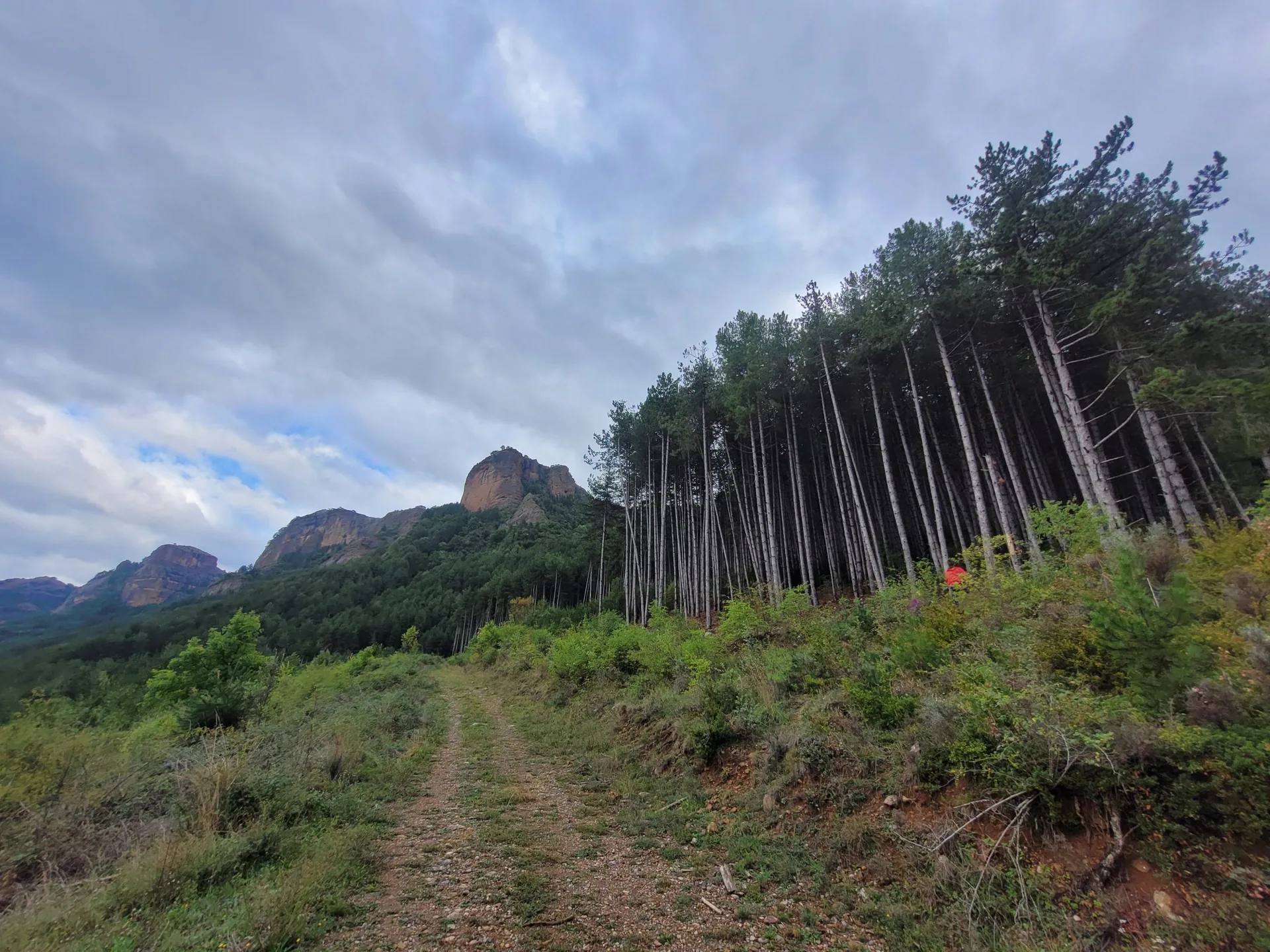
Trail through the pine forest near Estany de Montcortès
Legends and mysteries of Estany de Montcortès
A deep lake with no visible river to explain where its water comes from, surrounded for centuries by small rural communities, was a perfect setting for stories.
And Montcortès has quite a few.
The submerged city of Pallars
One of the best-known legends says that an ancient city called Pallars once stood beneath the waters.
According to tradition, the city was rich and prosperous. One day a beggar appeared asking for food and shelter, but its inhabitants refused to help him.
Only one woman took pity on him and offered him bread.
The beggar turned out to be God in disguise. As punishment for the city’s lack of hospitality, he caused the waters to engulf it, sparing only the woman who had helped him.
Some versions add that the voices of the former inhabitants can still be heard, or that the woman can sometimes be seen walking near the lake.
You do not have to believe the legend to understand how it might have arisen.
For people unfamiliar with karst geology, a deep lake fed by water that seemed to emerge from nowhere underground must have felt genuinely mysterious.
The woman who crossed the frozen lake
In the 19th century, Jacint Verdaguer recorded another story associated with Montcortès.
A woman attempted to cross the frozen lake while carrying a load on her head. People on the shore warned her not to turn around.
She looked back, the ice broke and she fell into the water.
According to the tradition recorded by Verdaguer, the woman reappears on the night of Sant Joan, walking across the lake.
Lake water to bring rain
Peramea also had a tradition directly connected with the water.
According to local memory, when rain was needed, the relics of the Sants Innocents were carried to the lake and immersed in its waters in the hope of bringing rainfall.
These different legends and rituals share the same underlying idea: for centuries Montcortès was not simply a geographical feature. It was a place charged with meaning for the communities living around it.
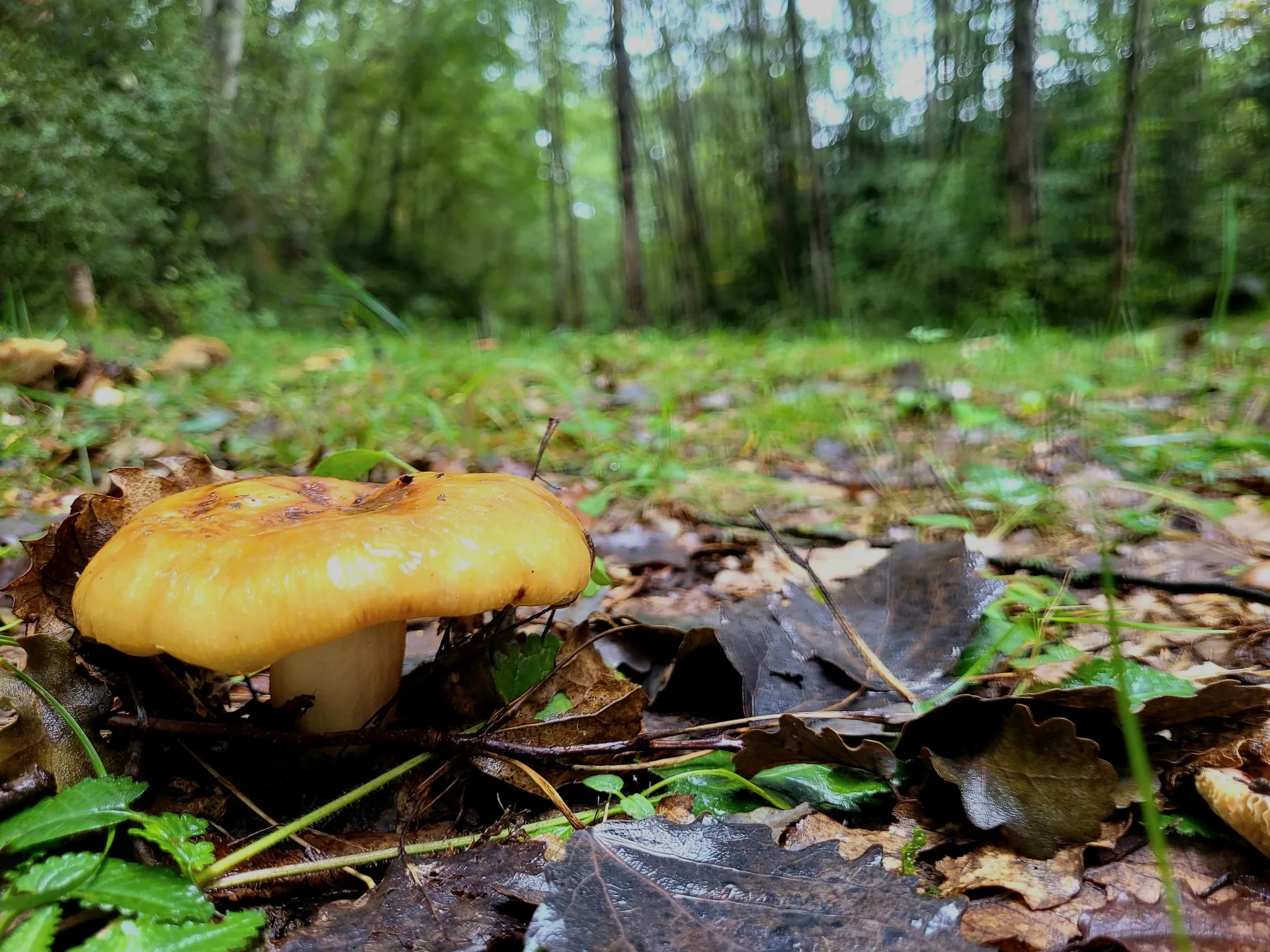
Yellow mushroom near Estany de Montcortès
What to do at Estany de Montcortès
You do not need to plan a major activity to enjoy Montcortès.
A simple visit allows you to:
- walk around the surroundings of the lake;
- observe the reed-bed vegetation and birdlife;
- photograph the landscapes of the Pla de Corts;
- stop here before continuing towards Peramea, Gerri de la Sal or Vall Fosca;
- include the lake in a longer hiking route.
The official Geganta Adormida route mentions an area beside the lake equipped for resting, eating and swimming. As this is a protected natural area with specific regulations, we recommend always checking current signs and rules before your visit.
Would you like to discover this area on foot?
At MundoCanyon we can prepare a route through the Pallars adapted to your level, the time available and the type of landscape you would like to explore.
Geganta Adormida route: Peramea – Montcortès
One of the best ways to discover the lake without simply arriving by car is to follow the Geganta Adormida route.
It is a circular itinerary through the Pla de Corts linking:
Peramea – Cortscastell – Montcortès – Bretui – Masia d’Enjaume – Peramea.
The Pallars Sobirà tourist office gives a distance of around 12.3 km, approximately 3 hours and 30 minutes and around 200 metres of elevation gain, with an easy difficulty rating.
The route helps you understand the landscape around the lake much better.
You are not simply walking towards Montcortès: the itinerary passes through villages, old paths, farmland and historic elements of the Pla de Corts.
Points of interest include the enclosed medieval village of Peramea, the church of Sant Cristòfol, the Roca del Castell, the Torre dels Colomers, the Dolmen de la Mosquera and the church of Santa Anna de Cortscastell.
It is a good option in spring and autumn, as well as on summer days when the hottest hours can be avoided.
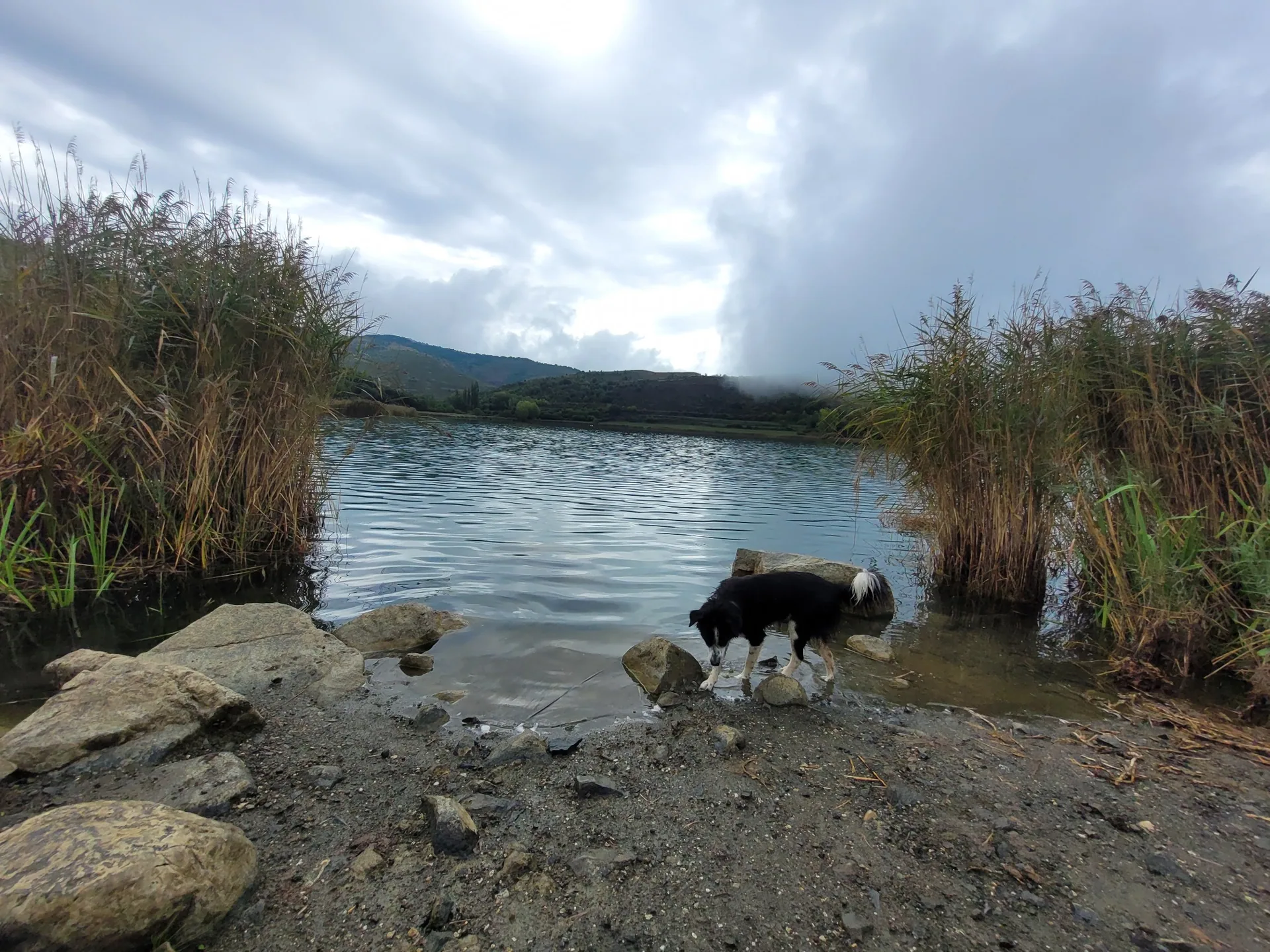
A dog on the shore of Estany de Montcortès
What to see around Estany de Montcortès
Montcortès becomes much more interesting when it is no longer treated as an isolated point on the map.
Peramea
Peramea is one of the most worthwhile nearby visits.
Its vila closa, or enclosed medieval settlement, preserves the structure of a historic village and forms part of the most interesting cultural heritage in Baix Pallars.
You can visit the church of Sant Cristòfol, the Torre dels Colomers, the Roca del Castell and the large tree in the main square, as well as use the village as the starting point for the Geganta Adormida route.
Gerri de la Sal
Further down, beside the Noguera Pallaresa, lies Gerri de la Sal.
Its history is closely linked to salt production, and it preserves a historic and architectural heritage very different from the rural landscape of the Pla de Corts.
Combining Gerri, Peramea and Montcortès makes it easy to plan a full day without long drives.
Vall Fosca
To the west, the landscape gradually connects with La Pobleta de Bellveí and Vall Fosca.
It is an especially interesting combination because over a short distance you can compare two completely different types of lake landscape: the karst lake of Montcortès and the glacial high-mountain lakes at the head of Vall Fosca.
See our complete guide to Vall Fosca for Estany Gento, villages, routes, canyons and activities in the area.
La Pobla de Segur and Collegats
If you continue south, La Pobla de Segur is an excellent base for exploring the Pallars.
Our guide to what to do in La Pobla de Segur brings together routes, villages and nearby natural areas.
From here you can also head towards Collegats and the Boumort Reserve, or discover some of the abandoned villages of Catalonia, such as Herba Savina.
Montcortès as part of an active trip through the Pallars
The lake itself may take only a few hours to visit, but its location makes it very easy to combine with other activities.
If you prefer walking, we can choose a route from our hiking options in the Pyrenees.
For a more active day, you can choose canyoning, a via ferrata or explore the area underground with a caving activity.
For families and groups, we can also organise an orienteering activity with a map, compass and checkpoints.
And when winter arrives, our snowshoe routes allow you to discover other areas of the Pallars under completely different conditions.
The best time to visit Estany de Montcortès
Montcortès can be visited throughout the year, but each season gives the landscape a different character.
Spring
This is one of the best times to enjoy the green surroundings, meadows and bird activity.
It is also a very pleasant season for walking through the Pla de Corts.
Summer
Summer makes it easy to combine the lake with hiking routes, villages and a relaxed day beside the water.
On hot days, it is best to avoid the middle of the day if you plan to complete the full route from Peramea.
Autumn
The landscape takes on different colours and there are usually fewer visitors.
It is an excellent season for combining Montcortès with village walks and other parts of the Pallars.
Winter
The atmosphere is much quieter and the surrounding mountains may be covered in snow.
During cold spells, the lake can look completely different, although you should not assume that it will necessarily be frozen.
Are you spending several days in the Pallars?
Tell us what kind of experience you are looking for and we can combine hiking, canyoning, orienteering, via ferratas or winter activities according to the season and the group’s level.
Frequently asked questions about Estany de Montcortès
Where is Estany de Montcortès?
The lake is in the municipality of Baix Pallars, in the Pallars Sobirà region, near Montcortès, Peramea and Gerri de la Sal.
Why is Estany de Montcortès not a glacial lake?
Because its basin is of karst origin. Over long periods, water dissolved soluble rocks underground, and collapses associated with this karst system created the depression occupied by the lake.
Where does the water in the lake come from?
The lake is fed mainly by groundwater through the karst system. There is no large visible river flowing permanently into it.
How deep is Estany de Montcortès?
Different sources place its maximum depth at around 30–32 metres.
Can you swim in Estany de Montcortès?
The official Geganta Adormida route mentions an area beside the lake where visitors can rest, eat and swim. As this is a protected area, we recommend always checking current signs and regulations at the time of your visit.
What hiking route can you do around Montcortès?
One of the most interesting is the circular Geganta Adormida route from Peramea, which passes through Cortscastell, Montcortès and Bretui. It is around 12.3 km long with approximately 200 metres of elevation gain.
What legends are associated with the lake?
The best known tells of an ancient city called Pallars that was supposedly submerged as punishment after its inhabitants refused to help a beggar. There are also stories of a woman who disappeared beneath the ice and old traditions from Peramea involving rituals to ask for rain.
What can you see near Estany de Montcortès?
Peramea, Gerri de la Sal and the villages of the Pla de Corts are all nearby. The visit can also be combined with Vall Fosca, La Pobla de Segur, Collegats and other parts of the Pallars.