 ENG
ENG  Español
 ENG
ENG CAT
CAT
What to do in La Pobla de Segur: guide to activities and excursions
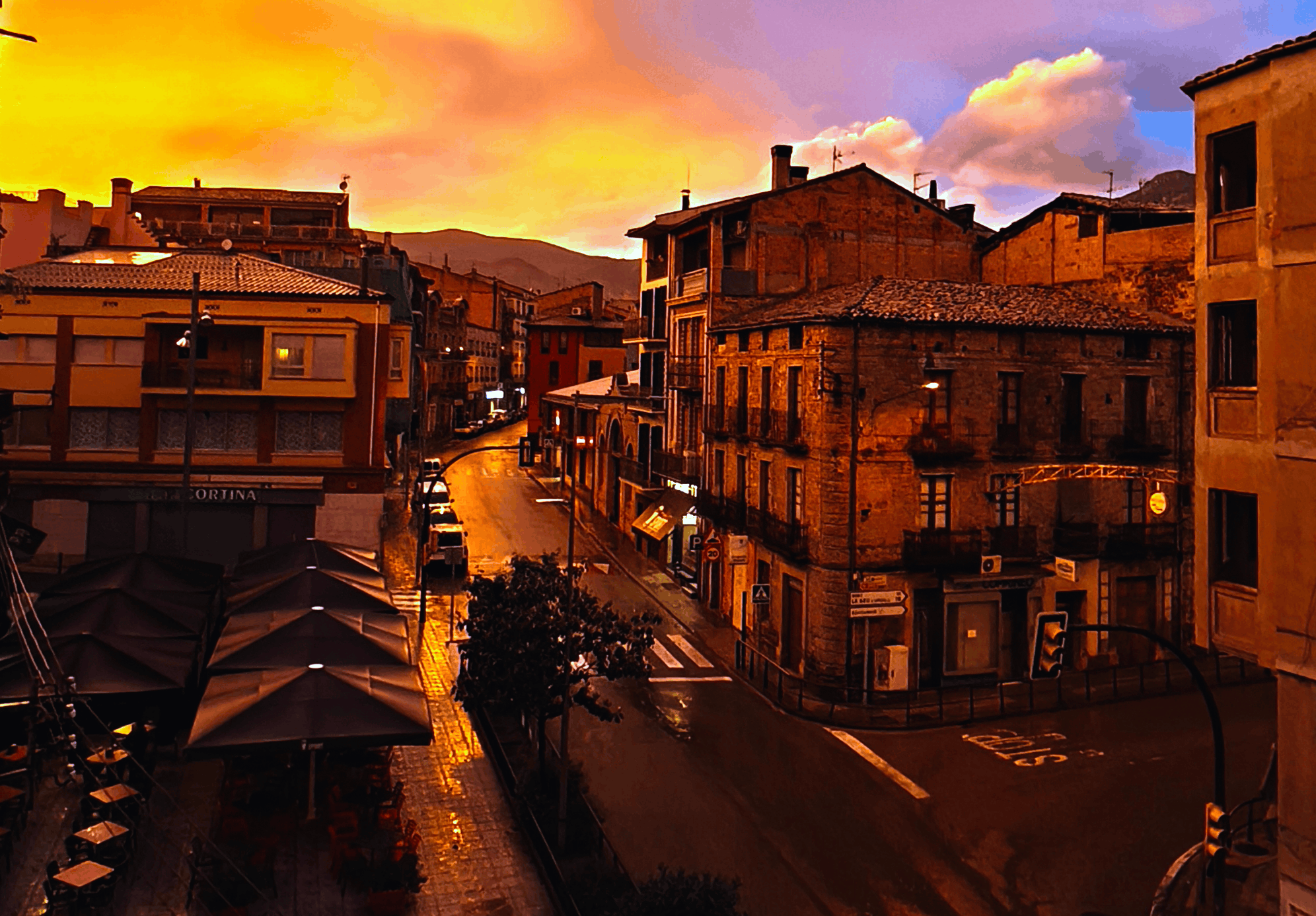
La Pobla de Segur is a wonderful base for discovering Pallars Jussà and the Lleida Pre-Pyrenees. In town you can wander historic streets, discover the traditional timber-rafting trade and stroll beside Sant Antoni Reservoir. Close by, Romanesque chapels, spectacular gorges, abandoned villages and mountain trails are waiting to be explored. This guide brings together the original 25 suggestions, along with additional year-round adventure ideas, to help you plan everything from gentle family outings to active holidays.
Things to see and do in La Pobla de Segur without a car
La Pobla de Segur does not need grand monuments to win visitors over. Its appeal lies in quiet streets, historic buildings, the surrounding scenery and the unhurried atmosphere of a Pyrenean town. Many of its attractions are within the town centre or an easy walk away.
Explore the historic town centre
To understand La Pobla de Segur, we need to go back to a time before the town existed in its present location. Between the 10th and 11th centuries, people lived in small settlements in the nearby mountains. One was Esplugues de Segur, documented as early as 976–978, where inhabitants made use of natural rock shelters. Another settlement later developed around the church of Sant Miquel del Pui.
In 1268, Pere, Viscount of Vilamur, granted a charter encouraging people to establish a new town beside the river. This was the beginning of La Pobla de Segur, which would become an important trading centre for the area.
You can still discover traces of this history on a walk through the old quarter. Start on Carrer Major, explore the surrounding lanes and look out for traditional houses, former town gateways and squares that preserve elements of the medieval street plan. Highlights include:
- The church of Mare de Déu de Ribera, dedicated to the town’s patron saint.
- Carrer Major, one of the historic streets of La Pobla.
- Former gateways, including Orteu and Parrau.
- Stone-fronted houses and historic residences that recall the town’s commercial past.
Tip: Allow 45–90 minutes for a leisurely wander. It is an excellent family activity, although some streets are sloping and have uneven paving.
Admire Casa Mauri and the old olive oil mill
One of La Pobla de Segur’s most distinctive buildings is Casa Mauri, an Art Nouveau-style property built in the early 20th century. Completed in 1907 and now home to the town hall, it stands out for its decorative details, modernist influences and craftsmanship.
Casa Mauri evokes a period of economic and social change, when industry, trade and new infrastructure began to reshape life in Pallars. Beside it stands the old Molí de l’Oli de Sant Josep, a building associated with traditional olive oil production.
Together, the two buildings offer a glimpse of very different aspects of local heritage: modernist architecture on one hand and the agricultural and industrial economy on the other. Both are worth admiring from outside; check current access arrangements if you would like to visit their interiors.
Discover the traditional timber-rafting trade at Espai Raier
Before reservoirs and modern roads, Pyrenean rivers were essential transport routes. For generations, raiers floated timber from the mountains towards the lowlands on large rafts built from logs.
It was demanding, dangerous work: the rafters needed to steer their wooden platforms through strong currents, avoid obstacles and know every stretch of the river. In La Pobla de Segur, this trade remains an important part of local identity.
Espai Raier, near the railway station, introduces visitors to the tradition and explains why river transport was once so important to the Pyrenean economy. The construction of Sant Antoni Reservoir and improvements in transport helped bring commercial rafting to an end, but the tradition survives through the annual Diada dels Raiers festival.
It is particularly worthwhile for families and anyone interested in the region’s old trades.
Enjoy a walk by Sant Antoni Reservoir
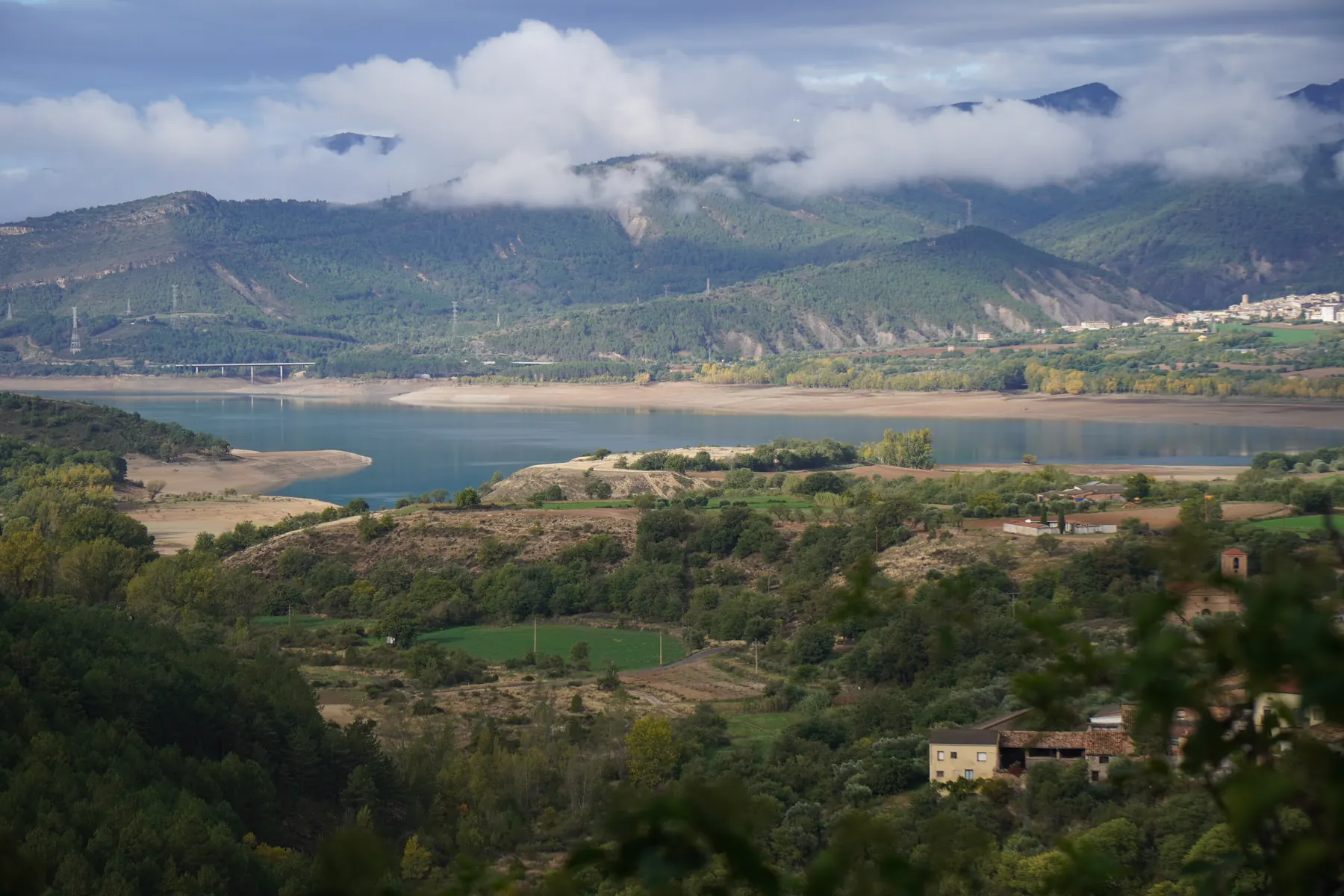
Sant Antoni Reservoir is one of the most characteristic landscapes of Pallars Jussà, surrounded by mountains and popular for waterside walks and outdoor activities.
There is more to La Pobla than mountains. Water is just as central to its landscape. Sant Antoni Reservoir, fed by the Noguera Pallaresa and other rivers, stretches south of the town and creates beautiful scenery, especially when water levels are high.
From La Pobla, you can reach paths and viewpoints around the reservoir, stroll through green areas and admire the surrounding hills. For a longer outing, head towards Salàs de Pallars for different perspectives over the water.
In the warmer months, authorised access areas may be suitable for kayaking or stand-up paddleboarding, depending on the weather and water levels.
Important: Not every stretch of shoreline is suitable for swimming or entering the water. Use designated access points and check the conditions before setting out.
Try local craft beer at CTretze Pirineus
After a day of hiking, few things sound better than a cold drink and something good to eat. CTretze Pirineus is a local craft brewery whose beers are closely connected with the identity and products of Pallars.
The project was founded by local entrepreneurs who wanted to create a beer rooted in their home region. Alongside brewing, CTretze has a food and cultural space hosting concerts, exhibitions and other events.
Visitors can see the brewing facilities through glass panels from the cultural space, although guided brewery tours are not currently offered. It is a great place to end the day, sample different beers and soak up the local atmosphere.
Check the latest programme and opening times on the CTretze Pirineus website.
Discover traditional liqueurs at Licors Portet
For an authentic Pallars souvenir, look beyond the usual gifts and discover the region’s traditional liqueurs. Licors Portet is a long-established family business producing drinks rooted in mountain traditions.
Its best-known products include Ratafia dels Raiers, a traditional liqueur made with green walnuts, aromatic herbs and other ingredients associated with the flavours of the region. Ratafia is part of Catalan food culture, with particularly strong roots in mountain areas.
Licors Portet also organises pre-booked guided visits, offering an opportunity to learn about production and see its historic facilities. To arrange a visit, check the Licors Portet website. Alcohol tastings are for adults only.
See La Pobla de Segur from its viewpoints
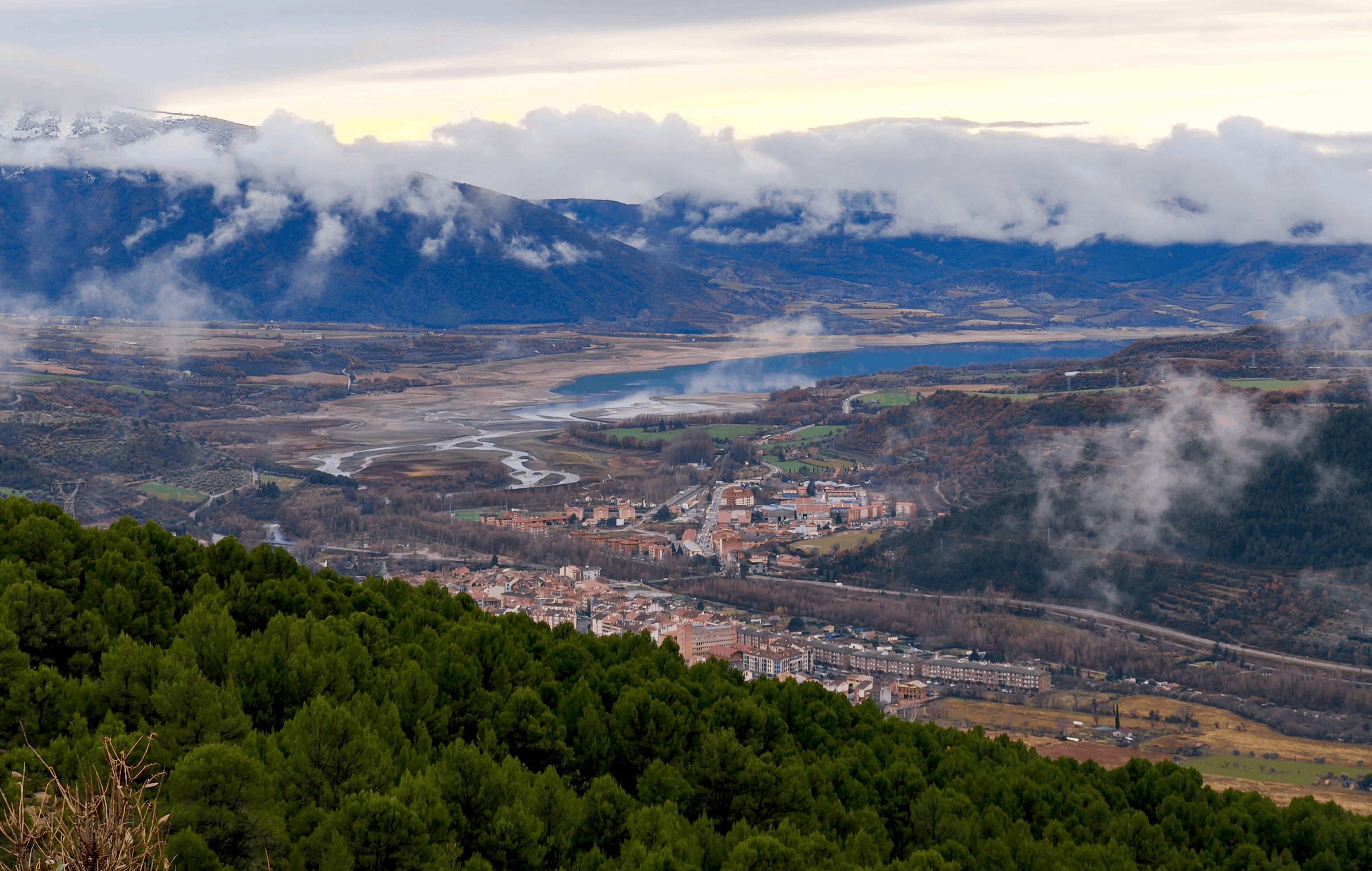
Sometimes the best way to appreciate a place is to see it from above. Several natural viewpoints around La Pobla overlook the town, Sant Antoni Reservoir and the Boumort mountains.
Among the best known are Santa Magdalena and Sant Miquel viewpoint, close to the chapel of the same name. Both are attractive stops for photographers and visitors who prefer a gentle outdoor experience.
On clear nights, the Sant Miquel area can also be a lovely place to look at the stars, away from the brightest lights of the town centre.
Hiking routes and nature around La Pobla de Segur
La Pobla de Segur is ideally located for walking and hiking. Just a few kilometres away are rocky ridges, old mountain tracks, Romanesque chapels, abandoned villages and gorges revealing the history and geology of Pallars. Some walks are manageable for regular walkers; others call for good fitness, experience or a professional guide.
Climb Roca Foradada: hiking or via ferrata
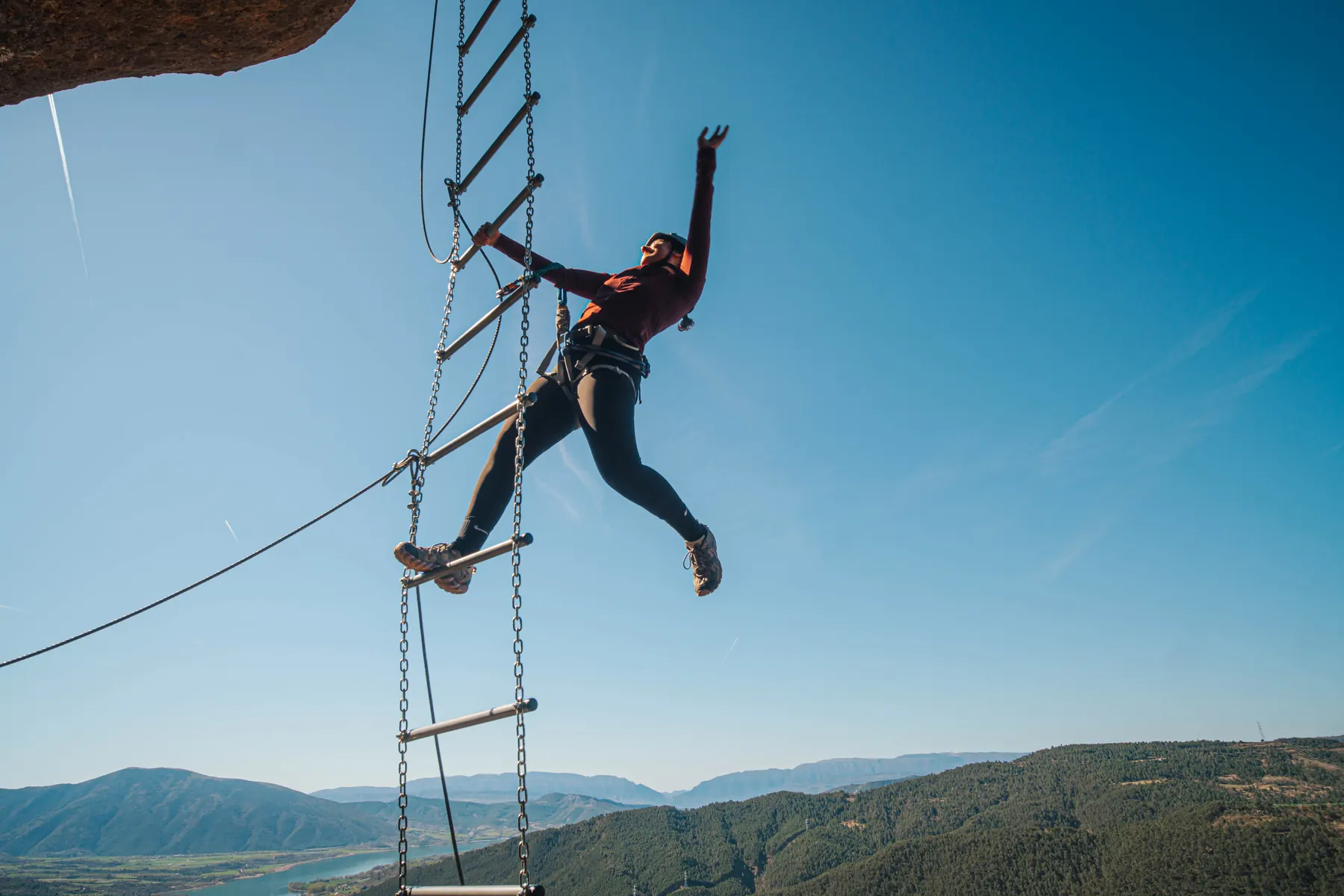
A participant tackles an exposed section of Roca Foradada via ferrata, combining climbing, suspension bridges and panoramic views over Sant Antoni Reservoir.
Roca Foradada is one of La Pobla de Segur’s most recognisable natural landmarks. Its rocky profile dominates the skyline, with remarkable views of Sant Antoni Reservoir, the Boumort mountains and the surrounding valleys.
There are two ways to experience the area: hiking along nearby mountain paths or tackling the equipped via ferrata route on the rock face.
Roca Foradada via ferrata
If you enjoy adventure, this is one of the most exciting activities close to La Pobla. The route combines vertical and horizontal movement across rock, iron rungs, exposed sections and Nepalese bridges. It offers variants graded K2, K3, K4 and K5, so choosing a route suited to your experience is essential.
On the climb, you can look down towards the historic Pui de Segur settlement, Sant Miquel’s Romanesque chapel and the wider Pallars Jussà landscape. The full experience generally takes around three to four hours, including approach, climbing and return, depending on the variant and the group.
You can explore the Roca Foradada via ferrata with MundoCanyon and complete it with a qualified guide and appropriate technical equipment.
Important: Access to the via ferrata is closed from 15 December to 1 April to protect breeding birds. Check for any additional restrictions before planning your activity.
Prefer to hike?
You do not need to climb to enjoy the Roca Foradada landscape. Old mountain paths lead to various viewpoints, but they do not all reach the same destination or have the same difficulty. Choose your route carefully and avoid exposed paths if you lack mountain experience.
For an easier outing, especially with children, consider visiting Sant Miquel del Pui chapel and enjoying the scenery nearby.
Visit the Romanesque chapel of Sant Miquel del Pui
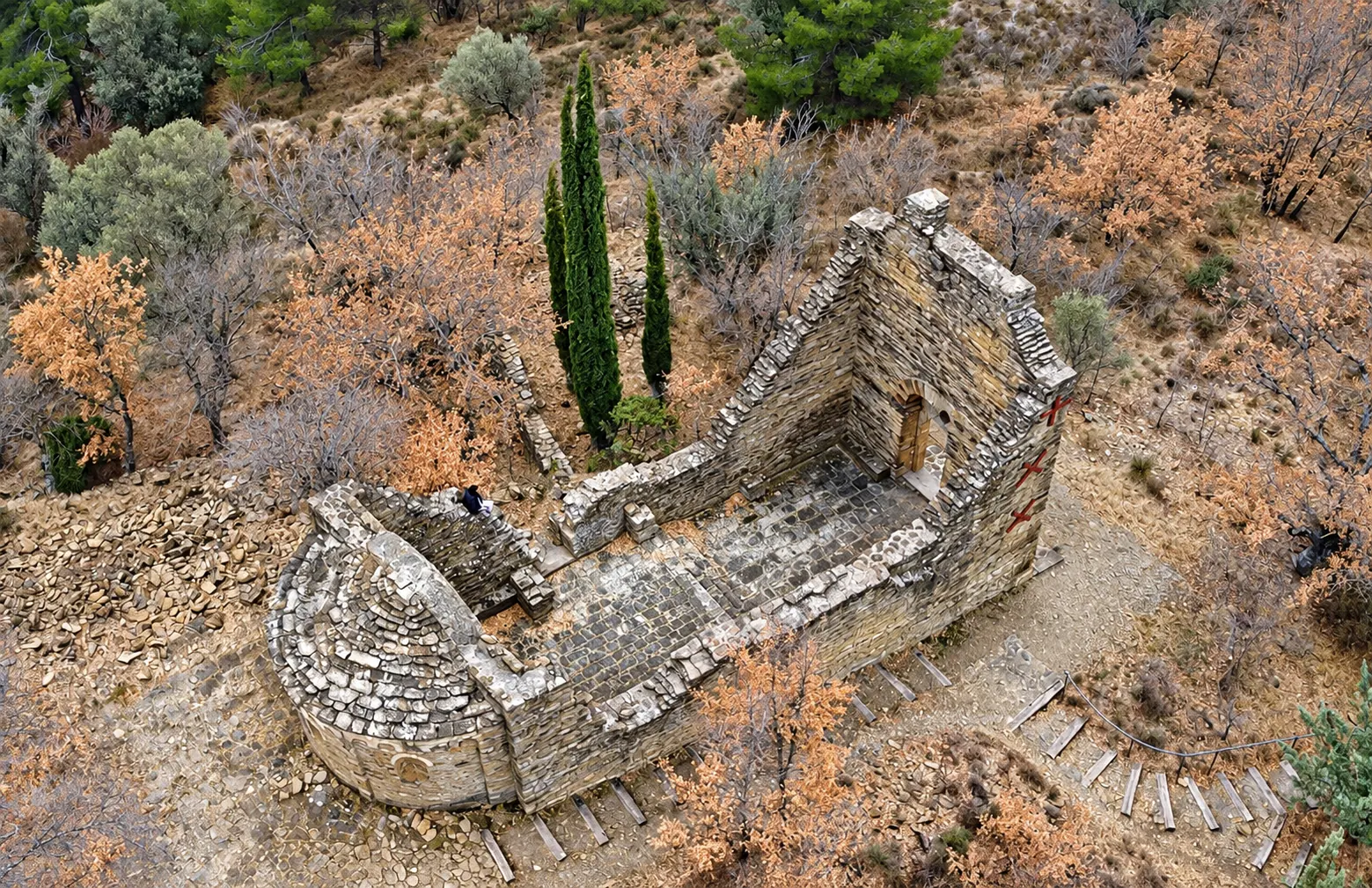
Aerial view of the Romanesque chapel of Sant Miquel del Pui, part of the historic settlement near the Roca Foradada hiking area.
A few kilometres from La Pobla is one of the most important places for understanding the town’s origins. The chapel of Sant Miquel del Pui formed part of a medieval settlement that existed before the present-day town.
During the 11th century, a community developed around the church within the local feudal system. After La Pobla de Segur was founded in the 13th century, many residents gradually moved to the new settlement.
Today, the Romanesque church and remains of the old village preserve this history. Its hillside setting also offers far-reaching views over the valley, Sant Antoni Reservoir and the surrounding mountains.
An easier alternative for families
If you want a family walk without technical sections, approach along the Sant Miquel del Pui road and choose a short route from a suitable permitted parking spot. Exploring the chapel and its surroundings is much gentler than the via ferrata, but remember that this is still mountain terrain with rough paths and gradients. It is not suitable for pushchairs; proper walking shoes are advisable.
Our tip: Take time to enjoy the views and explain to children that one of the settlements that eventually gave rise to La Pobla once stood here.
Explore Montsor, an abandoned mountain village
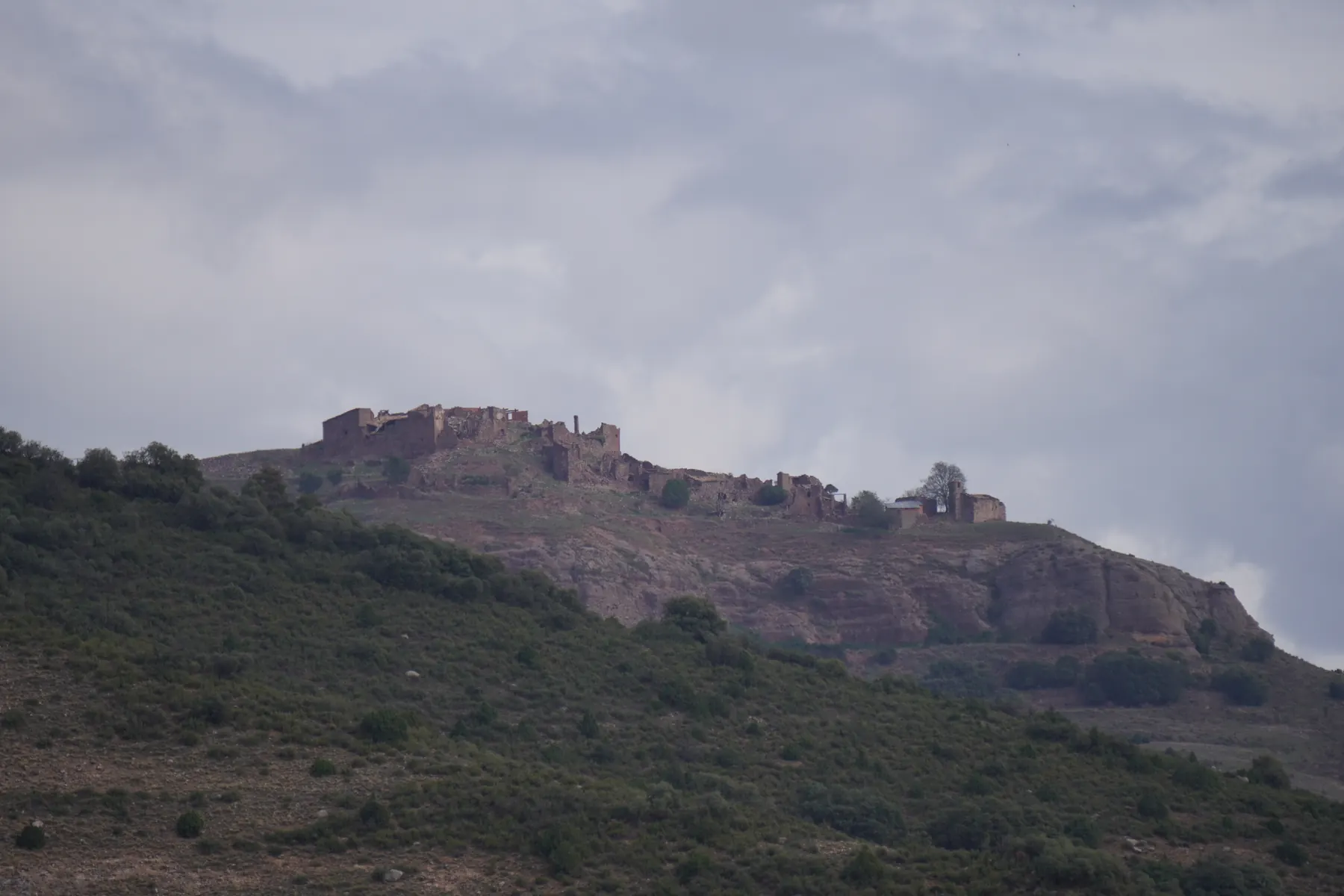
The ruined village of Montsor stands on a hillside near La Pobla de Segur and can be explored on a mountain hike or a guided 4×4 excursion.
Montsor sparks the imagination before you even arrive. Perched high in the mountains near La Pobla de Segur, the remains of this former rural community recall centuries of farming, livestock raising and life along remote mountain tracks.
Today, ruined stone houses and the surrounding silence tell a very different story. Visiting Montsor reveals a less-travelled side of Pallars, away from the main tourist routes.
Hiking to Montsor
Several approaches follow old paths linking mountain settlements. A more demanding option passes near Pas del Llop, crossing rugged landscapes, woodland and scenic viewpoints. Some longer itineraries exceed 14 km with considerable elevation gain and are best suited to experienced hikers.
Exploring by 4×4
It may be possible to complete part of the approach by 4×4 along tracks where driving is permitted. This reduces the distance on foot and gives you a chance to discover more of the countryside, but final access and track conditions vary. Not every mountain road is open to vehicles, and it is unwise to attempt the journey in an ordinary car without checking conditions.
A guided outing is a particularly good way to discover Montsor’s history and that of other abandoned villages in the area.
Discover Collegats Gorge and L’Argenteria
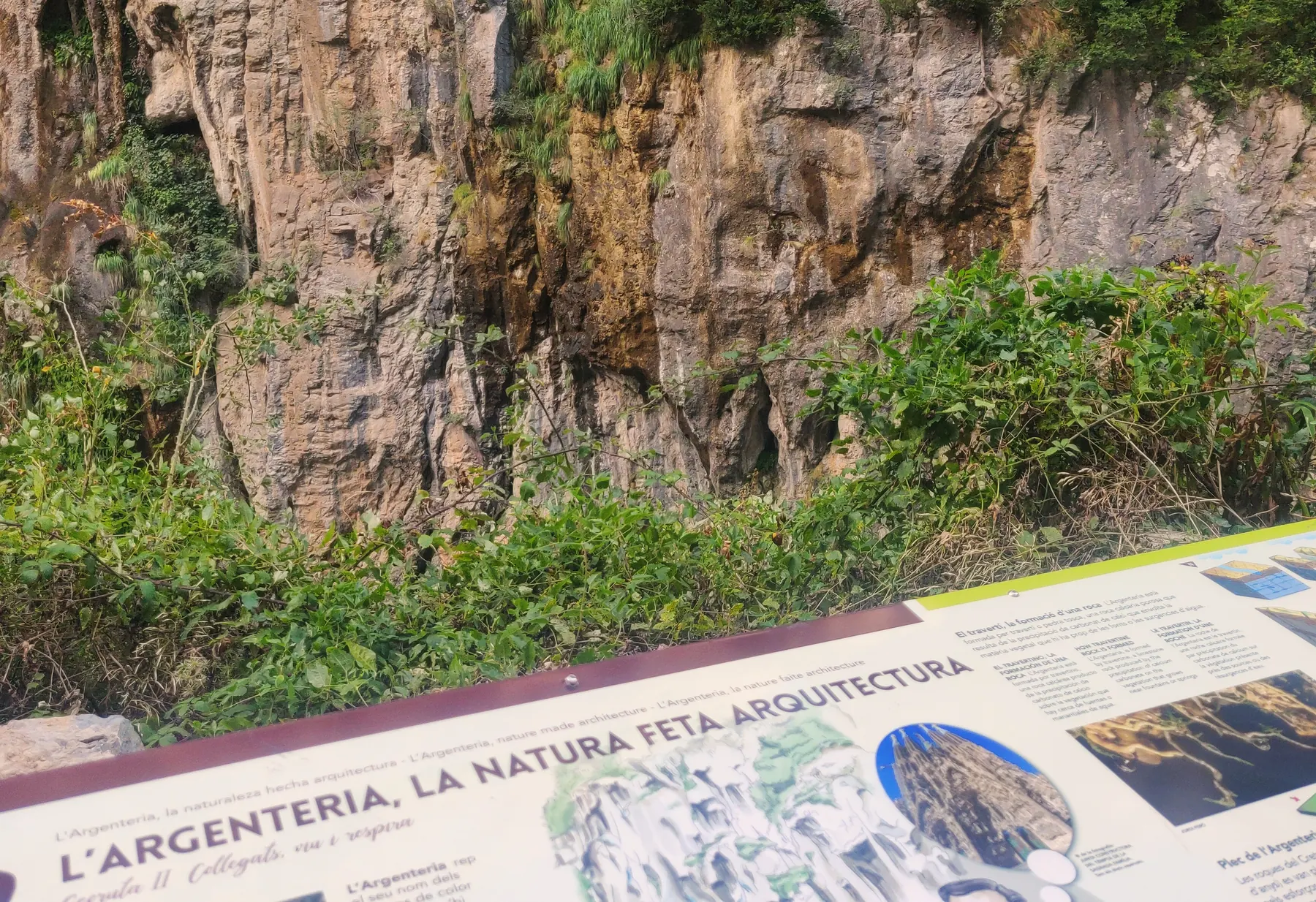
L’Argenteria is an extraordinary rock formation in Collegats Gorge, shaped by water and famous for its silver-like appearance in freezing weather.
Just north of La Pobla de Segur, the Noguera Pallaresa flows through one of the most dramatic landscapes in the Catalan Pre-Pyrenees: Congost de Collegats. Over millions of years, the river has carved a deep gorge through immense rock walls.
One of its best-known features is L’Argenteria, where water seeps down the rock face and can freeze into a striking curtain of ice during particularly cold winters. Its name recalls the silvery reflections that play across the wet stone and ice.
The site is also linked to a local legend: the shapes of L’Argenteria are said to have inspired Antoni Gaudí’s architecture. This connection is not conclusively documented, but it adds another cultural dimension to the visit. The poet Jacint Verdaguer also celebrated the place in Canigó.
How to visit
Drive towards Collegats from La Pobla, then walk along the accessible sections of the former road through the gorge. Check the current pedestrian access and never park in unsafe places along the N-260. You can combine this stop with other hikes in Collegats.
Explore Cova de la Serpent and Sant Pere de les Maleses
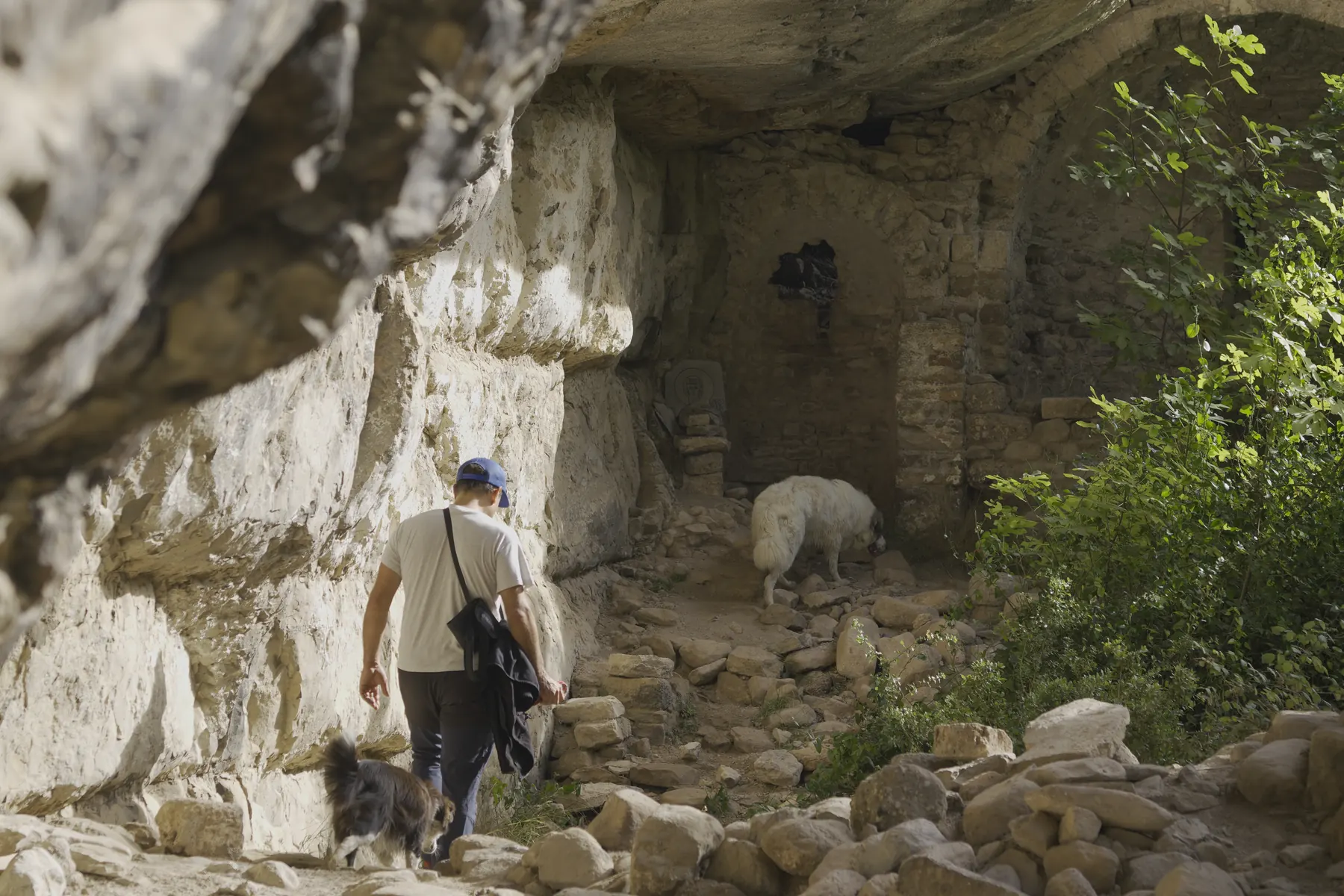
An old religious site beneath a rock shelter: Sant Pere de les Maleses is one of the most unusual hiking destinations in Collegats Gorge.
For a fuller hiking day, Collegats Gorge hides two other treasures: Cova de la Serpent and the remains of Sant Pere de les Maleses.
The Serpent’s Cave is surrounded by local legends and lies in a striking setting among the gorge’s rocky cliffs. Sant Pere de les Maleses preserves traces of a former religious site in a secluded position beneath the rock.
Together, they combine nature, history and the feeling of discovering places far from the busiest visitor routes. This is a more demanding outing than a short visit to L’Argenteria. Bring water, suitable footwear and an up-to-date route description, and avoid exposed sections when the ground is wet.
Day trips and excursions from La Pobla de Segur
With a car and a little more time, you can discover an extraordinary range of landscapes around La Pobla. Nature reserves, abandoned mountain villages, glacial valleys and historic settlements all make rewarding day trips.
Explore Boumort and listen to the red deer rut
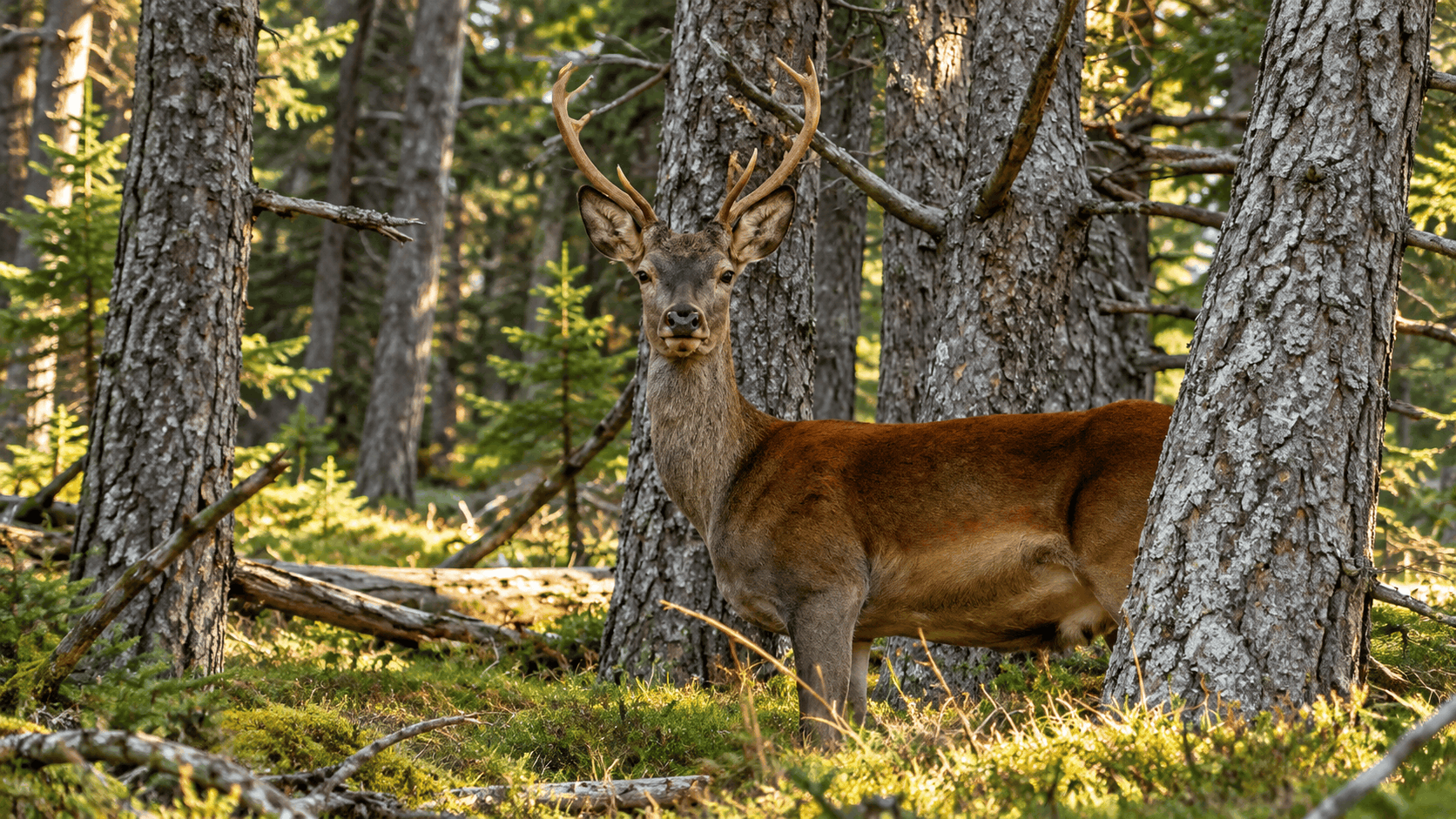
A red deer stag in Boumort, one of the best places to experience the autumn rut and hear the males calling in the wild.
The Boumort National Hunting Reserve is one of the great natural areas of the Pre-Pyrenees. Woodlands, mountain meadows, ravines and rocky slopes provide habitat for red deer, birds of prey and a wide range of other wildlife.
Boumort is fascinating throughout the year, but autumn brings something extraordinary. During September and October, male red deer bellow to attract females and challenge rivals. This is known as the red deer rut, one of the region’s most memorable wildlife experiences.
Excursions usually take place when the animals are more active, especially around dawn and dusk. Hearing the calls does not guarantee a close sighting: these are wild animals, and their behaviour depends on many factors.
Even outside rutting season, Boumort’s scenery and biodiversity make it worth exploring.
Tip: To reach the more remote parts of the reserve, consider a guided 4×4 trip. Respect driving restrictions and always give wildlife space.
Step back in time at Espluga de Cuberes
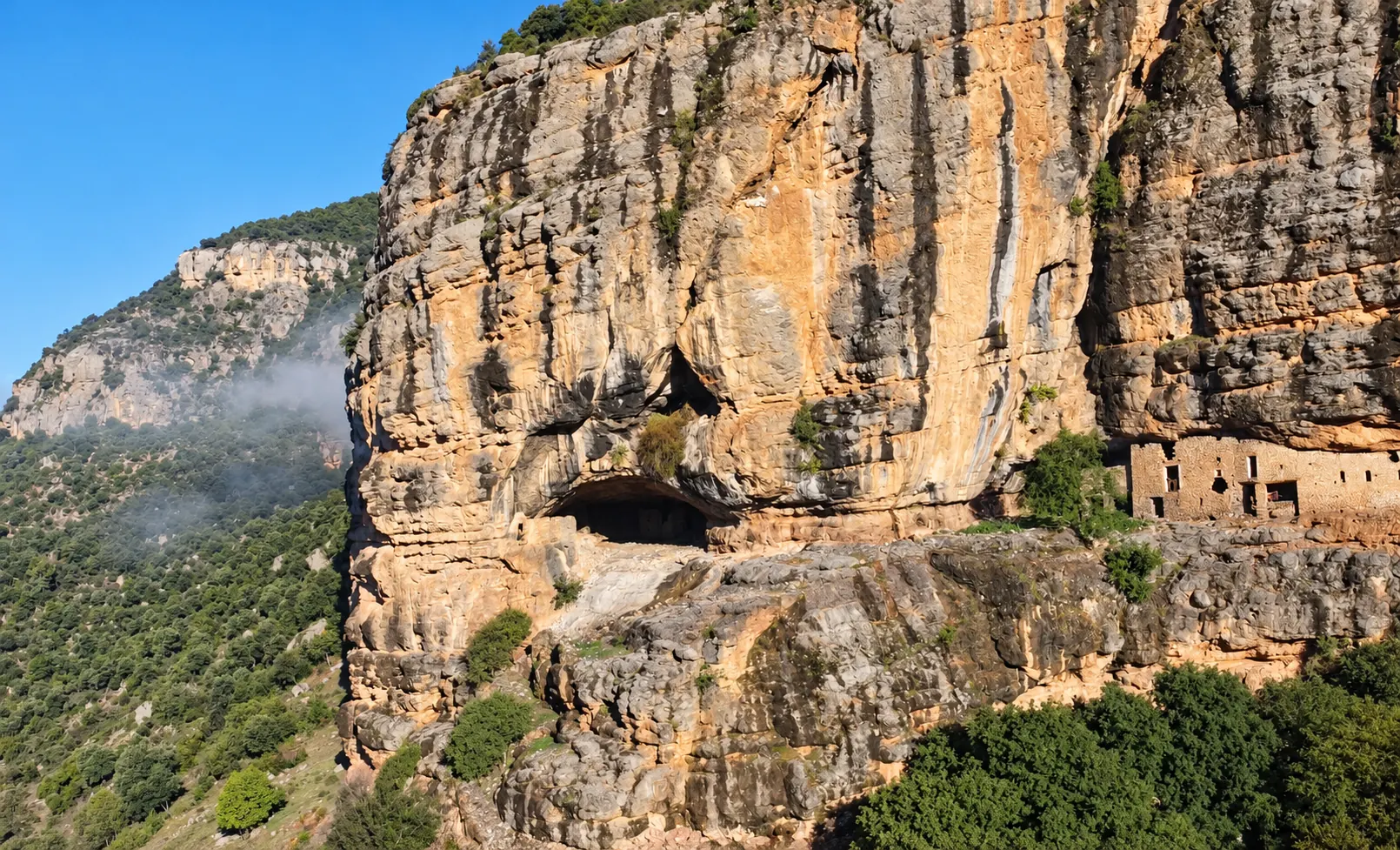
Espluga de Cuberes: abandoned stone buildings beneath towering cliffs, reached by a hike through the wild landscape of Pallars.
Can you imagine an entire village tucked beneath a vast rock overhang? That is exactly what awaits at Espluga de Cuberes, one of the most remarkable abandoned settlements in Pallars.
Its stone buildings were constructed under a huge natural shelter, offering protection from the elements. The remains of the houses, the church of Santa Coloma and the mountain setting create an unforgettable atmosphere.
The visit offers a glimpse of life in isolated rural settlements, where families relied on local resources and networks of mountain paths.
How to reach Espluga de Cuberes
Vehicles cannot drive all the way to the houses. A section on foot is essential, and the difficulty depends on where you begin. One particularly interesting option is to combine travel along permitted tracks in a 4×4 with a hike.
MundoCanyon offers guided trips to Espluga de Cuberes, allowing you to discover its history and mountain scenery without having to arrange the access yourself.
Discover Herba Savina, an abandoned village with a mysterious past
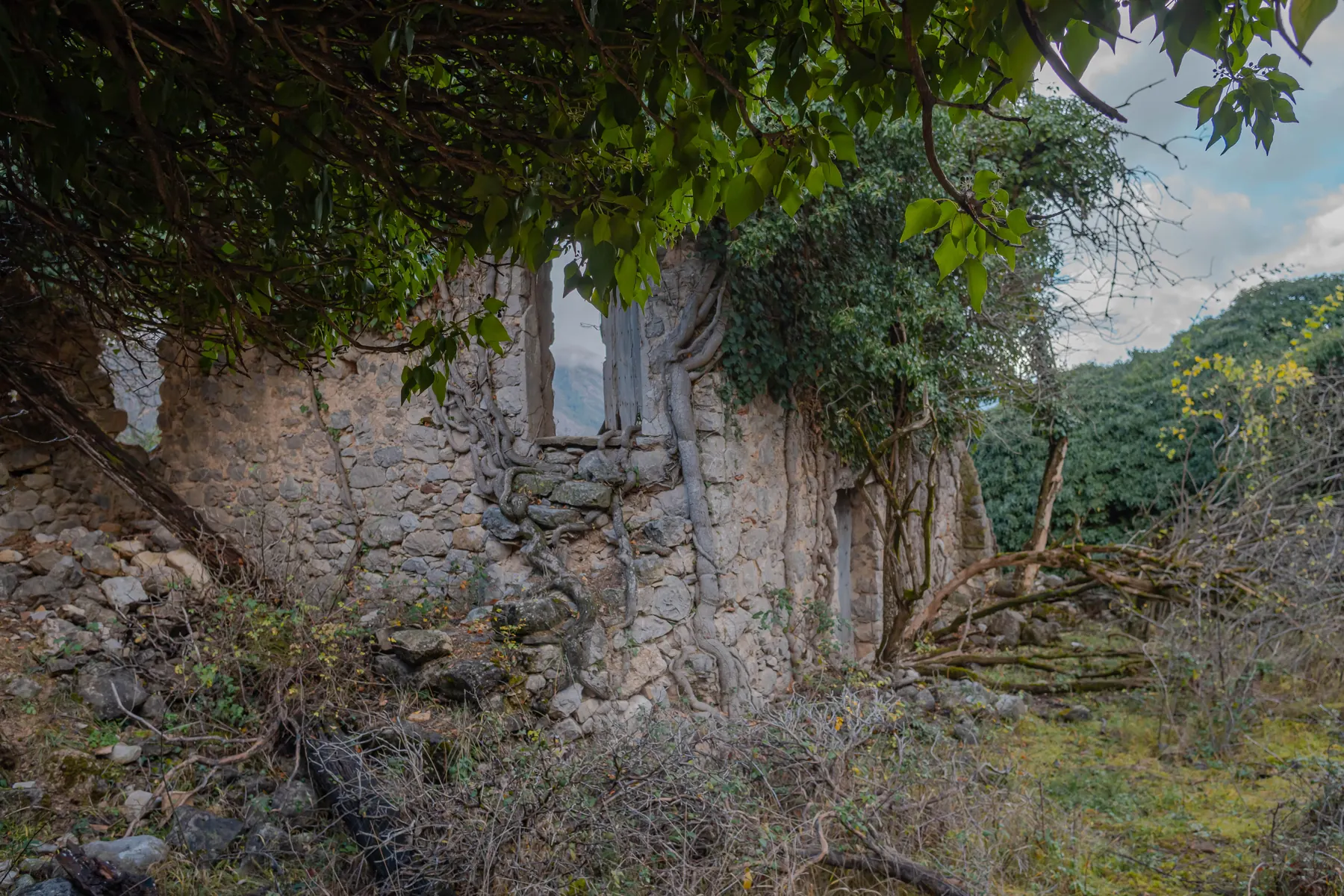
An old stone house partly reclaimed by vegetation along the Herba Savina route, a journey into the history of rural Pallars.
Many villages in Pallars gradually lost their inhabitants during the 20th century. Herba Savina is one of the most fascinating examples.
In a mountainous area between Carreu and Boumort, this small settlement once housed several families who lived mainly from farming and livestock. Today, its ruined buildings and the stories of its former inhabitants are all that remain.
One of those stories concerns a crime in the area, a case that continues to intrigue visitors because of its circumstances and the difficulties of investigating events in such isolated communities.
Yet Herba Savina is about more than one mysterious episode. It also illustrates the gradual disappearance of a way of life that shaped Pyrenean mountain communities for centuries.
A visit is especially rewarding for those who enjoy combining hiking with local history and lesser-known places. Plan access carefully and respect private land, unstable ruins and the natural environment.
Read the story of Herba Savina or explore walking, 4×4 and combined tour options.
Visit Salàs de Pallars and the Botigues Museu
Just a short distance from La Pobla, Salàs de Pallars is a small town worth visiting for its medieval atmosphere and commercial heritage.
Its main attraction is the Botigues Museu, a collection of recreated historic shops showing what daily life and shopping were like in the 19th and 20th centuries. Pharmacies, grocers and other traditional businesses display old packaging, shop fittings and objects that older visitors may recognise and younger ones have never seen.
It is an engaging family outing. Children can discover how shops worked before the age of supermarkets, while adults often enjoy the nostalgia of familiar products. Check opening hours and guided-tour availability in advance.
Salàs also has historic architecture and can easily be paired with a walk around Sant Antoni Reservoir.
Explore the ruins of Aramunt Vell
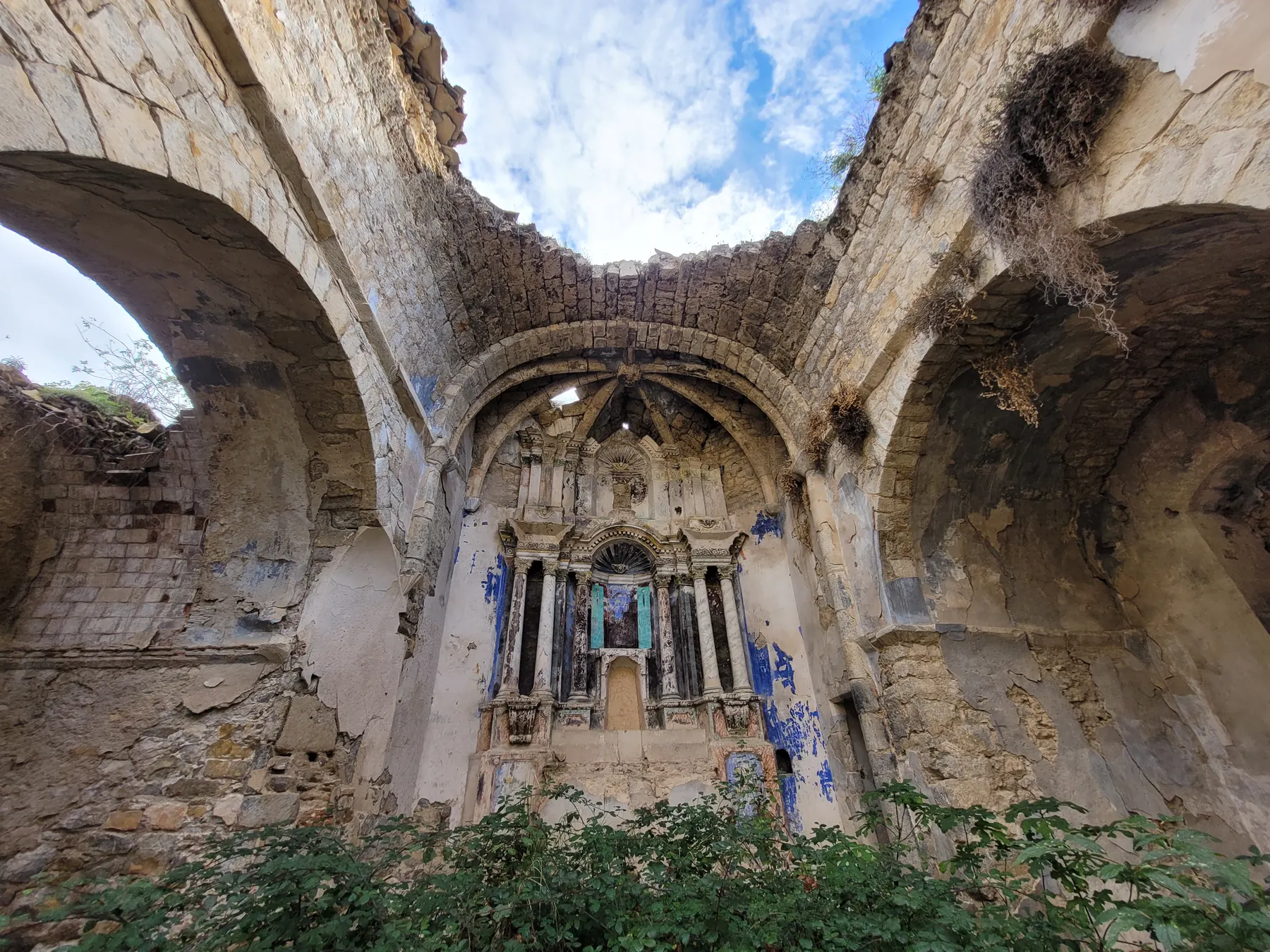
Inside the ruined church of Sant Fructuós in Aramunt Vell, where stone arches and historic architectural details remain.
Aramunt Vell is another former village in the area that rewards a visit. From its elevated position, the remains of the old settlement overlook Sant Antoni Reservoir and the surrounding countryside.
A walk here invites you to imagine rural life before residents moved towards better-connected settlements. It is a worthwhile historical excursion without travelling too far from La Pobla de Segur.
Safety: Many buildings are unstable. Never enter unsafe ruins or stand close to walls that might collapse.
Head to Vall Fosca and its mountain lakes
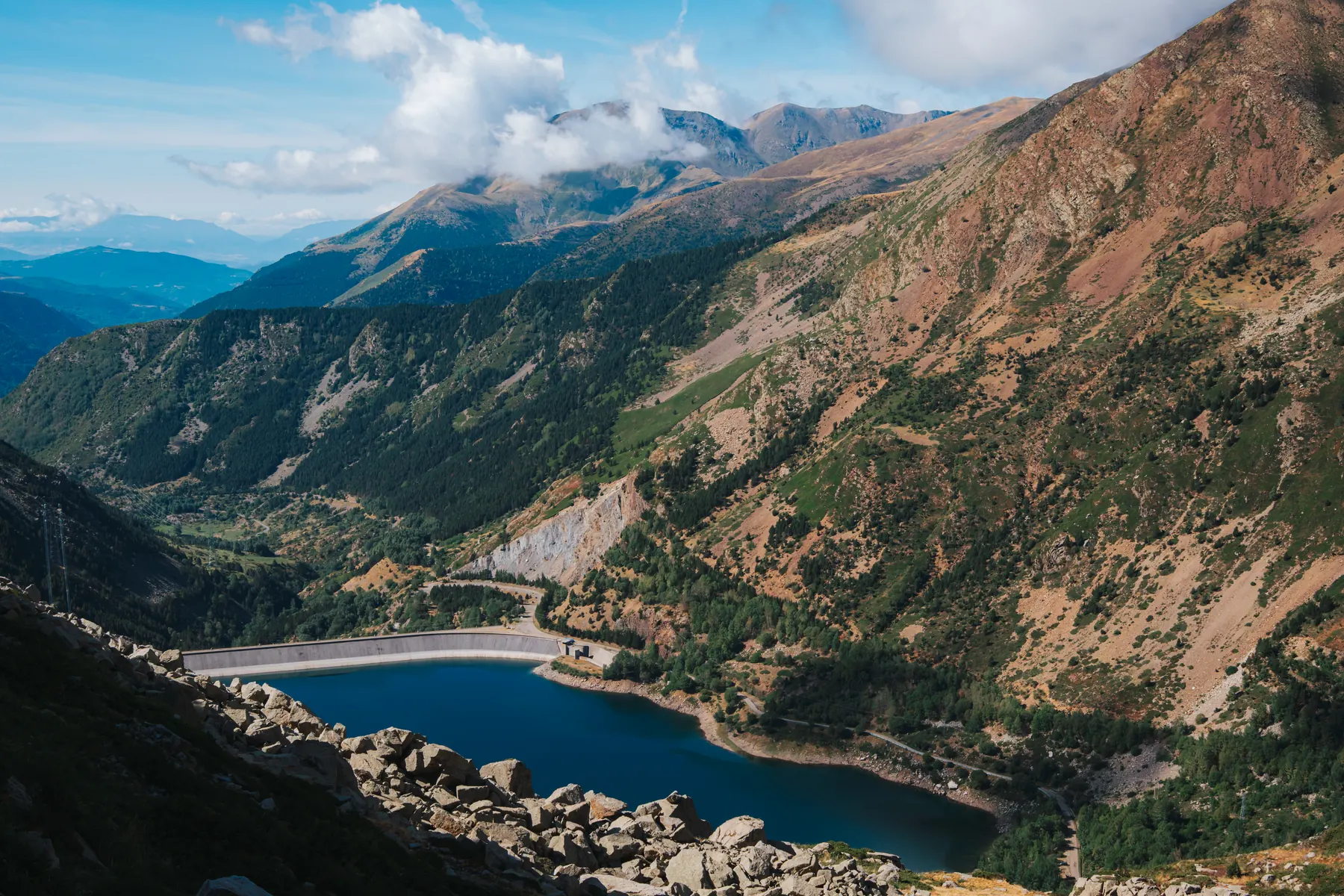
Sallente Reservoir is the starting point for many high-mountain excursions in Vall Fosca, including the seasonal cable car to Estany Gento.
If high-mountain landscapes appeal to you, set aside a day for Vall Fosca. Following the River Flamisell, the valley leads towards some of the most dramatic scenery in the Lleida Pyrenees.
Its upper section includes Estany Gento, a starting point for walks towards several glacial lakes. When the Vall Fosca cable car is operating, it provides convenient access to higher terrain and superb panoramic views.
Even without the cable car, Vall Fosca offers small villages, viewpoints, walking routes and peaceful corners to explore.
In winter, some higher areas are suitable for guided snowshoeing, provided the weather and snowpack are safe. This is an excellent excursion for visitors spending three days or more in Pallars.
Visit Estany de Montcortès, a truly unusual natural lake
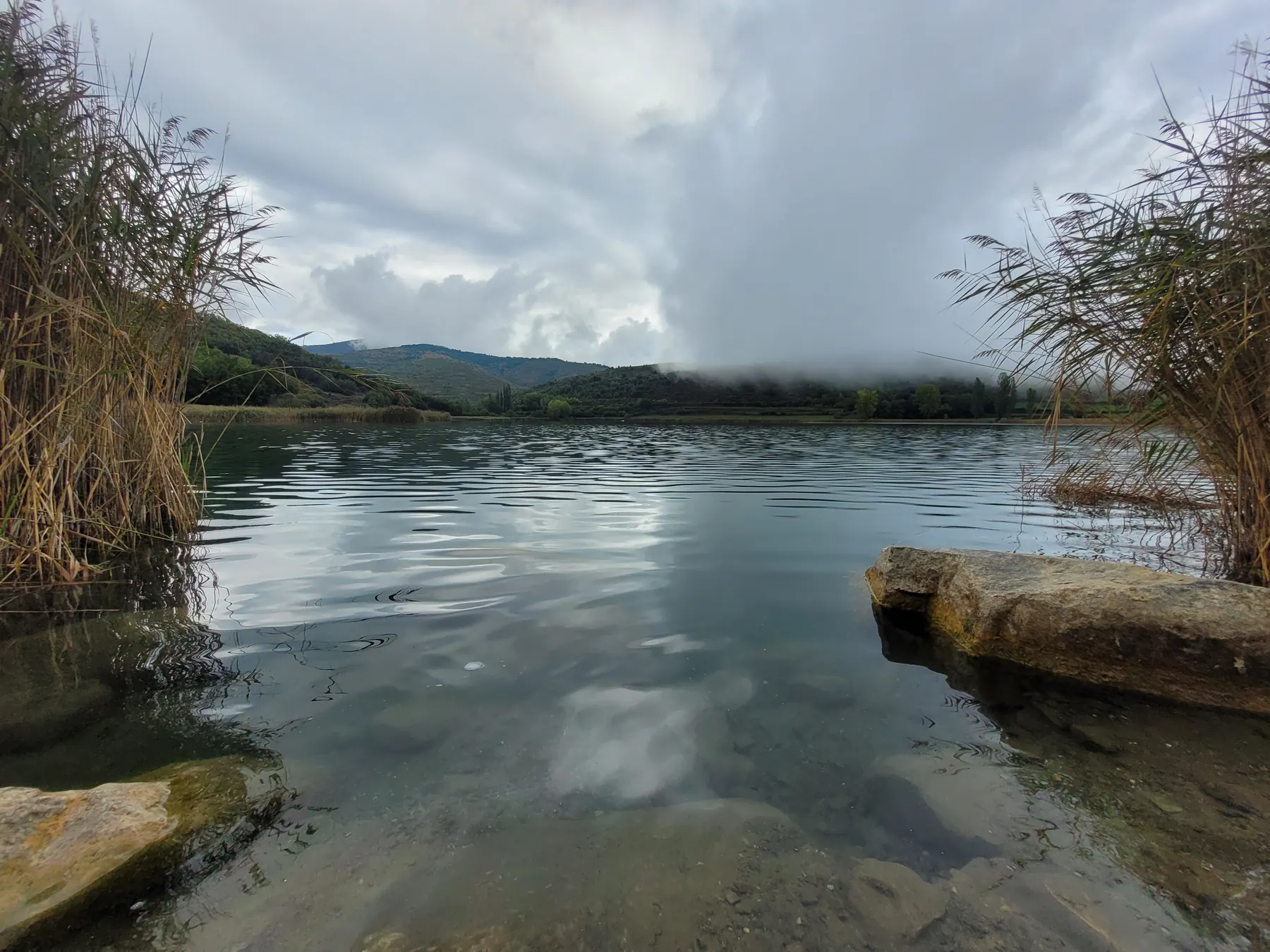
Estany de Montcortès is one of Catalonia’s rare natural karst lakes, known for its quiet waters, reedbeds and birdlife.
A short drive from La Pobla de Segur, in the municipality of Baix Pallars, lies one of the Catalan Pyrenees’ most unusual natural sites: Estany de Montcortès.
Unlike most Pyrenean lakes, which were formed by glaciers, Montcortès is a karst lake. It developed through the dissolution of underground rock and subsequent subsidence. But that is not its only unusual feature.
No river flows into the lake: it is fed mainly by underground springs. With its almost circular shape and depth of around 30 metres, it is of considerable geological and scientific interest.
At approximately 1,065 metres above sea level, the lake is surrounded by meadows, reeds and gentle hills that contrast with the steeper mountains elsewhere in Pallars. It is also an important habitat for waterbirds and wetland species and is included in the Natura 2000 network.
An easy family walk
One enjoyable option is the circular walk around the lake, approximately 1.7 km long and taking about 30 minutes without stops. It suits families, couples and anyone who wants a gentle outing in nature. In summer, some visitors come to cool off; always check current swimming regulations and respect protected areas.
A lake of legends
Because no visible river feeds the lake, Montcortès has long had an air of mystery. As with other lakes whose origin was unknown to earlier inhabitants, a number of local legends developed around it.
Tip: Combine the lake with a drive through Pla de Corts and its villages, or stop to admire the unusual Xemeneies de Fada, chimney-shaped geological formations shaped by erosion.
Visit Gerri de la Sal and its historic saltworks
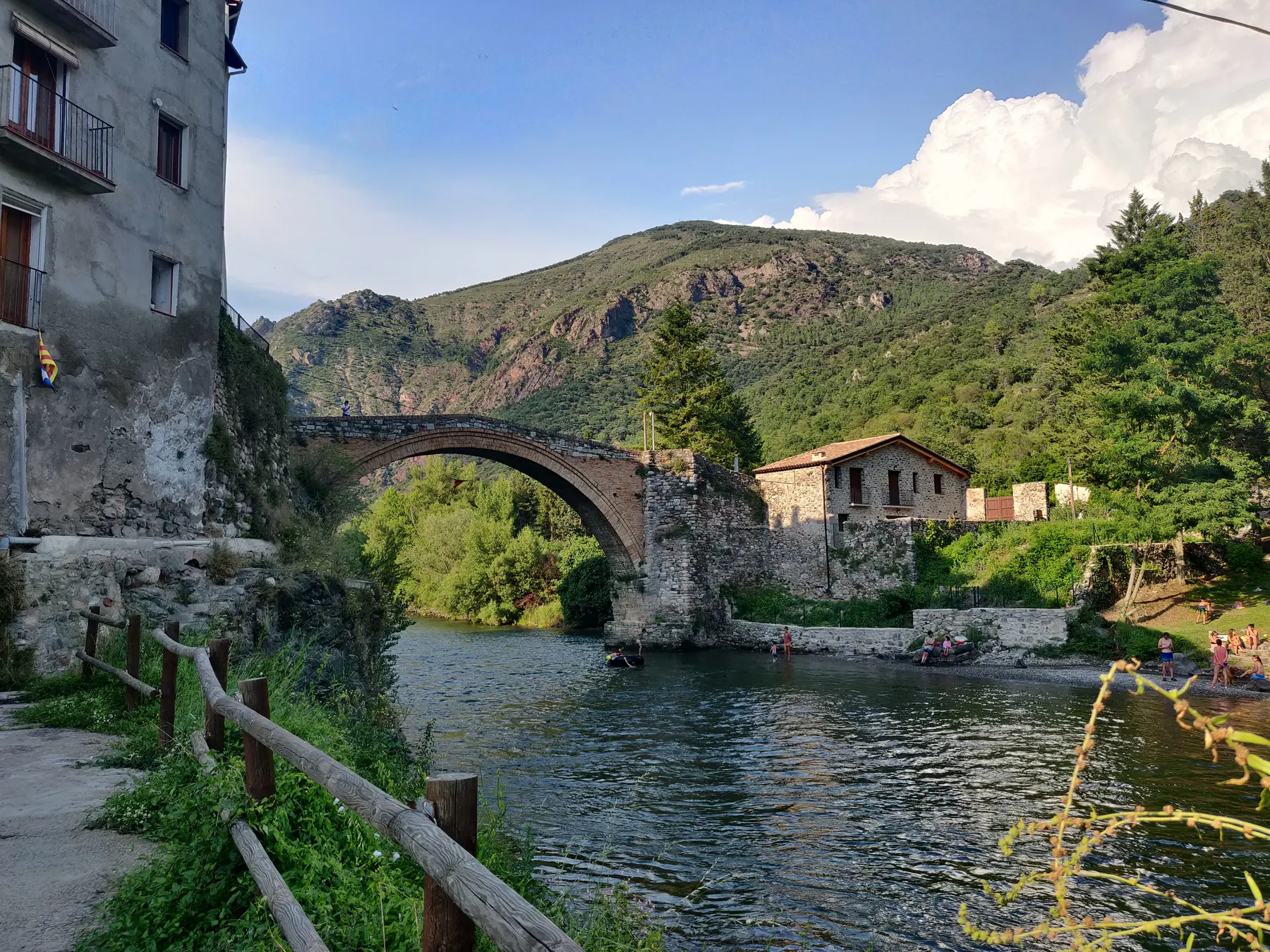
The medieval bridge of Gerri de la Sal crosses the Noguera Pallaresa beneath the mountains of Pallars Sobirà.
A few kilometres north of La Pobla along the N-260 towards Sort lies one of Pallars Sobirà’s most distinctive villages: Gerri de la Sal.
As the name suggests, the town’s history is closely linked to salt. Although this is the Pre-Pyrenees, far from the coast, local people produced salt for centuries using naturally saline spring water. They channelled it into shallow basins, where evaporation left behind salt crystals. Salt production was a major part of the local economy, and its heritage can still be explored today.
Museu de Gerri de la Sal
The local salt museum occupies the former Real Alfolí, an 18th-century building once used for storing and trading salt. It explains how the saltworks operated, which tools workers used and why salt was so valuable to the area.
The museum offers individual visits and guided tours; during summer, guided tours of the former saltworks may also be available. Check opening times and bookings on the Gerri de la Sal Museum website.
A medieval bridge and an old monastery
Gerri has much more to offer than its salt history. Its most photographed sights include a medieval stone bridge across the Noguera Pallaresa. Across the river stands the former monastery of Santa Maria de Gerri, whose medieval origins testify to the town’s historical importance. A walk to the bridge offers beautiful views of the monastery and surrounding mountains.
Combine it with Estany de Montcortès
Allow one to two hours for Gerri, then continue to Montcortès for a walk around the lake and the gentle scenery of Pla de Corts. Visiting the salt museum and medieval bridge in the morning and the lake later in the day makes a relaxed outing for families, photographers and history lovers.
Tip: If you are travelling with children, check the museum’s current family activities, which may include educational and theatrical tours depending on the season.
Would you like to explore Pallars with a local guide?
Tell us what kind of excursion you’re looking for and we’ll help you find the route that suits you best.
Adventure activities in La Pobla de Segur
La Pobla de Segur is one of Catalonia’s leading destinations for canyoning. Its location between Pallars Jussà, Pallars Sobirà and nearby Pyrenean valleys gives access to an exceptional variety of canyons.
The geology of this UNESCO Global Geopark Orígens territory explains much of that diversity. Descents may pass between limestone, conglomerate, slate or granite walls, each creating a different landscape and experience.
Go canyoning in Catalonia’s canyoning capital
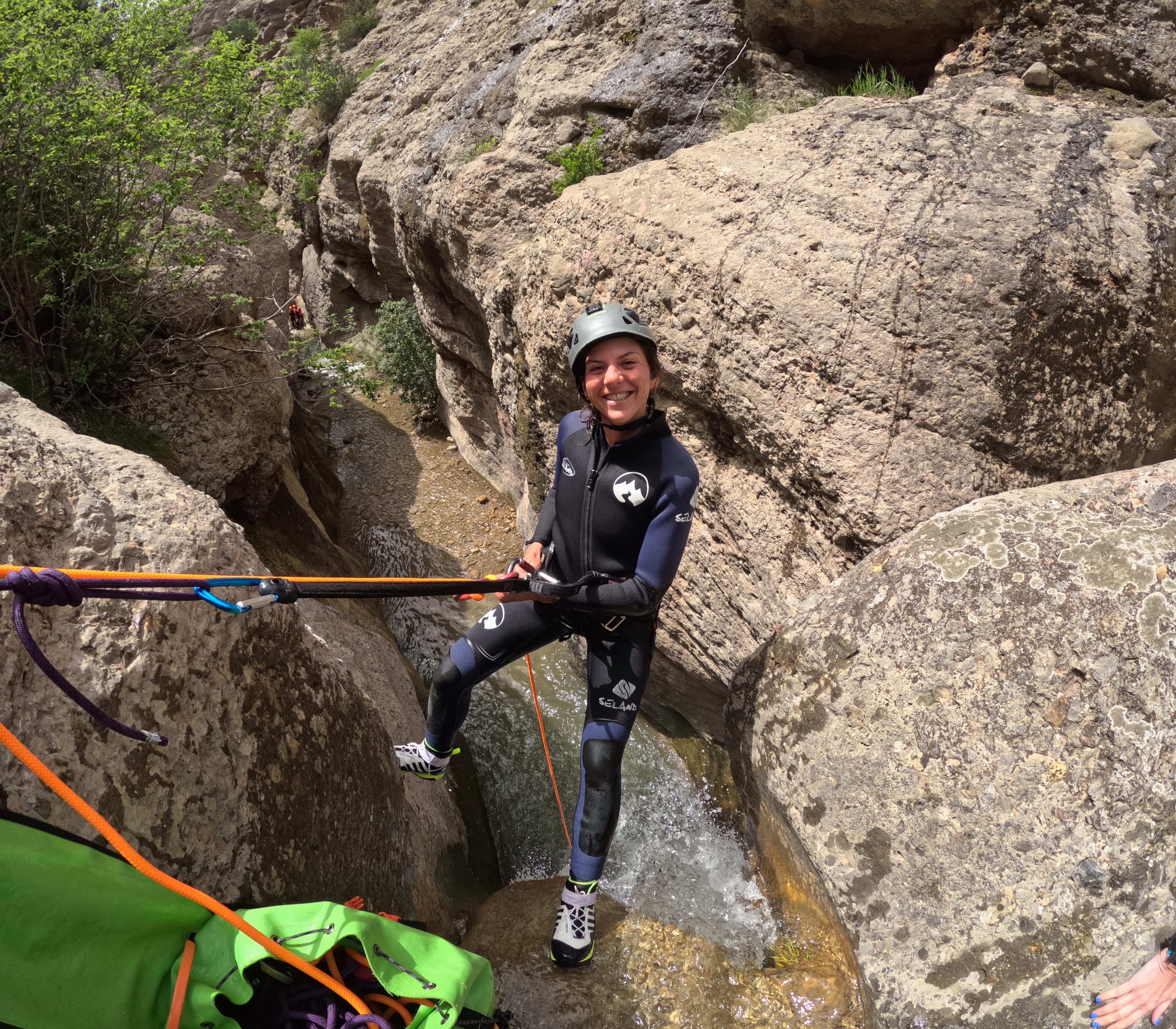
Canyoning means travelling along a canyon, negotiating natural obstacles by walking, swimming, sliding down rock chutes, abseiling and, where conditions allow, jumping into pools. One of La Pobla’s greatest advantages is the choice of routes for very different experience levels, from first-timers to experienced canyoneers.
Here are some of the area’s most interesting descents:
| Canyon | What makes it special |
|---|---|
| Sant Pere → | A lively descent and a good introduction when conditions are suitable. |
| Barranc de l’Infern → | Narrow rock walls, a spectacular setting and abseils in a dramatic gorge. |
| Gurp → | Limestone formations, crystal-clear pools and beautiful scenery. |
| Bóixols → | Natural slides, deep pools and a striking finish beneath a medieval bridge. |
| Viu de Llevata → | Numerous water obstacles and a varied, exciting descent. |
| Les Espones → | Vall Fosca landscapes, slate rock, slides and abseils. |
Dry Canyoning: An Adventure for Autumn and Winter
Canyoning doesn’t have to stop when temperatures drop. The dry canyons of Pallars Jussà offer an excellent way to continue enjoying this activity throughout autumn and winter without spending long periods in the water.
These routes focus on abseiling, descending rocky walls and navigating narrow gorges. As well as exploring spectacular landscapes, dry canyoning is a great opportunity to learn basic rope techniques or improve the skills developed during the summer canyoning season.
Close to La Pobla de Segur, three particularly interesting options are Gramontill, Serradell and Moró, each offering a different route and level of difficulty.
However, a dry canyon is not necessarily a safe or easy one. Rainfall, icy conditions and unstable terrain can create serious hazards, so the conditions must always be checked before starting a descent.
If you’re looking for an outdoor adventure during the colder months, explore our dry canyoning experiences in Catalonia and the Pyrenees. Another exciting winter option is thermal canyoning, which combines the thrill of canyoning with naturally heated mountain springs.
Try the Roca Foradada and Les Arcades via ferratas
Via ferratas are another highlight of adventure tourism around La Pobla. These equipped climbing routes use metal rungs, safety cables and suspension bridges to help participants explore mountain rock faces from an exciting new angle.
We have already covered the Roca Foradada via ferrata within the town itself, but it is not the only excellent option nearby.
In Congost de Terradets, the Les Arcades via ferrata offers a K3 route combining vertical walls, traverses and hanging bridges, with spectacular views of Terradets Reservoir and the Montsec mountains.
The approach is short and the itinerary is varied, appealing to visitors looking for a guided introduction at the appropriate level or for a step up from easier ferratas.
Compare the options in our guide to via ferratas in Pallars Jussà or browse all our guided via ferrata activities in the Pyrenees.
Go caving and discover the underground world of Pallars
The mountains of Pallars hold wonders not only above ground but also below it. Underground passages, shafts, chambers and stone formations have been shaped by water over thousands of years.
Caving in Pallars offers a way to explore this hidden world and learn more about the remarkable geology of UNESCO Global Geopark Orígens.
One of the most interesting options for first-timers is Forat la Bou Cave in the Serradell valley, with galleries, stalagmites, flowstone and other beautiful formations.
For those looking for a more technical outing, shafts such as Forat dels Diners require specialised equipment and underground rope techniques.
Caving is very different from hiking. It is a chance to explore hidden spaces, understand how caves form and experience the excitement of discovery with qualified professionals.
MundoCanyon offers guided caving trips for different levels, as well as introductory caving courses for anyone wishing to learn the necessary techniques.
Enjoy snowshoeing in the Pyrenees
When winter arrives and the mountains turn white, La Pobla de Segur remains a good base for exploring the Pyrenees. Higher mountain areas offer a wide choice of winter outings.
Snowshoe routes allow you to walk through snowy forests, valleys and high-mountain landscapes without needing to ski.
Areas to explore include Vall Fosca, Aigüestortes i Estany de Sant Maurici National Park and Alt Pirineu Natural Park, with routes of varying difficulty.
The route towards Refugi de Comes de Rubió is a particularly attractive introduction to Pallars Sobirà’s snowy forests. More demanding mountain days are possible around Tavascan and Sant Maurici.
Although snowshoeing is relatively easy to learn, winter mountain excursions demand careful preparation. The weather, snowpack stability and avalanche risk determine which routes are safe.
Browse our guided snowshoeing trips in Catalonia and get more ideas from our guide to adventure activities in the Pyrenees.
Explore the mountain tracks of Pallars on a guided 4×4 excursion
Some of the most fascinating places in Pallars are far from tarmac roads. Abandoned villages, remote viewpoints and natural areas may lie at the end of mountain tracks or old livestock routes.
A 4×4 trip makes it easier to approach places that would be difficult to reach in an ordinary car. Beyond Boumort, these outings can be combined with short walks to former settlements, geological sites and lesser-known landscapes.
Driving on forest tracks is subject to restrictions, especially in protected areas. Going with a local guide also brings the area’s traditions and stories to life in a way you might otherwise miss.
Find out more about MundoCanyon hiking and 4×4 adventures.
Your next adventure starts in La Pobla de Segur
Canyoning, via ferrata, caving or hiking? We’ll help you choose the right activity for your experience and the time of year.
Where to eat in La Pobla de Segur
After a mountain hike or several hours exploring a canyon, sitting down to a good meal is one of the pleasures of the day. Pallars cuisine combines rural traditions, locally produced ingredients and contemporary cooking that reinterprets regional flavours. La Pobla offers restaurants for special occasions, family-run places and relaxed eateries.
Discover La Pobla de Segur’s best places to eat
El Raier
If you want a special dining experience, El Raier is one of the town’s most interesting restaurants. Run by Clàudia Gozzi and Jaime Bes, it offers a contemporary take on Pallars cuisine with seasonal ingredients, creativity and respect for local traditions.
The restaurant holds a Michelin Bib Gourmand, an award recognising quality food at good value. This is not a Michelin star but a separate, respected distinction. Booking ahead is recommended, particularly at weekends.
A pleasant choice for a meal after an excursion or a walk around town. It fits particularly well into a one-day itinerary when you want to stop for lunch before exploring further.
Another well-known local name worth considering when choosing somewhere to eat. Check the current menu and opening hours before visiting.
Tatanka Pirineus
A relaxed option for burgers and informal dining, especially appealing after outdoor activities or for groups of friends.
CTretze Pirineus
As well as its craft beer, CTretze has food and a cultural venue: an excellent choice for an informal dinner or an evening with live music.
Special experiences and traditional festivals in La Pobla de Segur
Not everything here revolves around the landscape. La Pobla also celebrates centuries-old traditions and events that make certain times of the year especially rewarding for visitors.
Ride the historic Tren dels Llacs
One of the most memorable ways to reach La Pobla de Segur is by train. The railway from Lleida follows rivers and passes reservoirs among beautiful mountain scenery.
Tren dels Llacs offers a special tourist experience on the line, with two options: the Historic Train, using period railway carriages, and the Panoramic Train, with large windows designed for enjoying the views.
The journey passes four lakes or reservoirs, 40 tunnels and 75 bridges. It is a lovely experience for families, railway enthusiasts and visitors who want to discover the Pre-Pyrenees without driving.
The tourist trains run on selected dates, so check the calendar before travelling. Timetables and tickets are available on the official Tren dels Llacs website.
Tip: If you book a return tourist-train excursion, check how much time you will actually have in La Pobla. Staying overnight is often a better choice if you want to try adventure activities or explore more distant places.
Experience the Raiers festival and the Falles
Two celebrations offer an especially authentic introduction to La Pobla’s identity.
La Diada dels Raiers
This festival revives the tradition of transporting timber down the Noguera Pallaresa. Participants build rafts from logs using traditional methods and steer them along the river, recreating the work of earlier generations.
The festivities include cultural events, local gatherings and activities related to rafting history. The raier tradition is recognised by UNESCO as intangible cultural heritage.
The festival usually takes place in early July, although exact dates should be checked each year. See the Associació Cultural dels Raiers de la Noguera Pallaresa for details.
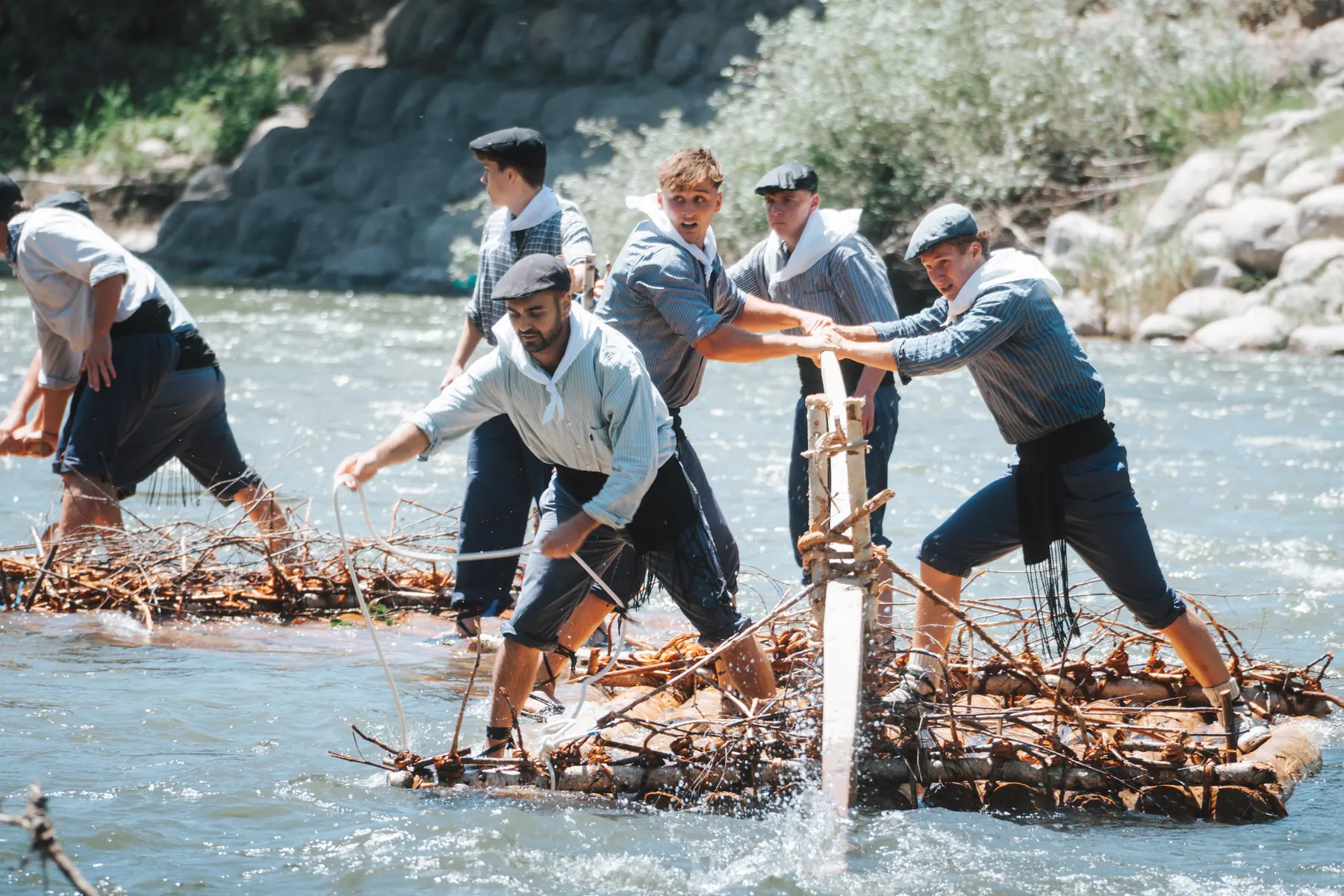
Raiers navigate the Noguera Pallaresa on traditional timber rafts during the UNESCO-recognised Diada dels Raiers celebrations.
Les Falles de La Pobla de Segur
The Falles are another great Pyrenean tradition. Unlike Valencia’s famous Fallas, this is not about burning giant sculptures. Participants carry blazing wooden torches, known as falles, down the mountainside.
In La Pobla, the tradition is linked to the descent from Santa Magdalena in June, around the beginning of summer. The Pyrenean fire festivals are also recognised by UNESCO as intangible cultural heritage.
Watching a line of flames wind down the mountainside at night is an unforgettable sight. Beyond these festivals, look out for concerts, fairs and food events such as Vianda, which celebrates Pallars produce and flavours.
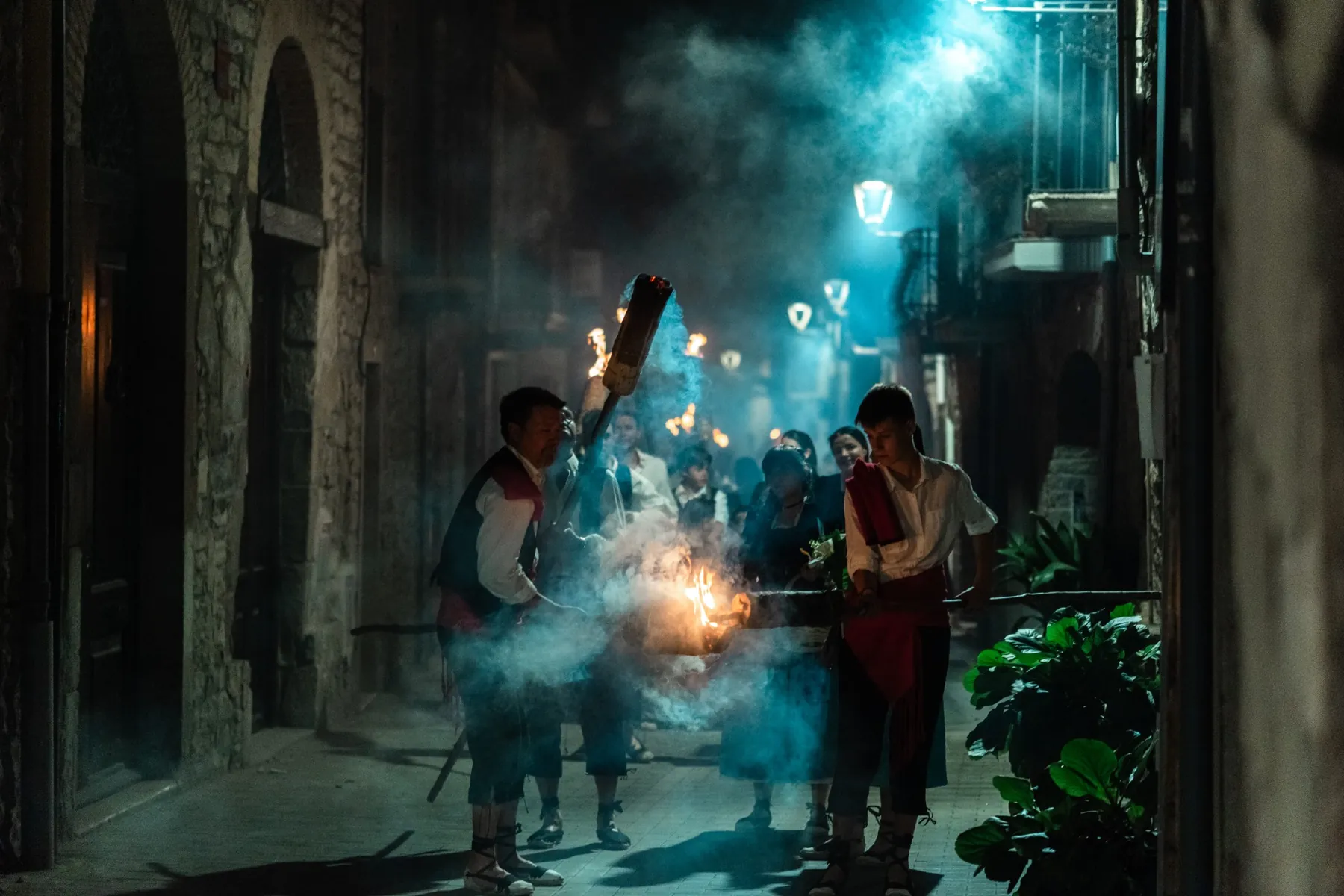
Wooden torches light the streets during the Falles of La Pobla de Segur, part of the UNESCO-recognised Pyrenean fire festivals.
Things to do in La Pobla de Segur with children
La Pobla de Segur is a rewarding family destination, with cultural attractions, easy walks and adventures suited to different ages. You do not need to arrange long mountain hikes to enjoy the area.
Easy activities for families with young children
If you are visiting with younger children, consider these ideas:
- Walk around the old town and spot unusual details on historic façades.
- Admire Casa Mauri and the old olive oil mill from outside.
- Visit Espai Raier to learn how timber was transported down rivers.
- Enjoy parks, green spaces and walks near the water.
- Ride Tren dels Llacs when the tourist service is running.
- Visit the Botigues Museu in Salàs de Pallars.
These activities need little physical preparation and make it easy to keep plans flexible.
Easy family walks and nature
For children who are used to walking, the area around Sant Miquel del Pui can be a good choice. Pick a short, safe approach, visit the chapel and enjoy the views. There are also gentle rural paths around Sant Antoni Reservoir and towards nearby villages.
Remember that many Pallars trails have loose stones, gradients or exposed, sunny sections. Check the full route distance before leaving and bring plenty of water.
Adventures for older children and teenagers
If your children love nature and want to try something different, a guided adventure may become the highlight of their holiday. Possibilities include beginner-friendly canyoning, interpretive guided walks, paddleboarding and certain via ferrata routes.
Always check participation rules, technical difficulty and any minimum age or height requirement. An activity that feels easy to an experienced adult may be too demanding for a child.
MundoCanyon can help you identify family-friendly via ferrata options and other appropriate adventures.
What to do in La Pobla de Segur when it rains
Bad weather need not spoil the whole trip. You can explore the old town during a break in the rain, arrange a visit to Licors Portet, visit indoor cultural attractions or head to the Botigues Museu in Salàs de Pallars.
It is also a great opportunity for a long lunch and a taste of local cooking. After heavy rain, however, canyoning should be postponed and paths affected by flash flooding or rockfall avoided.
La Pobla de Segur in 1, 2 or 3 days: suggested itineraries
One of the great advantages of La Pobla de Segur is its flexibility. You can spend a few hours exploring the historic centre or use the town as a base for discovering much of Pallars. Adapt these itineraries to your interests, the season and the time you have available.
La Pobla de Segur in one day: history, scenery and food
Morning
Start in the old town. Wander along Carrer Major, learn about its medieval history and visit Casa Mauri and the former olive oil mill. Then stop at Espai Raier to discover one of the Pyrenees’ traditional trades.
Lunchtime
Enjoy a meal in a local restaurant. Book El Raier for a special occasion, or choose a more casual option depending on opening times and your preferences.
Afternoon
Head towards Sant Antoni Reservoir for a relaxing walk. If you have a car, you can visit Sant Miquel viewpoint and the area near the chapel. Finish with a locally brewed beer at CTretze or pick up some regional products to take home.
This itinerary is ideal for first-time visitors who prefer to experience the town at a gentle pace.
La Pobla de Segur in two days: an adventurous weekend
Day 1: culture, food and traditions
Explore the old quarter, Casa Mauri and Espai Raier in the morning. After lunch, visit Licors Portet if you have arranged a tour, enjoy the reservoir views or take a short trip to Salàs de Pallars. In the evening, savour the local food scene.
Day 2: nature and adventure
Set aside the second day for an outdoor experience. Thrill-seekers can choose the Roca Foradada via ferrata, provided it is open and suits their experience. Another option is a guided beginner canyoning descent.
For a gentler day, visit Sant Miquel del Pui or explore Collegats Gorge and L’Argenteria. Relax beside the reservoir before heading home.
La Pobla de Segur in three days: the authentic Pallars
Day 1: discover La Pobla de Segur
Visit the old town, Casa Mauri, Espai Raier, the waterfront and local restaurants.
Day 2: experience adventure in the Pyrenees
Choose canyoning, a via ferrata or a guided hike. If you are new to canyoning, select a beginner route in suitable conditions.
Day 3: abandoned villages and mountain landscapes
Visit Espluga de Cuberes, Montsor or Boumort. In autumn, a guided trip to hear the red deer rut is especially rewarding. Alternatively, spend the day exploring Vall Fosca and its high-mountain views.
Our tip: Avoid trying to fit several demanding routes into the same day. Mountain roads, approaches and the time needed to enjoy each place make one main activity per day a more realistic plan.
Planning a trip to La Pobla de Segur?
Tell us how many days you have, who you’re travelling with and what you’d love to do. MundoCanyon will help you choose an experience tailored to you.
Practical tips for visiting La Pobla de Segur
How to get to La Pobla de Segur
La Pobla de Segur lies in Pallars Jussà, in the north of Lleida province. The C-13 is one of its main road connections, linking the town with Tremp, Balaguer and Lleida. You can also arrive on the Lleida–La Pobla de Segur railway, an especially scenic option for travellers using public transport.
Do you need a car?
Not to explore the old town, some cultural attractions and nearby streets and walks. However, a car makes it much easier to discover Boumort, Montsor, Espluga de Cuberes or Vall Fosca. Guided tours may be an alternative depending on availability and meeting arrangements.
What is the best time of year to visit La Pobla de Segur?
Every season has its own appeal:
- Spring: generally pleasant walking temperatures and green scenery. Canyoning depends on water levels and snowmelt.
- Summer: ideal for water activities, canyoning, paddleboarding and traditional festivals. Avoid the hottest hours on exposed trails.
- Autumn: superb for Boumort, the red deer rut and colourful forests.
- Winter: perfect for quiet breaks, local food, heritage and selected mountain outings, always subject to weather and seasonal restrictions.
What to pack for your excursions
Comfortable shoes are enough for exploring the town, but mountain adventures call for sturdy footwear, weather-appropriate clothing, sunscreen, water and a warm layer. If you book a guided technical activity, check which equipment is included and what you need to bring.
Mountain weather can change quickly, and mobile signal may be limited in remote valleys.
For your convenience, we have prepared an interactive map with all the places mentioned in this guide: